Languages
Friday, November 27, 2026



News and Views from the Global South
Global Governance
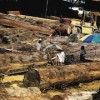
WORLD: Tropical Forest Summit Opens
Heads of state from the Amazon, Congo and Borneo-Mekong basins are meeting in the Congolese capital, Brazzaville: leaders hope to reach an accord on sound management of valuable rainforest ecoystems, but civil society actors believe the problems faced by local populations may be ignored.Putting Road Safety on the Development Agenda
The leading killer of children over the age of five is not malaria or dysentery, but cars and trucks. And 90 percent of those children are killed on roads in developing countries.OP-ED: Religion, Out of Place?
Brazil is seen as a country of diverse and profound faith. But though religion is an important reference point in the lives of the population, the extent of religious diversity in this sprawling country is not nearly so pervasive as belief itself.‘Europe Worsening Hunger Worldwide’
With spiralling food prices threatening to leave millions more people hungry every year, European countries must abandon subsidies and higher production targets for biofuels, the anti-poverty group Oxfam warns.LIBYA: Zuma says Gaddafi Ready for Truce
Muammar Gaddafi is ready for a truce to stop the fighting in his country, Jacob Zuma, the South African president, has said.
SOUTH AFRICA: Sound Policy Key to Renewable Energy
A radical rethink of current energy policy can cut South Africa's greenhouse gas emissions by 80 percent in 2050 compared to 1990 levels. More than that - after an initial spike in investment - South Africans four decades down the line would pay 23 billion dollars per year less for their electricity compared to business as usual.Arab Spring Wary of Economic Lifelines
Governments and international institutions that once bankrolled the authoritarian regimes of Tunisia’s Zine El-Abidine Ben Ali and Egypt’s Hosni Mubarak have begun floating aid packages to speed up the economic recovery and transition to democracy in these countries. Arab revolutionaries have reason to be wary.Germany Pledges Nuclear Shutdown By 2022
Germany has decided to shut all its nuclear reactors by 2022 in a drastic policy reversal in the wake of the nuclear disaster at Japan's Fukushima plant.Yemen Jets ‘Bomb Al-Qaeda-Held City’
At least 30 people have been killed by military jet fire in Yemen's southern city, Zinjibar, which is said to be controlled fighters linked to Al-Qaeda.A Candle in the Darkness – Amnesty Turns 50
Thousands of people worldwide raised glasses in a toast to freedom over the weekend to celebrate Amnesty International's 50th anniversary.Explosions Greet Nigerian President’s New Term
Bomb blasts hit a military base in the northern Nigerian city of Bauchi on Sunday, killing ten and injuring more than a dozen just hours after the swearing in ceremony of President Goodluck Jonathan in the capital, Abuja. News reports also said three others died in a bombing in Zuba, just outside the capital.China Takes Back Seat on IMF, For Now
The sex scandal in the top couloirs of the IMF and the power struggle to find a successor to Dominique Strauss-Kahn has fascinated the Chinese. Rife speculations about political intrigues and shadowy deals behind the scenes have spilled into cyberspace and the usually restrained media.Iceland Pushes Energetically Ahead
Iceland’s national power company, Landsvirkjun, has announced that it intends to double its generating capacity over the next 15 years, with a blend consisting mostly of hydroelectric and geothermal plants but potentially using wind and tidal energy as well.G8: ‘Arab Spring Could Lead to African Drought’
Stressing that there is only so much money to go around, development experts worry that the aid package the Group of Eight (G8) has announced for North Africa may mean fewer funds for the rest of the continent.
Amnesty’s Tireless Vigil during South America’s Dark Night
In the 1970s, with no Internet or social networking sites to get information out, Amnesty International managed to become a thorn in the side of the dictatorships of the Southern Cone of South America, several people who benefited from its advocacy work recalled on the occasion of the rights watchdog's 50th anniversary.TANZANIA-INDIA: A Rewarding Relationship
The Indian prime minister, Dr Manmohan Singh, concludes a three-day visit to Tanzania on May 28. Singh arrived in Dar es Salaam from the Ethiopian capital, Addis Ababa, where he took part in the Second India-Africa Forum Summit, which began on May 20.G8 Leaders Make Grand but Unconvincing Declaration
As leaders of the Group of Eight ended their two-day summit in this seaside town Friday, non-governmental organisations said the meeting had resulted in few concrete commitments.LIBYA: Water Emerges as a Hidden Weapon
Libya’s enormous aquatic reserves could potentially become a new weapon of choice if government forces opt to starve coastal cities that heavily rely on free flowing freshwater.New Leadership for the ICC
As the International Criminal Court gears up to elect six judges and a new prosecutor, observers are warning that political rather than merit-based considerations could govern the evaluation of candidates.GEORGIA: Opposition Rallies in the Face of Repression
More than half of Georgia’s population still lives in abject poverty due to economic stagnation, worsening living standards, rising unemployment and low pay nearly nine years after the 2003 bloodless ‘Rose Revolution’ that promised post-Soviet economic revival, a new political course and better living conditions.New Iran Sanctions Could Push Petrol Prices Even Higher
U.S. lawmakers have introduced a new package of unilateral sanctions targeting Iran that would challenge U.S. President Obama's discretionary authority to enforce such sanctions and would impose comprehensive restrictions on foreign entities that ship, refine or provide any other related services to Iran's energy sector.« Previous Page — Next Page »


The Week with IPS

NEXT STOP - SDGs
Tracking global progress towards a sustainable world
