Languages
Sunday, November 29, 2026



News and Views from the Global South
Global Governance
CLIMATE CHANGE: Food Supply Hangs in the Balance
Rocketing food prices and hundreds of millions more starving people will be part of humanity's grim future without concerted action on climate change and new investments in agriculture, experts reported this week.ISRAEL-US: Goldstone Rejects Netanyahu Remarks
The head of the U.N. commission that investigated the December-January Gaza war Thursday rejected assertions by Israeli Prime Minister Binyamin Netanyahu that any action to pursue the recommendations of his commission's report could prove fatal to any renewed peace process with the Palestinians.
ENVIRONMENT-CHILE: Authorities May Sue Geothermal Energy Firm
The Council for the Defense of the State (CDE), the Chilean government's legal watchdog, is considering bringing a suit for environmental damages against an Italian-Chilean consortium carrying out geothermal studies a few kilometres away from the El Tatio geyser field, a tourist attraction in the northern region of Antofagasta.RIGHTS: Security Council Backs Advocate for Women in War Zones
The U.N. Security Council Wednesday called on Secretary-General Ban Ki-moon to appoint a special representative to intensify efforts to end sexual violence against women and children in conflict situations.PAKISTAN: Local Residents Tacitly Approve of Swat Killings
Widespread reports of extrajudicial killings of suspected Taliban by the military do not seem to have raised alarm bells among a people that have been deeply traumatized by the militant group's atrocities.HEALTH: “Patent Pool” Could Ease HIV Drug Prices
Pharmaceutical giants like Pfizer and GlaxoSmithKline hold the future welfare of poor people living with HIV/AIDS in their hands, argues the humanitarian group Doctors Without Borders, which is urging the companies to release their patents on specific HIV drugs into a collective pool that will increase access and affordability to treatment in developing countries.RIGHTS: Women’s Groups Take on Laws Based on Sex
When a landmark U.N. conference on women adopted a "platform for action" in Beijing in 1995, member states were urged to commit themselves to revoke all existing laws in their statute books that discriminate on the basis of sex.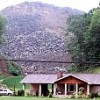
ENVIRONMENT-US: Advocates Fight Mountaintop Removal
Environmental groups across the southeast United States, from Georgia to the Appalachia region, are stepping up their opposition to a controversial but widespread practice by coal companies of removing the tops of mountains with explosives.ENVIRONMENT: Synergies in Fight Against Desertification , Climate Change
Climate change aggravates soil degradation, but sustainable use of land resources can, in turn, mitigate global warming, according to participants at the United Nations conference on desertification in the Argentine capital.POLITICS: China, Burma Bust Up Over Border Unrest
The border dispute between two close allies, China and Burma, has now been compounded by concerns over the junta’s future relations with the United States.
Q&A: Heavy Vehicle Market Taking Off in Africa
Russian president Dmitry Medvedev’s recent official visit to a handful of African countries has provided new impetus to Russian business’s interest in the region.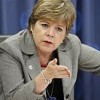
Q&A: “Latin America Faces a Tough Balancing Act”
Chile is leading the way towards the Millennium Development Goals (MDGs), while Honduras is seriously lagging behind, says Alicia Bárcena, executive secretary of the Economic Commission for Latin America and the Caribbean (ECLAC).POLITICS-US: Nukes Agency Pushes New Bomb Production
Despite statements by U.S. President Barack Obama that he wants to see the world reduce, and eventually eliminate nuclear weapons, the U.S. Department of Energy's National Nuclear Security Administration continues to push forward on a programme called Complex Modernisation, which would expand two existing nuclear plants to allow them to produce new plutonium pits and new bomb parts out of enriched uranium for use in a possible new generation of nuclear bombs.ENVIRONMENT: Could Food Shortages Bring Down Civilisation?
In early 2008, Saudi Arabia announced that, after being self-sufficient in wheat for over 20 years, the non-replenishable aquifer it had been pumping for irrigation was largely depleted.POLITICS: U.S. Story on Iran Nuke Facility Doesn’t Add Up
The story line that dominated media coverage of the second Iranian uranium enrichment facility last week was the official assertion that U.S. intelligence had caught Iran trying to conceal a "secret" nuclear facility.HONDURAS: Crackdown Prompts International Outcry
Honduras's de facto government under the leadership of Roberto Micheletti is coming under increasing international pressure to restore civil liberties, reopen closed television stations, and negotiate a solution to the coup crisis that was brought to a head by the clandestine return of Honduran President Manuel Zelaya, who has been taking refuge in the Brazilian embassy in Tegucigalpa for the past week.POLITICS: U.N. Chief Weighs in on Iran, Libya and Afghanistan
Addressing his monthly press conference Tuesday, Secretary-General Ban Ki-moon refused to back a Western endorsement of a premature election victory for Afghan President Hamid Karzai, implicitly criticised Libyan Leader Muammar el-Qaddafi for denigrating the U.N. charter, and faulted Iran for lack of transparency in its nuclear programme.EASTERN EUROPE: Fair Trade Takes Off
Fair trade is becoming popular in Central and Eastern Europe, as activist groups raise awareness of the region's responsibility towards the rest of the world, and open an increasing number of fair trade shops and cafes.
Q&A: 'Closer Now to a Nuke-Free World'
A world free of nuclear weapons is no longer utopia - it is a concrete possibility, says Daisaku Ikeda, president of the Buddhist association Soka Gokkai International (SGI).FINANCE: World Bank Head Acknowledges Shifting Global Order
The world economic crisis has called attention to shifting international power structures as emerging economies gain more influence and the failure of globalisation to assist the poorest countries becomes clear, said World Bank President Robert B. Zoellick in anticipation of the bank's annual meeting in Istanbul, Turkey next week.CARIBBEAN: British Jurist Rekindles Debate on Colonial-Era Court
Whether or not his words were meant to rekindle debate on the merits of a Caribbean court, the statement by British jurist Lord Phillips that "in an ideal world" the former Commonwealth countries would stop using the Privy Council and instead set up their own final courts of appeal has done just that.« Previous Page — Next Page »


The Week with IPS

NEXT STOP - SDGs
Tracking global progress towards a sustainable world
