
Saturday, September 19, 2026



News and Views from the Global South
IPS UN: Inside the Glasshouse

When the Glass House by the East River Exploded in Laughter….
Created in 1945 following the devastation caused by World War II, the United Nations was mandated with the task of maintaining international peace and security as one of its primary political missions. But the seriousness of its far-reaching mandate has been tempered by occasional moments of levity which have rocked the “glass house by the east river” with laughter -- as recounted in a newly-released book on the United Nations titled “No Comment –and Don’t Quote me on That”.
Q&A: Femicides, Domestic Violence and Online Violence Have Been Exacerbated
"The level of injustice in the world cannot go on like this…I am not pessimistic about the future," said Gladys Acosta, president of the CEDAW Committee, in an interview with IPS in the Peruvian capital.
A Nuclear-Weapons-Free-Zone in the Middle East— & the Elephant in the Room
Israel’s nuclear presence in the Middle East is best characterized as “the elephant in the room” -– an obvious fact intentionally ignored with deafening silence.
Global Arms Industry Thrives Amid Worldwide Pandemic Devastation
The 21-month long pandemic, which began with the outbreak of the deadly corona virus back in March 2020, ravaged hundreds and thousands of businesses and industries resulting either in widespread losses, closures or bankruptcies.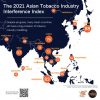
Big Tobacco Industry Rides COVID-19 Pandemic as Countries Grapple for a Response
Almost two years into the COVID-19 pandemic, many countries in the developing world continue to grapple with basic issues such as securing sufficient vaccines and providing essential medical care for their sick. Many economies are in recovery mode as governments scramble to resuscitate them with recovery packages and build back better plans.
Volunteerism: Central to the Creation of a New Social Contract
The International Volunteer Day, on December 5, is not just one of the many internationally observed days that the United Nations commemorates annually.
African Network Fosters Unity, Fights Gender Discrimination & Advances Sustainable Development
The widespread 21-month-old lockdown, triggered by the corona virus pandemic, had a destructive impact on the global economy, claimed over 5.2 million lives, destabilized governments and radically changed lifestyles worldwide.
Ethiopia’s Civil War Fueled by Weapons from UN’s Big Powers
In Hollywood movies, the legendary Wild West was routinely portrayed with gunslingers, lawmen and villains—resulting in the ultimate showdown between the “good guys and the bad guys”. Linda Thomson-Greenfield, US ambassador to the UN, told the Security Council early this month that the warring parties in the devastating 12-month-long civil war in Ethiopia involve the Ethiopian National Defense Forces, the Eritrean Defense Forces, the Amhara Special Forces, and the Tigrayan People’s Liberation Front.
Glossing Over in Glasgow – Some Thoughts on COP26
A week has gone by since COP 26 with 197 Parties ended in the Scottish city of Glasgow on extended time last Saturday. Climate change which covers wide array of issues affecting all living beings engaged the people around the world for COP 26 in a way never experienced since COP1 was held in Berlin in 1995.
Why Covid-19 Misinformation Works
At the United Nations General Assembly meeting in September, Brazilian President Jair Bolsonaro used his allotted time at the podium to recount his views on Covid-19. He extolled the virtues of treatments that have been rejected by scientists and proclaimed that he had benefitted from the anti-malarial drug hydroxychloroquine.
Growing Digital Divide Threatens Recovery from Covid-19
A growing digital divide is emerging as a major threat to a robust recovery from the Covid-19 pandemic, according to new research by the European Bank for Reconstruction and Development (EBRD).
Asian Staffers at UN Launch Network to Protect Rights & Fight Racism
The United Nations, which consists of 193 member states, has long been accused of discrimination against staffers who number over 315,000 and spread across 56 UN agencies and entities worldwide. But most of these are deeply rooted system-wide. A wide-ranging staff survey, both in New York and Geneva last year, revealed that discrimination was based either on race, religion, gender or nationality.
Glasgow Summit Ends Amidst Climate of Disappointment
Developing countries will surely remember the Glasgow climate summit, the most important since 2015, as a fiasco that left them as an afterthought. That was the prevailing sentiment among delegates from the developing South during the closing ceremony on the night of Saturday Nov. 13, one day after the scheduled end of the conference.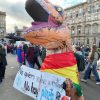
Social Movement Voices Fall on Deaf Ears of Governments at COP26
One element that runs through all social movement climate summits is their rejection of the official meeting of the United Nations Framework Convention on Climate Change (UNFCCC) and the low ambition of its outcomes - and the treaty's 26th Conference of the Parties (COP26) was no exception.
Indigenous Peoples Want to Move Towards Clean Energy Sovereignty
In the community of Bella Bella on Turtle Island in the western Canadian province of British Columbia, the indigenous Heiltsuk people capture heat from the air through devices in 40 percent of their homes, in a plan aimed at sustainable energy sovereignty.
UN’s “Indispensable Partners” Barred from Entering Secretariat Building
The United Nations has come under heavy fire for continuing a 20-month-long ban on non-governmental organizations (NGOs)– even though the Secretariat is expected to return to near-normal by November 15 after a pandemic lockdown going back to March 2020.
In Glasgow, Indigenous People Pound the Table for Their Rights
"For my people, the effects of climate change are an everyday reality. The rainy season is shorter and when it rains, there are floods. And we've suffered droughts." said Hindou Oumarou Ibrahim, a member of the Wodaabe or Mbororo pastoral people of Chad.
After a 20-Month Lockdown, UN Plans to Return to Near-Normal by Mid-November
The United Nations, which suffered a pandemic lockdown over the last 20 months-- with most staffers tele-working from their homes-- is expected to return to near-normal, come November 15.
COP26: Climate Emergency Includes Threat of ‘Nuclear Winter’
When world leaders gather in Scotland next week for the COP26 climate change conference, activists will be pushing for drastic action to end the world’s catastrophic reliance on fossil fuels.
COP26: The Roadmap Plotting the Way to a Historic Meeting – Or Not
The climate summit in Glasgow, Scotland, the most important since 2015, may go down in history as a milestone or as another exercise in frustration, depending on whether or not it resolves the thorny pending issues standing in the way of curbing global warming.
Big Brother is Watching You– as Electronic Surveillance Dominates Lives
The British novelist George Orwell’s “1984” characterized a dystopian society where people were restricted from independent thought and were victims of constant surveillance. Published in 1949, it was a prophecy of the future with the underlying theme: “Big Brother is Watching You”« Previous Page — Next Page »


It was dubbed "The Glass House" by U.S. ambassador James Wadsworth in 1966. Half a century later, the United Nations has gradually expanded its role as agent of peace and protector of the world's vulnerable populations, while simultaneously facing internal pressures to become more inclusive, increase transparency and maintain legitimacy in the post-Cold War political and economic order. Highlighting the local impacts of global policies on economic development, environment, health and human rights, IPS's coverage goes beyond the edicts of the Security Council to illuminate the power struggles, successes and shortcomings of the 193-member institution as it grapples with crises like climate change, armed conflict, poverty and HIV/AIDS.

The Week with IPS
