
Thursday, September 24, 2026



News and Views from the Global South
IPS UN: Inside the Glasshouse

After a 20-Month Lockdown, UN Plans to Return to Near-Normal by Mid-November
The United Nations, which suffered a pandemic lockdown over the last 20 months-- with most staffers tele-working from their homes-- is expected to return to near-normal, come November 15.
COP26: Climate Emergency Includes Threat of ‘Nuclear Winter’
When world leaders gather in Scotland next week for the COP26 climate change conference, activists will be pushing for drastic action to end the world’s catastrophic reliance on fossil fuels.
COP26: The Roadmap Plotting the Way to a Historic Meeting – Or Not
The climate summit in Glasgow, Scotland, the most important since 2015, may go down in history as a milestone or as another exercise in frustration, depending on whether or not it resolves the thorny pending issues standing in the way of curbing global warming.
Big Brother is Watching You– as Electronic Surveillance Dominates Lives
The British novelist George Orwell’s “1984” characterized a dystopian society where people were restricted from independent thought and were victims of constant surveillance. Published in 1949, it was a prophecy of the future with the underlying theme: “Big Brother is Watching You”
Forests & Climate: We Need to do Much, Much More
Governments agree that saving the climate means saving forests – but ambition and action fall short of what’s required. First the good news: one of the forest goals agreed by governments, businesses and civil society organizations has been met.
Guess Who’s Behind Paralysis on COVID19 in the UN Committee on World Food Security
‘COVID 19 has multiplied hunger and malnutrition challenges. We need transformative action!’ The first speaker at the UN Committee on World Food Security’s (CFS) 49th Plenary Session, the Secretary-General of the United Nations, turned the spotlight on the disastrous impacts of the pandemic that have afflicted communities around the world for close to two years.
A School & Cultural Institution Aims to Level the Playing Field for Women & Girls in Rural Uganda
As we honored women and girls last week, on the annual International Day of Rural Women on October 15, we want to highlight how a community is coming together to change the lives and livelihoods of rural women and girls in Uganda.
China and the UN at 50- What We Can Achieve Together
China was one of the architects of the United Nations and was the first signatory of the UN Charter in San Francisco in 1945. But it was only in October 1971, with the Chinese delegation led by Mr. Qiao Guanhua, that China’s representation at the UN resumed. Since that time, the UN has had the great privilege of witnessing and supporting China in achieving one of the greatest periods of socio-economic progress in world history.
UN Chief, in an Unprecedented War of Words, Battles it out with a Member State
A growing diplomatic battle is being played out at the United Nations between Secretary-General Antonio Guterres and one of the world body’s member states: the politically-troubled Ethiopia which is desperately in need of international humanitarian assistance.
Build Forward Fairer in the Wake of the COVID-19 Pandemic
Cities have been epicentres of the COVID-19 pandemic since 2020. City authorities have been the frontlines responders—from running testing stations, to managing food distribution, to disposing of corpses. Yet they are often under-resourced, and their critical role in policy implementation is often overlooked.
Will Taliban Honour UN Treaties Signed by Afghanistan Over the Last 20 Years?
When the Islamic Emirate of Afghanistan receives the political blessings of the 193-member General Assembly-- and eventually inherits its seat at the United Nations-- it will have to ultimately prove its credentials as a member of good standing by adhering to the UN Charter and the Universal Declaration of Human Rights (UDHR) – as all member states do.
Stop New Washington Putsch
As finance ministers and central bank governors gather next week for the IMF-World Bank annual meetings in the US capital, the first shots of a new putsch against multilateralism have been fired. The target: Kristalina Georgieva, Fund Managing Director (MD) since 2019.
Biden’s Nuclear Posture Review Must Reduce the Role of Nuclear Weapons
Most successful U.S. presidents have actively led efforts to advance arms control agreements and reduce the risk of nuclear war. Although much has been achieved over the years, there are still 14,000 nuclear weapons and nine nuclear-armed states; progress on disarmament has stalled; and tensions between the United States and its main nuclear adversaries—Russia and China—are rising.
Chakravarthi Raghavan: A Relentless Advocate of the Global South Passes Away
Chakravarthi Raghavan, who passed away early this week, was a prolific writer and a distinguished journalist who covered the United Nations both in New York and Geneva for several decades. A proponent of development journalism, Raghavan’s voluminous reporting and writings were sharply focused on the global South. A longstanding reporter for Inter Press Service (IPS) news agency in Geneva, he was Editor of Third World Economics and representative of the Third World Network (TWN) in Geneva.
When Taliban Ministers Avoided Eye Contact With Senior Female UN Officials
When the Taliban ruled Afghanistan during 1996-2001, the United Nations was engaged in a losing battle for women’s rights. And that battle was occasionally led by two senior female UN officials, one of them working for a UN agency providing humanitarian assistance inside unfriendly Taliban territory.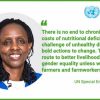
How Transforming Food Systems Could Unlock a $12 Trillion Global Windfall
With the world still counting the social and economic costs of the Covid-19 pandemic, amid a fresh “code red” on the climate crisis, food may not seem like the most pressing threat to humanity.
For Healthier Food Systems: Turn the Tide Against Ultra-Processed Products
COVID-19 has exposed serious vulnerabilities in how people around the world access and consume food. One of the more alarming trends is the significant increase in the consumption of foods that may be tasty and convenient, but harm our heath. These ultra-processed products include sugary drinks, snack foods, frozen meals, packaged breads and frozen desserts.
Fundamental Changes Needed at UN Summit to Tackle Global Food Insecurity
COVID-19 has exposed numerous fractures in global food systems that leave millions at risk of food insecurity. Like the numerous political failures in dealing with COVID, the repercussions of food system failings are experienced by rich and poor countries alike, with the poorest and most marginalised paying the greatest price.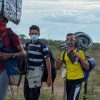
Venezuela’s Glimmer of Hope
This is the third serious attempt to inject some momentum in the negotiations between the Venezuelan government and opposition. Negotiations have been taking place in Mexico since last Friday, with Norway acting as mediator.
UN Staffers Under Pandemic Restrictions, but Diplomats to Wine & Dine Unrestrained
When hundreds of delegates and diplomats arrive in New York city next week for the new 76th session of the UN General Assembly, they will be pinned down with pandemic restrictions in a city where Delta variant infections have been skyrocketing.
As War Keeps Poisoning Humanity, Organizing Continues to Be the Antidote
Last weekend, U.S. corporate media continued a 20-year repetition compulsion to evade the central role of the USA in causing vast carnage and misery due to the so-called War on Terror. But millions of Americans fervently oppose the military-industrial complex and its extremely immoral nonstop warfare.« Previous Page — Next Page »


It was dubbed "The Glass House" by U.S. ambassador James Wadsworth in 1966. Half a century later, the United Nations has gradually expanded its role as agent of peace and protector of the world's vulnerable populations, while simultaneously facing internal pressures to become more inclusive, increase transparency and maintain legitimacy in the post-Cold War political and economic order. Highlighting the local impacts of global policies on economic development, environment, health and human rights, IPS's coverage goes beyond the edicts of the Security Council to illuminate the power struggles, successes and shortcomings of the 193-member institution as it grapples with crises like climate change, armed conflict, poverty and HIV/AIDS.

The Week with IPS
