Languages
Sunday, November 15, 2026



News and Views from the Global South
Headlines

Peace is the North Star During and the Post COVID-19 Pandemic
Amid various global conflicts in the 1980s and 1990s, the International Day of Peace (IDOP) was established to commemorate the strengthening of the ideals of peace globally. Today, peace is not just the absence of conflict, but a key prerequisite for development. It is in recognition of the crucial linkages between peace, respect for human rights and sustainable development that more than 36 indicators for peace were included across the Sustainable Development Goals (SDGs).
Ruth Bader Ginsburg Forged a New Place for Women in the Law and Society
Justice Ruth Bader Ginsburg’s death has generated an outpouring of grief around the globe. Part of this grief reflects her unparalleled status as a feminist icon and pioneer for women in the legal profession and beyond.
Helping Make Education a Reality for the 75 million Children in Conflict Zones
Aryan is a 15-year-old girl from Afghanistan who lives with her family in a shelter in an undisclosed country in Europe. She doesn’t go to school. But she is hugely creative. And it shows in how she occupies her time during the day — writing poetry and making bracelets and earrings that she hopes to sell online one day.
After 75 Years, UN Claims 50:50 Gender Parity, But Falls Short of its Ultimate Goals
When the United Nations was dominated by men, holding some of the highest positions in the staff hierarchy, women staffers were overwhelmingly administrative secretaries seen pounding on their Remington typewriters seated outside their bosses’ enclosed offices.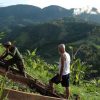
Philanthropy’s Role in the Missing Global Architecture
The promise of the United Nations, as articulated 75 years ago, is a global system capable of managing global issues. As UN leadership knows, that promise is needed now more than ever in a multipolar world with increasingly complex challenges. This mission must be fulfilled, but is not possible without the collaboration of broad-based coalitions made up of innovative thinkers from all sectors of society working together.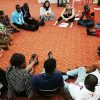
The Culture of Peace: Change our World for the Better in the Age of COVID 19
Last year, we paid tribute to the 20th Anniversary of the 1999 Declaration of the Program of Action on a Culture of Peace. Today, we need to ask ourselves if we had genuinely carried out our moral responsibilities to transition from a culture of hatred and violence to a culture of tolerance and peace.
A World Without Hunger Is Also About Protecting Food
Concern about food loss and waste has become an increasingly important focus of attention when discussing ways to eliminate hunger which, according to the latest FAO report, already exceeds 690 million people.
COVID-19 – Possible Human Rights Crisis in Asia as Disparities Expected to Widen
The negative impact of the coronavirus pandemic is likely to be felt long after the COVID-19 health risk is resolved, a high-level meeting under the auspices of the Asian Population and Development Association (APDA), heard.
Accessibility of Vaccines & Commitment to Ceasefire – Priority Focuses for 75th UNGA
Key focuses of the upcoming 75th session of the United Nations General Assembly (UNGA) High Level Week will be the accessibility of vaccines and a renewed plea for a global ceasefire. “I will make a strong appeal to the international community to mobilise all efforts for the global ceasefire to become a reality by the end of the year,” U.N. Secretary-General António Guterres said on Wednesday.
Supporting Migrants and Remittances as COVID-19 Rages On
Just as COVID-19 has disproportionately impacted some communities more than others, globally, the virus has had an oversized negative impact on migrant workers.
Leveraging Research for Solution-driven Policymaking in the Era of COVID-19
The United Nations has tasked the Canadian Institutes of Health Research Institute of Population and Public Health (CIHR-IPPH) to lead the research roadmap to identify priorities that will support an equitable global socio-economic recovery from COVID-19 within the broader framework of the Sustainable Development Goals (SDGs). As the world grapples with the impacts of COVID-19, identifying the research agenda and partnering with academic institutions and think tanks have become more essential than ever before.
Impact of COVID-19 on Women and Children
The impacts of crises are never gender-neutral and COVID-19 is no exception. The pandemic has resulted in increased rates of violence against women and has exacerbated challenges in accessing justice. Women are losing their livelihoods faster than men.
At 75, is the UN Still Fit for Purpose?
This September, New Yorkers will be a lot less annoyed. They’ve been spared the annual disruptions from road closures, sirens and movement of security forces accompanying world leaders who attend the UN General Assembly. By largely moving online due to COVID-19, the world’s most significant gathering will be missing some of its excitement even as the UN celebrates an important 75th anniversary in 2020.
State-Owned Companies Are Key to Climate Success in Developing Countries, but Are Often Overlooked in the International Dialogue
Later this month, government officials and climate stakeholders will once again converge on New York City (this time virtually) for Climate Week and the United Nations meetings. And while there will be much discussion about the important role that actors such as private businesses, civil society and cities will need to play in the climate change effort, there will once again be relatively little discussion about one key cohort: government-owned companies.
Syria’s Children Remain at Immense Threat of Rape and Recruitment by Army: Report
Children in Syria are facing the brutal brunt of the ongoing civil war in the country, now rendered further paralysed owing to the COVID-19 pandemic and United States sanctions. At the Sept. 15 launch of the report investigating human rights violations in Syria by the Commission of Inquiry on Syria, experts warned that in addition to the already ongoing conflict, “newer forms of violence” was on the rise.
Protecting Nature is Entirely Within Humanity’s Reach: The Work Must Start Now
We have known for a long time that biodiversity, and the services it provides, have been in decline. It is on this background that ten years ago, the international community adopted the Strategic Plan for Biodiversity 2011-2020.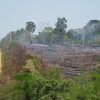
Fight Fire with Trade: How Europe Can Help Save the Amazon
The EU is thinking about agreeing to a €4 billion trade deal with Brazil, Argentina, Uruguay and Paraguay (known as the Mercosur bloc). In our new academic research, myself and 21 international co-authors looked at the details of this deal so you don’t have to. What we found wasn’t pretty.
COVID-19 Worsens Mozambique’s Hunger
Like many Mozambicans in the agricultural sector, 39-year-old Fatima Matavele, a commercial farmer in the district of Chokwe, some 213 kilometres north of the capital, Maputo, has had a tough year. Although the last few years have been hard, 2020 has proven to be the most difficult of all.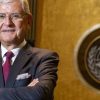
INTERVIEW: the top diplomat shepherding the General Assembly through its 75th year
The Turkish diplomat elected to be the president of the 75th session of the UN General Assembly, Volkan Bozkir, is taking on the role as the Organization grapples with an unprecedented pandemic, and questions surrounding the future direction it should take.
The Exploitative System that Traps Nigerian Women as Slaves in Lebanon
“I need help, right now I cannot walk properly,” trafficking victim Nkiru Obasi pleaded from her hospital bed in a video she posted online. The young Nigerian woman had been injured in the Aug. 4 Beirut blast, which ripped through the Lebanese capital, killing 190 people injuring a further 6,500 and damaging 40 percent of the city. However, it’s not her injuries keeping her in Lebanon but a restrictive and abusive system of migrant laws.
Nepal’s Glacial Lakes in Danger of Bursting
A new report out this week warns that hundreds of glacial lakes in the Himalaya are in danger of bursting because global heating is melting the ice on the world’s highest mountains. However, on only two of them have there been mitigation measures to reduce water levels.« Previous Page — Next Page »


