Languages
Saturday, November 21, 2026



News and Views from the Global South
Headlines

Feeding Hungry Children: How a School Does It Against the Odds
I am standing in the middle of a public elementary school in a rural municipality in the province of Cavite. The playground is without trees and shade. In the searing heat of a late morning sun, the cement building bakes. The steel handrails ribboning the walkways are too hot to hold. The area is nice, though. There are mountain views, fancy cafés and gourmet dining nearby. But the schoolhouse is on the wrong side of the good life. No one here can afford anything from Starbucks. I am waiting for lunchtime recess. For many of the kids, this will be the best part of their day. It will be the only time they will get to eat.
Of Boko Haram and Hindutva
Prime minister Theresa May could have easily ignored, without anyone noticing, the vengeful white Briton who drove his truck into a crowd of Muslim worshippers, mowing down a few and killing one. After all, England had not yet fully recovered from the terror carnage in Manchester and London inflicted by home-grown Muslims.
Are We Becoming Selective Activists?
It is sickening how rape is becoming a regular occurrence in our society and there is a report of an incident of sexual violence every day from various parts of the country, each more vicious and more heinous than the one before. The victim profile is so diverse indicating that no girl, no woman is safe. When I started writing this article, the number of rape cases reported in 2017 was 93. By the time this article was ready for publication, that figure had risen to 138. This was within a matter of 4 weeks. I cannot help asking myself, what is happening? Why the rise in sexual violence? Why have the men in our country become so cruel?
Is Religion the New Colonial Frontier in International Development?
A decade ago, it was difficult to get Western policy makers in governments to be interested in the role of religious organizations in human development. The secular mind-set was such that religion was perceived, at best, as a private affair. At worst, religion was deemed the cause of harmful social practices, an obstacle to the “sacred” nature of universal human rights, and/or the root cause of terrorism. In short, religion belonged in the ‘basket of deplorables’.
Funding Climate Resilience Benefits All Nations – Yes, the U.S. Too
A leading climate change mitigation and adaptation activist and former climate negotiator in the Caribbean says that the United States could protect its economic and political interest by helping the region to go green.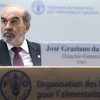
Progress on World Hunger Has Reversed
World hunger has increased, reversing years of progress, said a UN specialised agency. During its biennial conference held in Rome, Italy from 3-8 July, the Food and Agriculture Organisation (FAO) noted that the world is facing it’s worst food crisis since World War II.
Is the United States Preparing for a War in Syria?
Although US policies during the past few months have been quite puzzling and unpredictable, the events of the past few days have been truly bewildering and alarming. On Monday 26th June, the White House released a statement saying that the United States had “identified potential preparations for another chemical attack by the Assad regime…” It went on to say: “If, however, Mr. Assad conducts another mass murder attack using chemical weapons, he and his military will pay a heavy price.”
Sheikh Mohammed Bin Rashid Al Maktoum praised for initiative to help Cornish community
The decision of the Vice President and Prime Minister of the UAE and the Ruler of Dubai, His Highness Sheikh Mohammed Bin Rashid Al Maktoum, to step in and help the Cornish village of Godolphin Cross in Britain to raise funds for the purchase of a chapel has received widespread acclaim.
‘Address African Rural Youth Unemployment Now or They Will Migrate’
 In 2014 alone, about 11 million young Africans entered the labour market. But many see few opportunities in the agriculture sector and are constrained by a lack of skills, low wages, and limited access to land and financial services. Combined, this makes them more prone to migrate from rural areas.

Governments Support Trump’s Aim to Block Central American Migrants
Trying to make it into the United States as an undocumented migrant is not such an attractive option anymore for Moris Peña, a Salvadoran who was deported from that country in 2014.
The Rising Stakes for Ocean Governance
World oceans play the crucial role of a life support in poverty alleviation, food security, human health, and curbing climate change. But our oceans are increasingly being threatened and degraded by human-induced climate change, natural disasters, depletion of fisheries, loss of biodiversity, etc.
Top 300 Cooperatives Generate 2.5 Trillion Dollars in Annual Turnover
The top 300 cooperatives alone generate 2.5 trillion dollars in annual turnover, more than the Gross Domestic Product (GDP) of France, according to the UN Department of Economic and Social Affairs (UNDESA).
Time Stands Still for Nepal’s Conflict Victims
“Reconstruction and reconciliation require finances and physical structure, but the families of the victims of the conflict first and foremost need their integrity protected. Physical and financial compensation mean little without justice,” wrote Suman Adhikari nearly 11 years ago, during a ceasefire in Nepal’s Maoist insurgency.
The National Relaunches With Enhanced Print and Digital Platforms
International Media Investments (IMI) today announced the relaunch of The National, Abu Dhabi's first English language newspaper. The new ‘The National’ features a complete enhancement of both its print and digital platforms with a focus on digital including daily video content podcasts with unmissable analysis, 360 degree images bringing the reader closer to the story, interactive graphics and animation as well as live and interactive video interviews and news on Instagram, Facebook, Twitter, Snapchat and Youtube.
The Greater Caribbean Raises Funds to Protect its Sandy Coasts
Almost no Caribbean beach escapes erosion, a problem that scientific sources describe as extensive and irreversible in these ecosystems of high economic interest, that work as protective barriers for life inland.
Caribbean Seeks to Climate-Proof Tourism Industry
The tourism industry is the key economic driver and largest provider of jobs in the Caribbean after the public sector. Caribbean tourism broke new ground in 2016, surpassing 29 million arrivals for the first time and once again growing faster than the global average.
Ending Child Marriage Could Add Trillions to World Economy
The benefits of ending child marriage are many—boosting a young girl’s morale and increasing her chances of education and work, and by that virtue, curbing high population rates in developing economies and boosting growth.
Tokyo Workshops: Are Media and the Business Community Doing Enough on Sustainable Development ?
Why and how should the media report on the Sustainable Development Goals (SDGs) in an engaging way? Can the SDGs deliver global development? And what are the role and challenges of business leadership in advancing these goals?
Southeast Asia: From Miracle To Debacle
The World Bank and other influential international financial institutions and development agencies have been touting Southeast Asian (SEA) newly industrializing countries as models for emulation, especially by African developing countries seeking to accelerate their development transformations. But these recommendations are usually based on misleading analysis of their rapid growth and structural transformation.
Nikki Haley Grilled in US Congress on America’s Role in the UN and the World
Five months into her stint as United States ambassador to the United Nations, Nikki Haley faced two days of often-sharp questioning on June 27 and 28 by influential panels of the United States Congress. They demanded justification for the Trump administration’s decision to slash funding to the United Nations, particularly cuts to the UN Population Fund, Unicef, UN Women and the World Food Program.
Civilian Casualties Rise in Raqqa as Fighting Intensifies
As US-backed Syrian rebels plow ahead in the fight to take back Raqqa from the Islamic State in Iraq and the Levant (ISIL) in Syria, the stake of civilian lives, who number as many as 100,000 in the city, has raised concerns among top UN officials.« Previous Page — Next Page »


