Languages
Monday, November 23, 2026



News and Views from the Global South
Headlines

Making Sustainability Part of the Corporate DNA
Companies, governments and non-profit actors agree that economic growth and sustainable development have to go hand in hand to shape our increasingly globalised world in a fair way.
Brexit and EUexit
The Europeans went to bed Thursday night, with exit polls giving a comfortable margin of victory for those who wanted to Remain. The following morning they awakened to find that the real result was the opposite. Specialists in polling say that this happens when electors do not feel comfortable to say how they will rally voters because they are not comfortable, on a rational level, with what they will do. In other words, voters act because of their guts, not because of their brain.
Can Better Technology Lure Asia’s Youth Back to Farming?
Farming and agriculture may not seem cool to young people, but if they can learn the thrill of nurturing plants to produce food, and are provided with their favorite apps and communications software on agriculture, food insecurity will not be an issue, food and agriculture experts said during the Asian Development Bank (ADB)’s Food Security Forum from June 22 to 24 at the ADB headquarters here.
Least Developed Countries’ Vulnerabilities Make Graduation Difficult
Last month, over two thousand high-level participants from across the world met in Antalya, Turkey for the Midterm Review of the Istanbul Programme of Action, an action plan used to guide sustainable economic development efforts for Least Developed Countries for the 2011 to 2020 period. The main goal was to understand the lessons learnt by the world’s Least Developed Countries (LDCs) over the past five years and apply the knowledge moving forward.
To Be Fixed, Europe Needs a Wrecking Ball
One-time shot exclusive for The Manila Times WASHINGTON: Imagine a young Margaret Thatcher, a politician who deeply mistrusts the political establishment and identifies on a gut level with the frustrations of the middle class. That’s shorthand for what Britain will need as it picks up the pieces after Thursday’s “Brexit” referendum.
Cotton Crisis
Pakistan’s economy is in grave trouble. According to the Pakistan Economic Survey 2015-16, it failed to meet the growth target of 5.5pc in FY2016. GDP grew by 4.7 pc. This was mainly due to the ‘major setback’ (to use the finance minister’s words) in agriculture.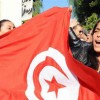
Islamists and Secularists Adjust to Work Together
It is encouraging to watch how Rachid Ghannouchi and Nahdha, the largest and most popular Islamic political party in Tunisia which is now widely expected to come to power again in the next election, have been transforming over time. Recently Ghannouchi astonished the world by declaring that “We will exit political Islam”, meaning that the country would be working to separate religious work from politics. Coming from one who once advocated Sharia law in governance, this change is amazing. Ghannouchi's leadership of remaining flexible, without compromising fundamental values and principles of Islam, has played a major role in helping Tunisia to become a vibrant democracy today, when other countries in the region have failed.Women’s Health Takes Center Stage at UN Population Awards
Social Scientist, Carmen Barroso and Polish Organisation, Childbirth in Dignity received the United Nations Population Awards here Thursday for their outstanding work in population, improving individuals’ health and welfare, and specifically for their decades-long leadership in women's rights.
Disagreement Continues Over Global Drug Policy
A new report has found that global drug use largely remains the same, but perspectives on how to address the issue still vary drastically.
Ethiopia-Eritrea: The Cry of the Imburi
The 12 June 2016 exchange of artillery fire along the heavily militarized frontier between Ethiopia and Eritrea could be just one of the periodic skirmishes between the two States. However, it could be the first signs of a flare up of violence. There have been calls from the United Nations and African Union officials for “restraint” but as yet no steps for real conflict resolution.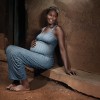
Let 5-year-old Sherry Tell You How Handwashing with Soap Saves Lives
For twenty-six year old Eunice from Migori County,Kenya, celebrating her daughter Sherry’s fifth birthday is a milestone that few of her friends have enjoyed. As with many areas of Africa, a child born in Migori is seven times more likely to die before the age of five, compared to a child in Europe.
Bringing Back Our Girls Is Not The End of The Story
"Wherever war reaches there is rape, and wherever rape is there is trauma, pain and terror” Zainab Bangura, Special Representative of the Secretary General on Sexual Violence in Conflict said here last week.
Political Crisis Looms in Nicaragua in Run-Up to Elections
The seventh consecutive nomination of Daniel Ortega as the governing party’s candidate to the presidency in Nicaragua, and the withdrawal from the race of a large part of the opposition, alleging lack of guarantees for genuine elections, has brought about the country’s worst political crisis since the end of the civil war in 1990.Brits Shouldn’t ‘Brexit’
Today the British will vote in their “Brexit” referendum whether to stay in or exit from the European Union. The United Kingdom applied for the first time to join what was then called the European Economic Community, in 1961. The Brit movers for membership were afraid their country would get politically isolated from Western Europe. At that time the USA’s and its allies’ Cold War with the Soviet Union was still ablaze.
Lords of the Campus
Thomas Pogge is a professor of philosophy at Yale University, one of the most eminent educational institutions in the world. From there he directs the Global Justice Centre, which advocates, among other issues, the premise that the wealthy countries of the world have a moral and ethical responsibility towards providing aid to poorer nations.
Collective Indifference or Silent Acceptance?
When blogger Rajib Haider was killed in 2013, the outcry was tremendous. But, over the next three years, at least 38 more were added to the list of those murdered, which includes writers, publisher, foreigners, religious minorities and LGBT rights activists. There have been reports about alleged IS involvement, and last week, the security forces launched a drive that resulted in the arrest of 194 'militants'. But the collective outrage over people being murdered seems to have mellowed.
UN Staff Unions Demand Stronger Action on Sexual Abuse
The United Nations claims it is doing its best to curb widespread sexual abuses in its peacekeeping operations overseas – from Haiti all the way to the Central African Republic.Rethinking Fiscal Policy for Global Recovery
Global economic recovery is being held hostage by the ideological dogma of the last three and a half decades. After long contributing to neo-liberal conventional wisdom, in its October 2015 World Economic Outlook, the IMF identified the vicious circle undermining global recovery and growth. Low aggregate demand is discouraging investment; slower expected potential growth itself dampens aggregate demand, further limiting investment.
Worldwide Displacement At Levels Never Seen Before
Displacement has increased to unprecedented levels due to war and persecution, the UN Refugee Agency (UNHCR) has found.
Xenophobic Rhetoric, Now Socially and Politically ‘Acceptable’ ?
“Xenophobic and racist rhetoric seems not only to be on the rise, but also to be becoming more socially and politically acceptable.” The warning has been heralded by the authoritative voice of Mogens Lykketoft, current president of the United Nations General Assembly, who on World Refugee Day on June 20, reacted to the just announced new record number of people displaced from their homes due to conflict and persecution.
African Fisheries Plundered by Foreign Fleets
In 2011, Dyhia Belhabib was a volunteer in the Fisheries Centre at the University of British Columbia in Vancouver when she was asked to participate in the Sea Around Us’s project to determine how much fish had been taken out of the world’s oceans since 1950 in order to better avoid depleting the remaining populations of fish.« Previous Page — Next Page »


