Languages
Sunday, October 4, 2026



News and Views from the Global South
Headlines

UN Security Council Confronts South Sudan’s ‘Compounding Crises’
The UN Security Council convened today (August 18) to discuss South Sudan and the "interlinked challenges of climate change and conflict" affecting the region.
Africa’s Moment: From Addis to the World, Food Systems Must Change Now
The global food system is under pressure from every direction – climate, conflict, inequality, and economic instability. But in Addis Ababa this July, something shifted. At the UN Food Systems Summit +4 Stocktake (UNFSS+4), over 3,500 people from 150 countries came together to confront the lack of progress and push forward solutions that can no longer wait.
Sexual Health Rights: Contradictions in East African Laws, Policies
Sarah Namukisa nearly missed her final year exams earlier this year. She was subjected to a mandatory pregnancy test—the 25-year-old student at the Medical Laboratory Training School in Jinja was then expelled because she was pregnant.
Will the US Blacklist Bar Political Leaders & Delegates from UN’s 80th Anniversary Summit?
When the 193-member General Assembly commemorates the UN’s 80th anniversary during a high-level meeting in mid-September, how many political leaders and delegates will be barred from entering the United States --despite the 1947 US-UN Host Country Agreement?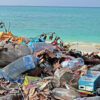
Plastics Treaty Talks End in ‘Abject Failure’ as US, Other Big Oil Allies Sabotage Progress
Negotiators in Geneva adjourned what was expected to be the final round of plastics treaty negotiations on Friday without reaching an agreement, a failure that environmentalists blamed on the Trump-led United States, Saudi Arabia, and other powerful nations that opposed any effort to curb plastic production—the primary driver of a worsening global pollution crisis.
Visualizing a Sustainable Future: The Intersection of Art and Climate Justice
In the 1900s, global discussions around climate change and fossil fuel usage reached new heights, leading to the emergence of climate change art. Since then, it has remained a key theme in contemporary art, with artists and corporations alike continuing to push messages of climate reform to instill a sense of urgency, fear, and shared responsibility in viewers.
Criminalising Animal Compassion? A Courtroom Drama with Real-World Consequences
During a suo moto hearing, a Supreme Court (SC) of India judge startled the Solicitor General and Amicus Curiae with a line from The Good, the Bad and the Ugly (1966): "When you have to shoot, shoot. Don't talk." For animal welfare advocates, it felt like a warning shot—not at criminals, but at India's street dogs.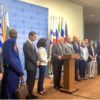
World Leaders Take a Stand as Outrage Against Israel Increases
The world is becoming increasingly outraged at Israel for its actions in the ongoing war against Hamas, particularly amid the recent killings of Palestinian journalists and Israel’s announcement of its plan to seize complete military control of the Gaza Strip.
The Hidden Backbone of Maternal Health: Asia’s Midwifery Gap
Asia-Pacific’s midwives are a healthcare lifeline capable of delivering nearly 90 percent of essential maternal and newborn services. Yet the region grapples with severe shortages, underinvestment, and systemic neglect.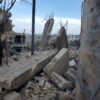
Southern Voices: Grief, Resilience, and Daily Life in Jnoub
"Special, targeted operations in southern Lebanon," a phrase that has echoed repeatedly over the past two years in Israeli Defence Force (IDF) statements. But behind these clinical military terms lies a human cost that statistics cannot capture.
Peacebuilding: The Missing Peace in COP30 Climate Ambition
Peacebuilding, conflict prevention, and crime prevention are no longer niche security concerns—they are global imperatives for sustainable climate action. From the migration crisis in Venezuela to the deforestation-driven conflicts in the Amazon, to organised crime in Central America, the ripple effects of instability and environmental degradation are felt far beyond national borders. In 2025, nearly 80% of countries experiencing risks to peace remain off-track to meet the Sustainable Development Goals (SDGs). Addressing these challenges isn’t just about safeguarding peace, stability and development. It’s also about ensuring sustainable climate action.
‘Life in Gaza’s Shelters Is Marked by Deprivation – but Also by the Endurance of Human Dignity’
CIVICUS speaks with a West Bank-based Palestinian activist about her family members currently enduring the war in Gaza. She has asked to remain anonymous for security reasons.
The Death of EU Values in Gaza
The EU likes to think of itself as a normative power — a community of values, committed to upholding international law, promoting peace, protecting civilians and building a rules-based global order. These are not just lofty ideals; they are enshrined in EU treaties, declarations and Council conclusions.
Four Years Later, Still No Clarity: WHO Report Highlights Gaps in Global Cooperation
More than four years since Covid-19 upended the world, the question of how it began remains unanswered. Did SARS-CoV-2 originate from animals to humans naturally, or did it accidentally escape from a laboratory? The World Health Organization’s latest report offers little new clarity and raises serious concerns about international cooperation and scientific transparency.
Fiji’s Truth and Reconciliation Commission Aims To Restore Trust and Peace After Decades of Political Crises
Fiji, a nation located west of Tonga in the central Pacific, is renowned for its natural beauty and beach resorts. But for 38 years it has endured a political rollercoaster of instability with four armed coups that overturned democratically elected governments and eroded human rights.
How the UN Can Prevent AI from Automating Discrimination
Artificial Intelligence (AI) is reshaping the world at a speed we've never seen before. From helping doctors detect diseases faster to customizing education for every student, AI holds the promise of solving many real-world problems. But along with its benefits, AI carries a serious risk: discrimination.
Bending the Curve: Overhaul Global Food Systems to Avert Worsening Land Crisis
Current rates of land degradation pose a major environmental and socioeconomic threat, driving climate change, biodiversity loss, and social crises. Food production to feed more than 8 billion people is the dominant land use on Earth. Yet, this industrial-scale enterprise comes with a heavy environmental toll.
From the Margins to the Courts: St Lucia Joins Caribbean Fight to Dismantle Anti-LGBTQI+ Colonial Laws
When Kenita Placide co-founded United and Strong, St Lucia’s first LGBTQI+ organisation in 2001, death threats were routine. Over the years, several friends were murdered for being gay. But 24 years on, Kenita’s Caribbean island nation has become the latest to overturn a colonial legacy that criminalised LGBTQI+ people.
Four Ways Asia Can Strengthen Regional Health Security Before the Next Pandemic
In an interconnected world when infections can circle the globe in hours, cooperation in preparing for pandemics is essential. The COVID-19 pandemic highlighted just how vulnerable countries are when surveillance is fragmented, laboratory networks are underfunded and underequipped, and vaccines are not dispersed equitably.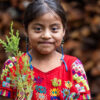
Bridging the Digital Divide: How AI Risks Marginalizing Indigenous Peoples
Although the advancement of artificial intelligence (AI) yields numerous opportunities for progress—such as improved efficiency, enhanced decision-making, and innovative tools for climate reform—it also poses new risks for Indigenous peoples. With AI rapidly transforming the world, it is imperative that there are ethical and equitable frameworks that prioritize inclusivity and work to narrow the gaps in the digital divide.
Women in Sudan are Starving Faster than Men; Female-Headed Households Suffer
The food crisis in Sudan is starving more day by day, yet it is affecting women and girls at double the rate compared to men in the same areas. New findings from UN-Women reveal that female-headed households (FHHs) are three times more likely to be food insecure than ones led by men.« Previous Page — Next Page »


