Languages
Wednesday, November 25, 2026



News and Views from the Global South
Headlines

Analysis: India’s Challenge on the SDGs
India’s stance on sustainable development goals is evolving as there are differing voices on what should be done. Over the next 15 years, the global development agenda will be preoccupied with the ambitious challenge of achieving 17 SDGs and 169 targets. The SDGs follow the Millennium Development Goals which were conceptualized as a set of eight goals on diverse development dimensions including poverty alleviation, gender equality, health and environmental sustainability. The buzz in the development community is that as the relative success of MDGs is a result of China’s super-rapid growth, the relative success of the SDGs will be because of India.
U.N. Launches Probe Amidst Charges of Bribery and Corruption
After initial hesitation, the United Nations has decided to probe allegations of bribery and corruption extending to the office of a past President of the UN General Assembly (UNGA), the highest policy-making body in the 70-year old Organisation.
Healthy Oceans Key to Fighting Hunger
Seafood offers a large amount of animal protein in diets around the world, and the livelihoods of 12 percent of the global population depend directly or indirectly on fisheries and aquaculture.Opinion: Five Key Takeaways from India’s New Climate Plan
Last week, India announced its new climate plan, also known as its Intended Nationally Determined Contribution, or INDC. As the world’s third-largest emitter and a country that’s highly vulnerable to the impacts of climate change, it is encouraging to witness India investing in actions to tackle climate change while addressing poverty, food security and access to healthcare and education.Rise in Large Scale Refugees Triggers New International Population Order
As the unprecedented flow of hundreds and thousands of migrants and refugees continues from war-ravaged countries to Europe, a new study warns that large-scale migration from poorer to rich nations will be a permanent feature of the global economy for decades.TPP is “Worst Trade Agreement” for Medicine Access, Says Doctors Without Borders
“The TPP [Trans-Pacific Partnership] will…go down in history as the worst trade agreement for access to medicines in developing countries,” said Doctors without Borders/Médecins Sans Frontières (MSF) in a statement following the signing of the TPP trade deal.
Analysis: Is the Miracle of Microfinance Illusory?
Mohammad Yunus, the founder of Grameen Bank in Bangladesh, transformed the lives of millions of poor women through unsecured micro loans or micro credit to self-help groups. Microcredit evolved into microfinance that also includes savings and basic forms of insurance and transfer mechanisms. Within a few years, microfinance became a global phenomenon. Although microfinance continues to grow, the enthusiasm for it shows signs of waning.
Opinion: International Tax Cooperation Crucial for Development
It has become clear that the South, including the least developed countries, has little reason to expect any real progress to the almost half century old commitment to transfer 0.7 percent of developed countries’ income to developing countries. But to add insult to injury, developing countries have, once again, been denied full participation in inter-governmental discussions to enhance overall as well as national tax capacities.
Shale Drives Uncertain New Geoeconomics of Oil
The emergence of fracking has modified the global market for fossil fuels. But the plunge in oil prices has diluted the effect, in a struggle that experts in the United States believe conventional producers could win in the next decade.
Women’s Alliance Plans to Counter Violent Extremism
When the Security Council recently hosted a meeting of world leaders to discuss the growing threats from violent extremism, Secretary-General Ban Ki-moon warned that any success in battling intolerance will be predicated on a “unified response.”
United Arab Emirates and Cuba Forge Closer Ties
Cuba and the United Arab Emirates agreed to strengthen diplomatic ties and bilateral cooperation during an official visit to this Caribbean island nation by the UAE minister of foreign affairs, Sheikh Abdullah bin Zayed Al Nahyan.
Opinion: American Exceptionalism on Child Rights
On 1 October 2015, Somalia ratified the UN Convention on the Rights of the Child (CRC), leaving the United States of America as the only remaining member state of the UN not to embrace this most universally accepted human rights treaty. UN Secretary-General Ban Ki-moon reflects the sentiments of all the world’s human rights activists in encouraging the US to join the global community by ratifying this noble treaty.
The Global South Will Make Its Contribution to Fighting Climate Change
Seen for years as passive actors in the fight against global warming, more than 100 countries of the Global South have submitted their national contributions to reducing greenhouse gas emissions and decarbonising their economies.
Q&A: ‘We Need to do Development Differently in the Post-2015 Era’
The Sustainable Development Goals (SDGs), adopted at a summit meeting of world leaders at the U.N. headquarters in New York on Sep. 25, reflect the five strategic domains the ACP Group is gearing to focus on, as it repositions itself as a more effective organisation in the global arena, says the 79-nation bloc’s head Dr Patrick Gomes.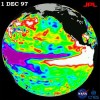
10 Million at Risk of Hunger Due to Climate Change and El Niño, Oxfam Warns
At least ten million of the poorest people face food insecurity in 2015 and 2016 due to extreme weather conditions and the onset of El Niño, Oxfam has reported.
Brazil’s Expanded Climate Targets Frustrate Environmentalists
Brazil’s greenhouse gas emissions reduction programme, hailed as bold, has nevertheless left environmentalists frustrated at its lack of ambition in key aspects.
The Spectre of Jobless Growth in India
India faces a serious challenge of dealing with joblessness despite statistically being the world’s fastest growing economy. The spread, depth and intensity of the problem, especially among the educated youth, is not reflected the latest unemployment number of 4.9 per cent in 2013-14. This estimate captures the chronically unemployed – those who sought or were available for work for the major part of the year – but it rarely figures in public discourse as the rate is relatively low and stable over time. Another reason is that the economy continues to generate employment opportunities even if they are largely casual or temporary in the informal sector.
U.N. Continues Condemnation of Civilian Casualties in Yemen
The Saudi coalition, which continues its air strikes against rebels in strife-torn Yemen, is fast gaining notoriety as “the gang that couldn’t shoot straight” – largely because of its misses than its hits.
Honduran Fishing Village Says Adios to Candles and Dirty Energy
A small fishing village on the Caribbean coast of Honduras has become an example to be followed in renewable energies, after replacing candles and dirty costly energy based on fossil fuels with hydropower from a mini-dam, while reforesting the river basin.
Palestine President Abbas Warns of ‘Grave Dangers’ in Jerusalem
“I come before you today…compelled to sound the alarm about the grave dangers of what is happening in Jerusalem,” said Palestine President Mahmoud Abbas in his remarks to the United Nations General Assembly on Sep. 30.
As the Mediterranean Refugee Crisis Endures, International Morality Ebbs
As the world suffers its biggest upheaval of human mobility, with 60 million people forced to desert their homes or countries due to persecution, armed conflicts, starvation and hunger that are a veritable danger to their lives, the response from the international community has been rather laggard.« Previous Page — Next Page »


