Languages
Thursday, November 19, 2026



News and Views from the Global South
Africa

Somalia’s Fractures Getting Hard to Heal
The system of government remains the biggest political obstacle in Somalia as key political players boycotted the government’s current national conference to discuss this country’s political future, according to Jaylani Mukhtar, a local academic based in capital Mogadishu.
Cameroonians ‘Dying’ for Fake Drugs
When Francois Biloa fell ill with malaria, his family did what they had always done in the past – they gave him anti-malaria drugs and antibiotics bought from the local market. Only when his condition worsened and he became bedridden and fell unconscious, did his family take him to a local clinic in Cameroon’s capital Yaoundé.
Inadequate Support for Agriculture Costs Zimbabwe
 Zimbabwe used to be self sufficient in maize, the staple crop and often produced a surplus which was sold to neighbouring countries. But since the land reform programme launched in 2000, the country has failed to meet its needs. Experts blame insufficient support by the government for the agricultural sector's poor performance.

Squatting on Kenya’s Mineral Wealth
Zeinab Mohamed is a 70-year-old squatter in Kwale County, in Kenya’s Coast Province. Like many other Coast Province residents, for decades, Mohamed has lived in what squatters call “floating houses”.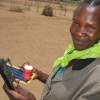
Mobile Phones Big Hit in Rural Zimbabwe
Prosper Muripo rents a small space in a general dealer’s shop at the Gotora shopping centre in Zimbabwe’s Mashonaland East province. He is one of the many people in rural Zimbabwe who earn a living selling recharge vouchers and charging mobile phone batteries on solar-powered chargers.
Sharks, Victims or Perpetrators?
Recent fatal attacks off Réunion have re-ignited demands for sharks to be hunted. But when it comes to humans and sharks, who is predator and who is prey? And what lessons need to be learned when people venture into environments where they are exposed to dangers posed by wildlife?
Q&A: “We Need a Decisive Win Against Polio”
Africa and Pakistan are now battling outbreaks of polio, threatening the extraordinary progress the world has made in fighting the almost-extinct disease. In the Horn of Africa, there are now 121 reported polio cases. Last year, there were 223 worldwide. Siddharth Chatterjee has served as the chief diplomat, head of strategic partnerships and international relations at the International Federation of the Red Cross and Red Crescent Societies, the world’s largest humanitarian network, since June 2011.
Water Scarcity Could Drive Conflict or Cooperation
When the General Assembly declared 2013 the International Year of Water Cooperation (IYWC) three years ago, the U.N.'s highest policy-making body was conscious of the perennial conflicts triggered by competition over one of the world's most critical finite resources.
‘Biggest Guns’ to Control Somalia’s South
Somali clan leaders say that an Aug. 27 agreement between the government and only a few leaders from the country’s three southern Jubba regions, which aims to resolve the ongoing dispute over who controls the area, creates more problems than it solves.
Kenya Embraces Carbon Trading
Mary Itumbi reports from Nairobi that Kenya is taking advantage of carbon trading to contribute towards efforts to address climate change.
Filming Uganda’s Own Stories
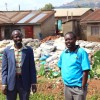
For four years Isaac Godfrey Nabwana made and sold bricks in Kampala’s Wakalinga slum. But now, thanks to his labours, he is building what he hopes will become Uganda's answer to Nollywood.
West Cold-Shoulders Rebuilding Southern Africa
The Southern African Development Community has had to revisit its plans to raise funding for its ambitious regional development plan in the wake of a cold-shoulder from western nations and multilateral finance institutions.
DR Congo Armed Groups Increase Child Recruitment
Over 2,000 children are still being used as soldiers by 27 armed groups in North Kivu in eastern Democratic Republic of Congo despite efforts by the United Nations Children’s Fund to remove them from the frontlines and return them to their homes.
Zimbabwe Sails Close to Economic Rocks
For President Robert Mugabe to defeat the opposition in the Jul. 31 election by hook or by crook may have been a walk in the park, but beating the economic crisis will be another matter. The stock market fell 11 percent the day he was sworn in, the biggest fall in a day since 2009.
Rwanda Tribunal Digs Up Partial Truth
The International Criminal Tribunal for Rwanda (ICTR) based in Arusha, Tanzania, is due to conclude its business at the end of 2014 following several deferrals. A United Nations Security Council Resolution set up the tribunal in 1994.
Brotherhood Cornered, Not Crushed
With the sun inching closer to the horizon on Friday afternoon in the Mohandiseen neighbourhood of Cairo, the call to prayer from Mostafa Mahmood mosque goes out over a street empty of all but a few soldiers lingering beside their tanks.Eavesdropping on the Whole World
How do U.S. intelligence agencies eavesdrop on the whole world? The ideal place to tap trans-border telecommunications is undersea cables that carry an estimated 90 percent of international voice traffic.
Mugabe Begins Another Presidential Term
Robert Mugabe will be inaugurated on Thursday, Aug. 22, to serve yet another five-year term as Zimbabwe’s president after holding the post for the last 33 years. And he does so as analysts here raise concerns that a recent High Court ruling recommending the arrest of outgoing Prime Minister Morgan Tsvangirai’s lawyers on contempt of court charges could be the start of political oppression.
Swazi Chiefs Shut Women Out of Parliament
Archaic and chauvinistic practices are being used to prevent Swazi women from taking part in the upcoming primary elections, despite the country having a constitution that guarantees their rights, says political analyst Dr. Sikelela Dlamini.
Southern Africa Shows the Way With Water
Water remains a key component in development policy. And, as the Southern African Development Community discusses how best to develop the region, the effective management of watercourses will be key, says Professor Anthony Turton, one of the foremost experts on water policy in southern Africa and a trustee of the Water Stewardship Council of Southern Africa.
Media Law Hits Somali Journalists
Somalia’s journalists say that the government is not serious about reviewing the country’s new, controversial media bill that requires them to reveal their sources, despite a series of recent consultations.« Previous Page — Next Page » *#*

The Week with IPS

NEXT STOP - SDGs
Tracking global progress towards a sustainable world
Tracking global progress towards a sustainable world
