Languages
Wednesday, September 30, 2026



News and Views from the Global South
Aid

DR Congo, Ituri. Fleeing War, Weaving Life in IDP Camps of Bunia
He moves aside the curtain, thin as gauze, and then bends over. The darkness dazzles for a few seconds when one enters the house—actually, a den made of earth where air and light filter through the narrow entrance. Jean de Dieu Amani Paye holds her tiny baby, wrapped in an elegant fabric, in his arms. He was a teacher of French and Latin and had a small business. He also cultivated the land: cassava, corn, sorghum, and beans.
Revamped UN System Crucial for a Changing World
From an international humanitarian perspective, the first half of 2021 has been disappointing. We’re no further ahead in ending the conflict in Syria and Yemen. From the fledgling democracy that it had become, Myanmar has descended into what most of its people had hoped was a bygone era of military rule. And in Ethiopia, where its Prime Minister, Ably Ahmed, was awarded the Nobel Peace Prize in 2019, armed conflict in Tigray is preventing the 2020 winners of the very same prize, the World Food Programme, from delivering the food needed to stop at least 350,000 Ethiopians from starving to death.
Water Scarcity: Coming Soon
In 1995, a highly-respected water expert in South Africa, Bill Pitman, in very concise terms illustrated that the country, already battling a growing lack of water then, would likely run out in 25 years if it did not increase its supply.
To Prevent Teenage Pregnancies in Sub Saharan Africa, It Takes a Whole Village to Raise a Child
Honorine Meda is 23. Cycling through her hometown of Dissin, in Burkina Faso’s verdant southwest, she smiles, waves and stops to chat with one of the girls she counsels.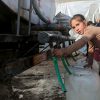
Water Poverty: The Political Connection
The water we drink and the air we breathe are the basis of life. With universal access to clean water and sanitation, we will be healthier, our economies will be stronger, gender equality will be more achievable, and more children will stay in school.
Child Rights’ Experts Warn that Displaced Children and Young People Risk Being Wiped Out of the Education System
The difficulties in accessing education faced by children and young people forcibly displaced from their homes were today laid bare in a virtual high-level roundtable convened by UNHCR, the UN Refugee Agency, Education Cannot Wait (ECW), the UK and Canada.
European Duplicity Undermines Anti-Pandemic Efforts
Despite facing the world’s worst pandemic of the last century, rich countries in the World Trade Organization (WTO) have blocked efforts to enable more affordable access to the means to fight the pandemic.
“If Only the Fighting Would Stop “ A Sudanese Woman’s Wish
With her bare hands, Roda clears debris and forages scraps from her wrecked teashop after attackers scorched Gumuruk, a town in the Greater Jonglei region where conflict frequently disrupts daily life and stifles progress.
Reflections on South Sudan’s Ten Years of Independence
The declaration of independence of South Sudan was a great historic moment that gave hope to South Sudanese on July 9, 2011. It brought a sense of satisfaction, indicating achievement of a life-time dream for which millions of our people across generations paid the ultimate price.
Another Impending Cataclysm in Afghanistan
The Biden administration made a decision to withdraw US troops from Afghanistan based on the Trump-Taliban agreement. Their last combat soldier may have already left. There is nothing to argue about!
Investing in Education as Driver for All Our Futures
Never before have so many children been out of school. 1.6 billion children and young people – more than 90% of students worldwide – have been impacted by school closures during the pandemic. Hundreds of millions of those children have gone without any learning at all, deprived of all the benefits that being in school provides.
COVID-19 Pandemic Exacerbates Domestic Workers’ Plight in Bangladesh
Rani Akter, a mother of five, usually works as a domestic helper in Dhaka’s Zikatola area. When the coronavirus pandemic broke out in Bangladesh last March, her employers asked her not to come to their homes for fear of infection. “I lost my work in three houses one after the other, which became a nightmare for me. My rich employers did not allow me in their homes as they thought that I might carry the invisible virus,” Akter told IPS.
“We Need to Act Now” — as Sub-Saharan Africa Faces Third Wave of Covid-19
Sub-Saharan Africa is in the grips of a third wave of COVID-19 infections that threatens to be even more brutal than the two that came before.
Southeast Asia and Food Price Inflation: Double Whammy
In 2020, Southeast Asian countries were already facing varied challenges that affected the region’s food supplies and prices. The onset of the Covid-19 pandemic later in the year exacerbated the region’s food insecurity and poverty. Southeast Asian countries need to take a hard look at food security, even as the double challenges — climate change and the Covid-19 pandemic — continue to fester.
Digital Media on the Frontline: Supporting the Ones who Support the Rest
For Dr Farzana Khan, a frontline worker and a second-generation immigrant from Pakistan living in California, social media helped her connect and realign herself during the COVID-19 pandemic.
Boldly Finance Recovery to Build Forward Better
COVID-19 has become a “developing country pandemic”, retreating from the North’s mass vaccination. With developing countries heavily handicapped, the International Monetary Fund (IMF) warns of a “dangerous [new] divergence”.
Education Cannot Wait for Refugee Children in Crisis, says Yasmine Sherif
With financing, the number of out-of-school refugees could be reduced to zero, Yasmine Sherif, Director of Education Cannot Wait (ECW) says, as the world commemorates World Refugee Day.
The Marginalisation of Africa
Is Africa marginalised in contemporary economics and politics, and in contemporary economic and political research? Impressions gathered over the years and a bit of evidence (much more could be assembled) indicate that it is. I would distinguish three types of marginalisation: objective, objectified and subjective marginalisation.
Letter from Rome – Italy at the Crossroads
Italy, as other countries, has been struggling to balance the health and economic challenges posed by COVID-19. Controlling the spread of the virus implied restrictions on economic activity, on school and college attendance, and on personal movement. It also had to deal with the economic and social implications of a fall of almost 10% in GDP. This has been hard for a country which, even before the pandemic, was one of the slowest growing economies in Europe, with unemployment, especially among young people in the South of the country, at alarming levels.
Africa’s Forgotten Crisis
A few weeks ago, I traveled with the UN High Commissioner for Refugees Filippo Grandi to the Modale refugee site in the Nord-Ubangi province of the Democratic Republic of the Congo (DRC). What we witnessed there was a profound humanitarian crisis that has left 4.7 million children and youth in need of urgent, life-saving, life-changing educational support.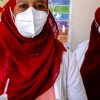
Are There Clinically Meaningful Differences Between anti-COVID-19 Vaccines?
Despite claims by the industry and some politicians, there are no clinically meaningful differences among the variety of vaccines approved under emergency use authorisation (EUA).« Previous Page — Next Page »


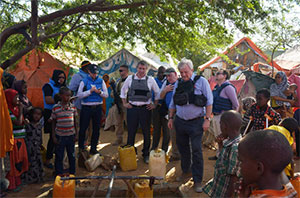 UN Emergency Relief Coordinator Visits Somalia. Credit: UN Photo/Tobin Jones
In recent years, conflicts have broken out across the world with no sign of slowing down or stopping. In times like this, millions of people globally are in dire need of humanitarian aid. Famine, warfare, natural disasters, and economic decline plague a host of nations, including Palestine, Sudan, Chad, Lebanon, and Haiti, to name a few. Humanitarian aid provides millions of people with critical services including healthcare, food, clean drinking water, psychosocial support, housing, and access to education. UN agencies such as the UNDP, UNICEF, the World Food Programme (WFP), UNHCR, UNRWA, and UNEP work with the UN Office for the Coordination of Humanitarian Aid (OCHA) and local organizations to come up with the best possible strategies to support affected communities. At the same time, humanitarian aid and those working on the frontlines are consistently threatened by both actors directly involved in conflict as well as those who are meant to contribute to the international humanitarian regime at large. The near-collapse of United States international aid structures in 2025, including the termination of 83% of USAID’s 6,300 global initiatives, has left millions of people without access to vital humanitarian assistance. 98 million people in 2025, only 65% of people targeted for humanitarian assistance, received the help they needed. In contrast, 123 million people received some form of humanitarian assistance in 2024, and OCHA’s 2026 Global Humanitarian Overview estimates that 239 million people are in need of assistance in 2026. IPS is well-positioned to discuss current initiatives to provide aid and relief through in-depth reporting and opinion content.

The Week with IPS

NEXT STOP - SDGs
Tracking global progress towards a sustainable world
Tracking global progress towards a sustainable world
