Languages
Saturday, November 7, 2026



News and Views from the Global South
Armed Conflicts

Global Impact of Ukraine War on Food, Energy & Finance Systems
Now, since the Russian Federation’s invasion of Ukraine, the world’s attention has been focused on the war’s terrifying levels of death, destruction and suffering.
Education Cannot Wait in Moldova with Strategic Partners Scaling-up its Ukraine Crisis Regional Education Response to US$6.5 Million for Crisis-affected Children and Youth
Expanding on Education Cannot Wait’s (ECW) US$5 million Ukraine First Emergency Response grant announced in March, ECW today announced a new, initial US$1.5 million allocation to support the education in emergencies response for the Ukraine refugee crisis in Moldova while on mission with strategic partners USAID, FCDO/UK and Theirworld. This new allocation brings ECW’s total Ukraine crisis education response to US$6.5 million to date. The new grant will be delivered in partnership with the Government of Moldova to ensure refugee children and youth can access safe and protective learning opportunities. Investments will also benefit children in the host communities. The development of the grant will be facilitated through the coordination mechanism established for the education response.
US TV Networks Covered the War in Ukraine more than the US Invasion of Iraq
The evening news programs of the three dominant U.S. television networks devoted more coverage to the war in Ukraine last month than in any other month during all wars, including those in which the U.S. military was directly engaged, since the 1991 Gulf War against Iraq, according to the authoritative Tyndall Report. The only exception was the last war in which U.S. forces participated in Europe, the 1999 Kosovo campaign.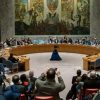
Why Africa is Divided Over the Russia-Ukraine War?
While the West has closed its ranks in response to the Russian invasion of Ukraine, the response in Africa has hardly been uniform. Following Russia’s military invasion of Ukraine on 24 February, various constituencies within the international community have reacted with a mixture of shock, anger, and trepidation as they ponder the invasion’s implications for international security.
Connecting the Dots for the Transforming Education Summit
Look around the world at this very moment. Whether we look at it in stark numbers and statistics, whether we look at it as a generational loss of basic human rights, including the right to an education, or whether we look inwardly and feel the unspeakable human suffering and devastation taking place, we all agree: we are at a historically low point in our collective humanity.
How Putin Underestimated Ukraine
In the eyes of the Kremlin leadership, the basic precondition of the successful war against Ukraine has been the perceived power of the Russian Armed Forces and possible superiority over the Ukrainian forces.
United Nations & its Leadership Challenged by an Existential Crisis
The other day a friend asked me “Can Russia be expelled from the General Assembly by a two-thirds majority?” Almost impossible to do that, I responded.
Ukrainian President’s Plea: Expel Russia or be Ready to Close Down the UN
A legendary quote attributed to Joseph Stalin most likely applies to the United Nations too. “How many divisions does the Pope have?” asked the Soviet leader, interrupting a speech by Winston Churchill in a bygone era.
How a Massive Climate Project Can Help Win Peace for Ukraine – And Help African Job + Food Crises
How would the late Archbishop Desmond Tutu have reacted to the Russian Invasion of Ukraine? Differently than you might think. The invasion of Ukraine is a mass human tragedy. It is killing Ukrainians, exposing families to violent atrocities, and has driven a refugee crisis of over 4 million people and counting. The war in Ukraine has also reawakened our fear of global war - even nuclear war - and the importance we place on global peace.
Egypt’s Tourism Hit by Ukraine Crisis
Tourism to Egypt’s GDP is as vital as the Nile to its people. After Egypt’s tourism sector began to recover following the Russian plane crash in 2015. Then COVID hit, and now the Ukrainian war shot a bullet through its heart.
Bennett Is Siding with the Ruthless Killer Putin
Prime Minister Bennett’s “neutrality” in the Russian war against Ukraine is outrageous and contemptable. It runs contrary to every moral principle that Israel is supposed to stand and fight for. Bennett must join the Western alliance in opposing Putin — a merciless tyrant who is committing crimes against humanity and must pay for it
Perils of Hunger, Food Insecurity in Southern Africa- Challenges & Opportunities
Food systems are under severe stress around the world now. The thresholds of tolerance are already exceeding limits with millions facing acute food and water scarcity throughout all continents. Over a quarter of Africa’s population are facing hunger and food insecurity. Conflict, droughts, flooding, rising unemployment, inequality, economic crises, and the impacts of Covid-19 pandemic have been ravaging the Continent on an unprecedented scale.
Deepening Stagflation: Out of the Frying Pan into the Fire
The world is sailing into a perfect storm as key leaders seem intent on threatening more war, albeit while proclaiming the noblest of intentions. By doing so, they block international cooperation to create conditions for sustainable peace and shared prosperity for all.
Sanctioning Tchaikovsky: Taking the War a Tad Too Far?
One of my great joys, if present in America on Independence Day, has been being out at the fireworks on the Fourth of July with my daughter, son-in-law, and my two grandchildren. The glorious denouement of the event has often been a final spray of brightly lit colours against the azure sky, with delighted crowds cheering along with the resounding crescendo of the volley of cannon-fire, the flamboyant finale of Pyotr Tchaikovsky’s 1812 Overture! Can those happy moments of such experience be at the risk of being altered or even eliminated from our lifestyle?
War, Displacement & A Global Refugee Crisis: A Wake-Up Call to Increase Refugee Participation
It has been a month since Russia’s invasion of Ukraine, which has now created one of the biggest refugee crises of modern times. More than 3.7 million people have left the country, in what has become the fastest exodus globally since World War II.
War in Ukraine Morally Unacceptable, Politically Indefensible & Militarily Nonsensical
For more than one month now, the entire population of Ukraine has been enduring a living nightmare. The lives of millions of people are in upheaval as they are forced to flee their homes or hide in basements and bomb shelters as their cities are pummeled and destroyed.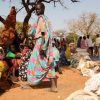
South Sudan: Oil Underground, Blood on the Surface
While several politicians -and media– have been viewing the ongoing armed conflict in South Sudan as a “civil war” between rival ethnic groups, so nothing to worry about, there are some key facts that should be considered for the sake of having a wider, more accurate panorama. One of them is that this country is rich in oil.
War or Peace, Barbarism or Hope
The spectre of ‘stagflation’ threatens the world once again. This time, the risk is the direct consequence of political provocations and war, and not simply due to inexorable economic forces. Stagflation? Stagflation is a composite word implying inflation with stagnation. Stagnation refers to weak, ‘near zero’ growth, inevitably worsening unemployment. Inflation refers to price increases – not high prices, as often implied.
Should NATO Enter the Russian-Ukrainian Fray?
It is hard to describe the excruciatingly painful destruction Putin is inflicting on Ukraine. However, whereas NATO should provide Ukraine with active defensive military equipment, it should not directly join the war which could ignite a major European if not world war.
Why Russia’s War on Ukraine Poses a Risk to Global Food Security
The situation in Ukraine is first and foremost a humanitarian crisis, and the food security and wellbeing of the people of Ukraine should be our immediate concern. However, because of the dominant roles of Russia and Ukraine in global food, fuel and fertiliser markets, there are also massive knock-on effects for people around the world. This is particularly true for the supply and cost of food. Here are three ways that the invasion of Ukraine leads to potential risks to food security in other countries.
The Cost of War: 23 Million Afghans Suffer Acute Hunger, 95% Don’t Eat Enough Food
Following 20 long years (2011-2021) of brutal war on Afghanistan by the US-led military coalition, which ended up in delivering the country to the Taliban in August 2021, 23 million Afghans now face severe and acute hunger, economic bankruptcy, healthcare system collapse, unbearable family indebtedness, and devastating humanitarian crisis.« Previous Page — Next Page »





Armed conflicts are a sad constant on daily front pages worldwide. Wars, civil wars, revolts, coups, genocides, ethnic and political violence, and global terrorism capture our attention for the geopolitical landslides, human suffering, food crises and streams of migration that follow in their wake. As in times of natural disaster, man-made crises claim frequent casualties among the poor, women and children. IPS examines emerging and ongoing armed conflicts around the world with an eye on the underlying social and political dynamics, and special focus on the lived experiences of those most affected by armed conflict.

The Week with IPS

NEXT STOP - SDGs
Tracking global progress towards a sustainable world
Tracking global progress towards a sustainable world
