
Wednesday, November 11, 2026



News and Views from the Global South
Climate Change

How Encroachments, Willows and Silt Ate up Half of Kashmir’s Own Sea
Warming himself with a kangri (a firepot) kept under his pheran (a long winter cloak worn by Kashmiris), 66-year-old Mohammad Subhan Dar sat chatting with a bunch of his fellow villagers on a January afternoon on the edge of the road overlooking Wular Lake in Saderkote-Bandipora, northern India.
Pulses for a Sustainable Future
Reducing poverty and inequalities, eliminating hunger and all forms of malnutrition and achieve food security for all – these are some of the most important objectives of the Sustainable Development Goals. Still, the rate of poverty and inequalities is increasing and over 820 million people are going hungry. In addition, 2 billion people in the world are food insecure with great risk of malnutrition and poor health. This alarming situation is further aggravated by current trends such as the rate of population growth, impacts of climate change, loss of biodiversity, soil degradation and many others. Transition to more sustainable food systems can provide adequate solutions to all these challenges. Pulses could play an important role in this transition, having nutritional and health benefits, low environmental footprint, and positive socio-economic impacts as well. What is required to promote and support the production and consumption of more pulses? This question is particularly relevant now, since 10 February is the World Pulses Day.
Globalization of Indifference: Ai Weiwei and the Refugee Crisis
Humans belong to a species that is constantly on the move . Since some Homo Sapiens 125,000 years ago began to move from the African continent, humans can be found all over the world, even in such utterly inhospitable places as the icebound plateaus of Antarctica. By moving, humans have tried to escape inadequate food-supply or otherwise unacceptable living conditions. Natural forces have forced them to leave, or even more commonly – violent actions by other humans. With them migrants have brought their means of expression and interaction, some of them expressed through their art.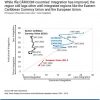
Strengthening Caribbean Regional Integration
The Caribbean economies have long recognized the value of working together. Improving regional integration—for instance, through more intraregional trade and policy coordination—can help the region’s small-size economies build greater resilience and scale, as well as enhance bargaining power on the global stage.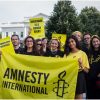
World’s Young Activists at War: First, Occupy Wall Street, Next Un-Occupy Palestine
The world’s young activists, numbering over 3.8 billion, are on the war path. The rising new socialist movements—which included “Black Lives Matter,” “Occupy Wall Street” “Un-Occupy Palestine” and "the #Me Too Movement" triggering women's marches— were aimed at battling racism, institutionalized inequalities, political repression and sexual harassment.
India’s Outdoor Workers on the Frontlines of Climate Change
Last June when more than half of India was reeling under daily temperatures topping 40 degrees Celsius, Nursing Behera’s 11-month-old son burned both his legs when a pot of boiling water fell on him.
World Drains Away Valuable Energy, Nutrients & Water in Fast-Growing Wastewater Streams
Vast amounts of valuable energy, agricultural nutrients, and water could be recovered from the world’s fast-growing volume of municipal wastewater.
Coping with Australia’s Surfeit of Natural Disasters & Lessons to be Learned
I love visiting Canberra in the summer. The air is clean. The water in lake Burley Griffin is crystal clear and the "go boats" merrily bob up and down with their wine sipping occupants while black swans frolic in peace.
Women & Girls Up Front — the Humanitarian Response in Democratic Republic of Congo
Eleven-year-old “Anne” went to a health facility with her mother in the conflict-affected province of Ituri, in northeastern Democratic Republic of the Congo. At first, she could barely tell her story.
The Role of Sherpas in Nature Conservation as Guardians of the Himalayas
 Since I was a kid, I grew up with adventures and stories of famous characters of the books of Jack London: White Fang, Make a Fire… and the incredible ode to perseverance of Martin Eden.

Our Message at Davos: Water & Sanitation Are a Critical Line of Defence Against Climate Change
There was only one topic on everyone’s lips at Davos this year – climate change. The headlines focused on the cold war between Greta Thunberg and Donald Trump, but there was much greater consensus among those gathered for the annual meeting of the World Economic Forum (WEF).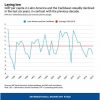
New Challenges to Growth in Latin America & the Caribbean
Economic activity in Latin America and the Caribbean stagnated in 2019, continuing with the weak growth momentum of the previous five years and adding more urgency and new challenges to reignite growth.
Multilateralism Versus Regionalism: Which Path Should African Countries Pursue to Expand Trade and Investment Opportunities?
Increasingly, the ability of multilateralism to address contemporary global issues such as climate change and international trade is being questioned. In the case of international trade, WTO Members have thus far not been able to conclude the Doha Round, which was launched in November 2001. The Round was supposed to have been concluded on 1 January 2005, but it has been beset by persistent differences among the WTO Members. Whereas most developing countries believe that the Round is still active and have called for the fulfilment of all Doha mandates, several developed countries are of the view that the Round has run its full course and overtaken by developments in the global economy. They note that three out of the ten top economies in the world are developing countries – Brazil, China and India – and that several developing economies are also competitive in certain sectors of the global economy and that by granting significant flexibilities in the negotiations to these competitive developing economies, the Round's mandates are no longer valid and that differentiation among developing countries should be part of the broader on-going discussion on WTO reform.
Blue Innovation in the Commonwealth
With 95 per cent of the ocean still unexplored by humans, we are only just beginning to understand its profound influence on life on earth, including its effect on global climate and ecosystems.
Global Inequality Continues to Grow: UNDESA Report
More than 70 percent of the global population is currently living in parts of the world where income inequality has grown, according to a World Social Report 2020 launched by United Nations Department of Economic and Social Affairs (DESA).
Will 2020 World Economic Forum Deliver on Combating Climate Change?
For the first time, the world’s elites meeting this year at Davos have listed environmental issues as their top concerns about the next decade.
Empowering Women in Poor Communities & Building Resilience Against Climate Pressure
As global temperatures continue to rise, vulnerable populations around the world are facing increasingly complex climate risks – with ongoing droughts in Zimbabwe and floods devastating Indonesia's capital, Jakarta.
Climate Change and Financial Risk
Climate change is already a reality. Ever-more-ferocious cyclones and extended droughts lead to the destruction of infrastructure and the disruption of livelihoods and contribute to mass migration.
Climate Change: A Tale of Weather Extremes with Mixed Fortunes for Zambia
It is early Saturday morning and Planeta Hatuleke, a small scale farmer of Pemba District in Southern Zambia, awakens to the comforting sound of rainfall. As the locals say, the “heavens have opened” and it is raining heavily after a prolonged dry spell.
In Dealing With Climate Change: Foresight is Key
United Nations World Food Program recently released 2020 Global Hotspots Report. According to the report, millions of citizens from Sub-Saharan African countries will face hunger in the first half of 2020 for several reasons including conflict, political instability and climate-related events such as below-average rainfall and flooding.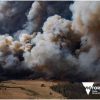
Australia’s Wildfires Part of a Vicious Cycle of Food & Fire
“Unprecedented.” “Hell on Earth.” “Catastrophic.” In Australia, these terms are being used to describe 17.9 million acres of burned land so far. While fires of this magnitude are certainly unprecedented, they’re far from unexpected.« Previous Page — Next Page »





As unsustainable human consumption and production systems are driving changes in average temperatures and weather patterns, "abnormal" is increasingly becoming the norm. So far, a lack of financing has been standing in the way of a comprehensive global plan for climate adaptation, and a global financial crisis has contributed to an increasing reliance on public-private partnerships. Our Climate Change page provides you with the latest news about international and local efforts to address what's frequently been called "the challenge of our time", the forces behind the climate change and the impact it has on the world's most vulnerable populations. Along the way, we bring you stories on growing citizen awareness, new scientific data, and emerging climate policies towards sustainable development.

The Week with IPS

Tracking global progress towards a sustainable world

