
Friday, November 13, 2026



News and Views from the Global South
Climate Change
How Best to Tackle Inequality in the 21st Century? Start with Climate Change
Do you prefer to hear good news or bad news first? I will begin by giving you the (unsurprisingly) bad news. Today’s world is an unequal place. Standards of living vary massively both between and within countries.
Parts of Kenya are Already Above 1.5˚C
Kenya’s getting hotter. Much hotter than the 1.5˚C increase that has been deemed acceptable by global leaders, and it is too hot for livestock, wildlife and plants to survive. Thousands of households, dependent on farming and livestock, are at risk too.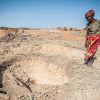
Heatwaves are a ‘New Normal’, Says Red Cross
It is barely the middle of the month, but the verdict is in: July has been hot.
Want to Inspire More People to Act on Climate Change? Broaden the Framing
“It has never happened before,” is a sentence that is becoming excessively common in the news due to a changing climate where new extremes are becoming normal.
Rwanda Prepares the Foundations for Climate-Resilient Cities
How do you plan a resilient city? A city that can withstand climate change impacts, and the natural disasters that it produces at increased frequencies. And how do you protect the city, its individuals and communities, its business and institutions from either the increased flooding or prolonged droughts that result? It’s a complex question with an even more complex solution, but one that the central African nation of Rwanda is looking to answer.
International Green Court: A solution to achieving climate justice?
(The Daily Star) - WE’RE running out of time on climate change. The UN Intergovernmental Panel on Climate Change’s (IPCC) report released in October 2018, revealed that there are only a dozen years left for global warming to be kept to a maximum of 1.5 degrees Celsius (2.7 degrees Fahrenheit). Reaching temperatures beyond that, even half a degree higher, will significantly worsen the risks of droughts, floods, extreme heat and poverty for hundreds of millions of people. Of course, we are already feeling these symptoms as the five hottest years on record, globally, all took place within the current decade. According to scientists at National Oceanic and Atmospheric Administration, 2016 was the hottest, 2015 the second hottest, and 2017 the third hottest—2018 is currently on track to be the fourth hottest. Urgent changes are needed in order to keep global temperatures down.
Bangladesh is our best teacher in climate change adaptation: UN ex-chief Ban Ki-moon
(The Daily Star) - Former United Nations secretary general Ban Ki-moon today said Bangladesh is the best teacher in climate change adaptation.
Climate Change Victims: What Will You Do Next?
Contemporary politics generates a lot of noise and smoke, with little attention devoted to understanding, analysing and fixing the causes of the noise and smoke. The global public discourse is dominated by statements made by politicians and aspirants to power, designed to shock, awe and draw support.
Climate Change Deniers Violate Human Rights
Whoever still thinks climate change is purely an environmental issue, threatening only nature, needs to think again. Climate change is also essentially a human issue because of its devastating effect on human life – and rights. It exacerbates existing inequalities, undermines democracy and threatens development at large. Likewise, by far the greatest burden will fall on those already in poverty, while the rich will be able to buy their way out of rising heat and hunger.
Why Environmental and Humanitarian Action Must Be Linked
Environmental and humanitarian action is often understood as two different sectors. However, the lack of awareness regarding its intersections could lead to further long-term devastation.
Chilean Schools Recycle Greywater to Combat Drought
Children from the neighboring municipalities of Ovalle and Río Hurtado in northern Chile are harvesting rain and recycling greywater in their schools to irrigate fruit trees and vegetable gardens, in an initiative aimed at combating the shortage of water in this semi-arid region.
Indigenous Rights Approach a Solution to Climate Change Crisis
The Global Landscapes Forum (GLF) was held in Bonn, Germany to rally behind a new approach to achieving a future that is more inclusive and sustainable than the present – through the establishment of secure and proper rights for all.
We Cannot Save the World from Climate Catastrophe if Largest Emitters of CO2 Don’t Step up Now
SUVA, Fiji, 27 June 2019 (IPS) -- Are the most climate-vulnerable nations of the world right to demand that developed and major economies commit to carbon neutrality by 2050? Should the poorest nations of the world insist that the “haves” put their significant economic and political resources behind aggressive efforts to combat climate change?
Looking to the Land in the Climate Change Race
The international community still has a long way to go to chart a new, sustainable course for humanity. But the upcoming climate change meetings provide a renewed opportunity to tackle climate change head on.
Desertification ‘More Dangerous and More Insidious than Wars’
Businesses are being encouraged to follow the lead of the youth to halt desertification, reduce degradation, improve agricultural sustainability and restore damaged lands.
There’s No Continent, No Country Not Impacted by Land Degradation
The coming decades will be crucial in shaping and implementing a transformative land agenda, according to a scientist at the United Nations Convention to Combat Desertification (UNCCD) framework for Land Degradation Neutrality (LDN).
Air Pollution Ranked as Biggest Environmental Threat to Human Health
In a world that is becoming more and more industrial by the day, air pollution appears to be on the rise. While there have been efforts in major cities to combat the grave effects that pollution can have on the overall health of its citizens, there is still more progress to be made.
South Africa’s First Carbon Farm
Land restoration could attract large private investments in the fight against climate change over the coming decades, if Governments and the United Nations put the right incentives and conditions in place.
At the intersection of conflict, climate change and energy access
With the advent of the 21st century, there has been a steady rise in energy access all around the globe. For the first time ever, the total number of people without access to electricity fell below 1 billion in 2017 according to the International Energy Agency. Despite the increase in the pace of electrification, 13 percent of the global population, mostly concentrated in sub-Saharan Africa and South Asia, still lack critical access to electricity—a factor linked closely with productivity, health and safety, gender equality and education. Without much greater ambition and more intensified efforts, the Sustainable Development Goal (SDG) 7 that has an objective of “ensuring access to affordable, reliable, sustainable and modern energy for all” will be impossible to attain by 2030.
Uganda’s Rare Tree Climbing Lions and Endangered Primates Threatened By Climate Change
As climate change leads to increased temperatures in East Africa, a thicket of invasive thorny trees with the ability to withstand harsh climatic conditions have begun threatening Uganda’s second-largest park, home to a rare breed of tree climbing lions and one of the highest concentrations of primates in the world.
Developing Technologies for Zero-Carbon Economies
Never before has half a degree (0.5C) meant so much for humanity. We are behaving as if we have time to deal with climate change. We don’t. The main problem is that we believe we must sacrifice growth and prosperity for the sake of decarbonisation. We don’t.« Previous Page — Next Page »


As unsustainable human consumption and production systems are driving changes in average temperatures and weather patterns, "abnormal" is increasingly becoming the norm. So far, a lack of financing has been standing in the way of a comprehensive global plan for climate adaptation, and a global financial crisis has contributed to an increasing reliance on public-private partnerships. Our Climate Change page provides you with the latest news about international and local efforts to address what's frequently been called "the challenge of our time", the forces behind the climate change and the impact it has on the world's most vulnerable populations. Along the way, we bring you stories on growing citizen awareness, new scientific data, and emerging climate policies towards sustainable development.

The Week with IPS

Tracking global progress towards a sustainable world

