Languages
Thursday, November 19, 2026



News and Views from the Global South
Crime & Justice
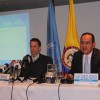
Illegal Wiretapping Continues in Colombia, U.N. Says
Illegal spying on human rights activists and journalists is still happening in Colombia, according to a new report by the Office of the United Nations High Commissioner for Human Rights.Honduran Government Seeks to Minimise Cost of Prison Fire
The government of Honduras hopes to reach friendly settlements with the families of inmates killed in the Comayagua prison fire, to avoid international lawsuits.
U.S. States Grapple with Exploding Prison Populations
Budget constraints combined with exploding prison populations are prompting a number of U.S. states, including some of in the politically conservative south, to rethink their criminal codes.Canada’s Tough New Crime Bill May Violate Child Rights
As the Senate debates the merits of the Canadian government's newly-passed omnibus crime bill, organisations across the country have raised serious issues with the legislation, particularly when it comes to amendments relating to the treatment of young offenders.BRAZIL: Rio Police Reports to Respect Transgendered Identities
The state of Rio de Janeiro in southeast Brazil will introduce a pioneering policy in March to reduce the under-reporting of crimes against transvestites and transsexual people, who will be able to identify themselves with their preferred names when they report crimes to the police.Violent Crime Surge in the Caribbean Takes Heavy Toll
Helen Clarke, the former prime minister of New Zealand, recalled a situation a few years ago when within the less affluent suburbs of her country, youth gang violence had become a serious problem.HONDURAS: Support for President Lobo Hits All-Time Low
Last Friday marked two years since the inauguration of Porfirio Lobo as president of Honduras, amidst accusations of corruption, an unprecedented crime wave, and his lowest approval rating yet.GUATEMALA: Rios Montt to Stand Trial for Genocide
After a hearing that lasted more than 11 hours, a Guatemalan court ordered the trial of former dictator Efraín Ríos Montt (1982-1983), who could face up to 30 years in prison if he is convicted of genocide and crimes against humanity.EL SALVADOR: Gangs May Be Scapegoat for Soaring Murder Rate
El Salvador is one of the most violent countries in the world, with one of the highest murder rates. But the authorities cannot agree on whether or not most of the killings should be laid at the door of the youth gangs known as "maras".War Crimes Immunity for Ousted Leaders Under Fire
As ousted political and military leaders in the Middle East continue to seek immunity from war crimes prosecutions, the United Nations and international human rights groups are taking an increasingly tough stance against such legislation in Yemen, Egypt, and possibly in a post-conflict Syria.SPAIN: Trials of Judge Garzon Called Scandalous by Rights Groups
Another trial opened Tuesday with Spain's best-known judge, Baltasar Garzón, in the dock for attempting to investigate crimes against humanity committed during the 36-year dictatorship of Francisco Franco.Cuba Rebuts International Criticism Over Prisoner’s Death
The Cuban government energetically rebutted what it regards as another campaign to discredit it, following the death in prison of a man who, according to the authorities, was not a dissident nor on hunger strike, as the opposition alleges.HONDURAS: Pressed by the U.S., Lobo Amends Extradition Laws
Following a surprise meeting between President Porfirio Lobo and U.S. government officials, Honduran lawmakers voted to amend the constitution to allow extradition of its nationals.Guatemalans Long for Security, Fear More Abuses
Guatemala's new president, retired general Otto Pérez Molina, made campaign promises to deal with crime with a firm hand ("mano dura") in this country, one of the most violent in the world where impunity is almost absolute, giving rise to cautious hopes from civil society.U.S.: A Decade in the Purgatory Called Guantanamo
Hundreds of protesters, dozens outfitted in orange jumpsuits and black hoods, took to the streets outside the White House on Wednesday to demonstrate against torture and indefinite detention on the 10th anniversary of the opening of the U.S. prison facility at Guantánamo Bay, Cuba.Q&A: War Crimes Court Should Strengthen Victims’ Participation
Most of the cases brought before the Hague-based International Criminal Court (ICC) include gender-based crimes, but advocates say the court is still falling short in ensuring that women play an active role in decision-making and outreach at the highest levels.VENEZUELA: Putting (Mothers’) Faces to the Violence
These women are not fashion models, nor are they advertising any product, yet their images look down on passersby from giant black-and-white posters in the Venezuelan capital. There are 52 of them, and they are all mothers who have lost one or more children to the criminal violence that is plaguing the country.COLOMBIA: Of Blackmail and Fake Guerrillas
After Colombia's attorney general announced that she was bringing charges against a former government peace commissioner for his role in a staged surrender of a fake guerrilla unit, he called for an investigation of her husband – which she promptly ordered.
Death Penalty Returns to Haunt Afghanistan
While Afghanistan’s violent decades-long war has claimed thousands of lives, the last known state-sanctioned execution was in June under the direct order of President Hamid Karzai.DEATH PENALTY: Urgent Appeal for Fair Trials
Senior representatives of Amnesty International and the Anti-Death Penalty Asia Network have urged the Taiwan government to "uphold fairness and justice" in its judicial system and resume a broken moratorium on use of the death penalty.BELARUS: Fight Against Death Penalty Gets Tougher
A petition signed by 250,000 people calling for an end to capital punishment has been turned away by Belarussian authorities as the regime continues to harden its stance on the death penalty.« Previous Page — Next Page »


Issues of crime and justice are as pertinent to development as they have ever been. The struggle for abolition of the death penalty is not over, and penal reform is desperately needed in many countries around the world. From violence to religious persecution, white-collar crime to police brutality, we keep you updated with reports from around the world. IPS correspondents focus on the causes of crime, attempts to prevent it, and the process of bringing those who commit crimes to justice. We also cover the campaign against capital punishment, and for legal and prison reforms that would give prisoners the right to life, and also to justice and decency.

The Week with IPS

NEXT STOP - SDGs
Tracking global progress towards a sustainable world
Tracking global progress towards a sustainable world
