Languages
Thursday, November 12, 2026



News and Views from the Global South
Crime & Justice

Scream of the World: Volcanos and Earthquakes
In February the killing of the Italian ambassador, Luca Attanasio, in the vicinity of the Virunga National Park in eastern Democratic Republic of the Congo, did for a short while put the global spotlight on this troubled area, where warfare, poverty and general insecurity generate immense human suffering.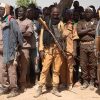
Death toll of Burkina Faso Attack Reaches 160
On the night of Friday 4th June, a group of unidentified armed men stormed the village of Solhan in the north of Burkina Faso, shooting indiscriminately, looting the market and burning homes. A report by RFI, the French radio station said there could have been as many as 200 attackers by some accounts of survivors.
‘Let’s Talk About Sex’ Discussion Highlights Risks to Women
Every two minutes, a girl or woman dies from pregnancy or childbirth-related complications, including unsafe abortions. Every year, around 12 million girls are married while in their childhoods. An additional 10 million are now at risk of child marriage due to the Covid-19 pandemic.
Indian Muslim Minority Targeted During COVID-19 Pandemic
A Muslim call centre operator at a COVID-19 ‘war room’, who once saw himself a COVID-warrior, is now unemployed after being falsely branded by a top politician as a key member of a bed-for-bribe scam. He is a victim of the rise in Islamophobia in India as the country grapples with the COVID-19 pandemic – with scant evidence of condemnation from the authorities, say activists.
Africa’s Forgotten Crisis
A few weeks ago, I traveled with the UN High Commissioner for Refugees Filippo Grandi to the Modale refugee site in the Nord-Ubangi province of the Democratic Republic of the Congo (DRC). What we witnessed there was a profound humanitarian crisis that has left 4.7 million children and youth in need of urgent, life-saving, life-changing educational support.
Motorcycle Diaries with a Twist
Four women, two motorbikes, 64 districts and a journey of a lifetime, this is the story of Dr. Sakia Haque from Bangladesh. In November 2016, Dr Haque co-founded “Travelettes of Bangladesh - Bhromon Konya,” a women's only group, with the motto of “empowering women through travelling.” This platform is not just an ordinary online travel group, but it is a platform of connection, sisterhood and networking of almost 60,000 girls and women in Bangladesh that empowers them by teaching them to raise their voices and encourages them to step out of their comfort zones and to “go see the world”.
The Killings in Gaza and Two Jewish Philosophers’ Hope for a Better World
I hear about casualties and numbers, but cannot perceive the faces, the human beings behind them. A week ago, eleven days of havoc ended after at least 243 people, including more than 100 women and children, had been killed in the Gaza Strip and 12 people, including two children, in Israel. An open, gravely infected wound which continuous to bleed, causing never ending human suffering.
Sleep Now in the Fire
Israel’s massive war machine attacks the Occupied Palestinian Territory (OPT) with total disregard for international law. Since the OPT is an occupied territory, the United Nations does not permit the occupier – Israel – from altering the character of the land under occupation. However, this has not impeded Israel, whose attempt to evict families in Jerusalem’s Sheikh Jarrah neighbourhood resulted in the entry of Israeli border troops inside the al-Aqsa mosque, followed by waves of aerial bombardment that has resulted in daily death and injury toll that will be known only when the dust settles.
– Mining giant Rio Tinto Face Environmental, Human Rights Complaint in Papua New Guinea –
On the occasion of World Environment Day, 5 June 2021, drawing from IPS’s bank of features and opinion editorials published this year, we are re-publishing one article a day, for the next two weeks. The original article was published on January 4 2021

Said Zahari: Unsung Mandela of Press Freedom
Have you ever heard of a workers’ strike or similar labour action for press freedom? And how long do you think it lasted? A day? A week? A month? And where and when do you think this happened? Workers strike for press freedom Six decades ago, in 1961, Said Zahari, the editor of the Malay language daily, Utusan Melayu, led a strike of journalists and other employees. The protracted strike, in both Malaysia and Singapore today, was for press freedom rather than employee welfare.
Online Violence: Weaponization of Deeply Rooted Misogyny, Sexism & Abuse of Power
Every time a woman journalist receives threats of physical and sexual violence, cyber attacks and surveillence, doxxing, public humiliation, damage to her professional & personal credibility, the driving forces behind these intents are deeply rooted misogyny, sexism and abuse of power.
World Press Freedom Day 2021
 WORLD PRESS FREEDOM DAY: a reminder to governments of their commitment to press freedom. This year’s World Press Freedom Day theme: “Information as a Public Good.”

World Press Freedom in an age of remoteness
Edmund Burke called the press the fourth estate, the fourth pillar of democracy, with an oversight role on the remaining three pillars – the legislature, executive and the judiciary. In an ideal world, this fourth estate would have unimpeded access to the other three pillars so that the citizenry could be kept informed at all times. This freedom was conceived to be so sacrosanct that many countries have included it as a fundamental right, e.g., the US Constitution enshrined it as the very first amendment.
Sacred Words
is all that you can't say.
Years gone by and still
words don't come easily,
like forgive me, forgive me.
Tracy Chapman

World Military Spending Rises to a Hefty $2.0 Trillion Despite UN Pleas for Cutbacks
The United Nations-- which is desperately seeking funds to help developing nations battling a staggering array of socio-economic problems, including extreme poverty, hunger, economic inequalities and environmental hazards-- has continued to be one of the strongest advocates of disarmament.
One Year Later; No Justice for Victims of 2020 Mali Protests & Coup
It has been about a year since anti-government demonstrations and a coup in Mali, which saw 18 people, including a 12-year-old boy being killed. But there has been no justice for the families of those injured and killed by defence and security forces during last year's May to August protests.
Disability in Goma. The Power of Staying Together Against Covid-19, War, and Stigma
Sylvain Kakule Kadjibwami lost the use of his legs during one of those ambushes that bloodlessly bleed North Kivu. “When I was shot, I thought it was the end of my life, but when I shared it with other disabled people, I discovered that life is still possible,” he said. Now it is Covid-19 that risks destroying the dreams of Sylvain, a small trader from Goma, a city whose roads are volcanic rock-ridden screes where pick-ups trudge. Those who walk face the risk of falling at every step. However, for those who cannot, the same roads can become traps where it is not only war that kills but also a stigma fostering misery and disease.

Table Mountain Ablaze in Cape Town
 Cape Town-based photojournalist Yazeed Kamaldien reported on a massive mountain fire that broke out on Sunday on Table Mountain and near residential areas on its foothills. By this morning, Wednesday 21 April, officials said the fire had been extinguished after three grueling days for firefighters. Firefighters are still monitoring on the ground for any flare-ups.

I Entered My Country’s House of Justice and Found a Snake Charmer’s Temple
On a Sunday night on 21 March 2021, gunmen stopped Juan Carlos Cerros Escalante (age 41) as he walked from this mother’s home to his own in the village of Nueva Granada near San Antonio de Cortés (Honduras). The gunmen opened fire in front of a catholic church, killing this leader of United Communities in front of his children. Forty bullets were found at the scene.
People’s Leader: A Dalit Woman Becomes The Voice of Farmers In India
On 12 January this year, somewhere in the outskirts of the capital, New Delhi, 24 year old Dalit activist Nodeep Kaur was arrested by the Haryana police for protesting outside a factory. During the lockdown in 2020, Nodeep joined a local workers’ rights organization called Mazdoor Adhikar Sangathan (MAS) in the Kundli Industrial Area in Haryana. In January Nodeep was accused of allegedly manhandling management and staff of an industrial area during a protest and also assaulting the police team.
Cost of Being ’Honour Bearers’ Sexual Violence During Communal Riots in India
Delayed, or no, justice and perpetrators’ impunity effectively silence rape and sexual assault survivors of communal violence in India. Activists and human rights lawyers have been speaking out about how rape and sexual violence, especially during communal conflicts, aims to humiliate religious and other minorities by turning the women into symbols of dishonour.« Previous Page — Next Page »


Issues of crime and justice are as pertinent to development as they have ever been. The struggle for abolition of the death penalty is not over, and penal reform is desperately needed in many countries around the world. From violence to religious persecution, white-collar crime to police brutality, we keep you updated with reports from around the world. IPS correspondents focus on the causes of crime, attempts to prevent it, and the process of bringing those who commit crimes to justice. We also cover the campaign against capital punishment, and for legal and prison reforms that would give prisoners the right to life, and also to justice and decency.

The Week with IPS

NEXT STOP - SDGs
Tracking global progress towards a sustainable world
Tracking global progress towards a sustainable world
