Languages
Thursday, November 12, 2026



News and Views from the Global South
Development & Aid

The Ukraine War – Will it Ever End?
There seems to be no end in sight to the war in Ukraine. On the contrary it continues to escalate. The latest ratchet up has been the decision by the USA to supply the Ukrainian army with cluster bombs. These are nasty weapons which scatter and explode over a wide area. They are specifically designed to kill people rather that destroy infrastructure, military installations or communication hubs. They also have a sting in the tail – some of the bomblets remain unexploded, effectively becoming anti-personnel mines. These can turn wide swathes of territory into virtual no-go areas.
Grey Market Charcoal East Africa — Why Prohibitionist Interventions Are Failing
At Kampala’s Nakawa market, Lovisa Nabisubi scoops charcoal from a bag and packs it into tins ready for customers. Her bare hands, feet, and clothes are stained black from hours of dealing in this popular household fuel which some equate to “black gold” not just in Uganda but in most of East Africa.
Re-thinking Disability Inclusion for the SDGs
This year marks halfway towards the Sustainable Development Goals (SDGs), an ambitious agenda which set out to transform our world. We have always known that the goals cannot be realized without the inclusion of persons with disabilities. From poverty to inequality, climate to health the promise to leave no-one behind is the bedrock of the SDG call to action.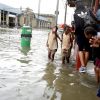
Shielding the Vulnerable: The Potential Role of Insurance in Protecting the Most Vulnerable
Small Island Developing States (or SIDS) have been talking about loss and damage in an insurance context since the creation of the UNFCCC. The original 1990s outline of the UNFCCC included the proposal for an international insurance fund that would compensate low-lying countries for losses from rising sea levels in the future, however, this fund was never adopted in the final text.
The Dark Side of Wind and Solar Farms as Sustainable Energy in Brazil
"Anxiety, insomnia and depression have become widespread. We don't sleep well, I wake up three, four times a night," complained Brazilian farmer Roselma de Melo Oliveira, 35, who has lived 160 meters from a wind turbine for eight years.
UN Weather Agency calls for Robust Early Warning Systems as Latin America and the Caribbean Brace for More Extreme Weather Events
The World Meteorological Organization says adaptation efforts and the switch to renewable energy must increase for regions like Latin America and the Caribbean to face the challenges of a changing climate.
Vaccination Is the Best Bet Against Drug-Resistant Superbugs — Experts
The first thing you notice about eight-month-old Manahil Zeeshan is how tiny she looks on the adult-size hospital bed at the government-run Sindh Institute of Child Health and Neonatology (SICHN) in Korangi, a neighbourhood in Karachi.
The Grand Narrative of Private Finance: Over-Reliance on Attracting Investment is Undermining Change at World Bank
One message that was repeated throughout last month’s summit on a so-called “New Global Financing Pact” was that developing countries urgently need mass financing to tackle the climate and biodiversity emergency. And there is not enough of it in public coffers.
Greener Pastures Not So Green for Zimbabweans in the Diaspora
They have high-paying jobs, a high standard of living, and almost everything they need, but for Zimbabweans abroad, all that glitters is not gold. Twenty-eight-year-old Gift Gonye, based in Germany, is one such Zimbabwean, and he is apparently not satisfied with his life abroad.
Wood Smoke Continues to Make Women Sick in El Salvador
Using a few dry sticks as fuel, Margarita Ramos of El Salvador lit the fire in her wood stove and set about frying two fish, occasionally fanning the flame, aware that the smoke she inhaled could affect her health.
Transformative Change of our Relationship with Nature: Key to Saving Global Biodiversity
To most people, ‘transformative change’ is an abstract academic catchphrase. But transformative change is far more than that. It is the foundational response necessary to address the global crisis of biodiversity loss that threatens the wellbeing of every person in every community – and every species in every region.
Quest for Safe Water in One of India’s Most Isolated Villages
Simita Devi spent over ten days in a government-run hospital a year ago anxiously watching her critically ill nine-year-old daughter, Gudiya, who was diagnosed with typhoid. Gudiya was so sick she even went into a coma for a day. Medical staff attending to the child said she contracted the disease from drinking contaminated water.
Climate Change and Development
There is little doubt that human activity is accelerating climate change. Our activities are causing global warming and potentially disastrous climate change.
Women in Peru’s Poor Urban Areas Combat the Crisis at the Cost of Their Wellbeing
At five in the morning, when fog covers the streets and the cold pinches hard, Mercedes Marcahuachi is already on her feet ready to go to work in Pachacútec, the most populated area of the municipality of Ventanilla, in the province of Callao, known for being home to Peru's largest seaport.
Tuberculosis: A Disease of the Poor Begs For Rich Funding
The United Nations General Assembly is convening a high-level meeting on Tuberculosis (TB) to get a political commitment for increased funding for programmes and research to end an old disease that today kills more people than AIDS and COVID.
Water Harvesting Boosts Agriculture in Brazil’s Semiarid Northeast
"The rainwater tanks are the best invention in the world for us," said Maria de Lourdes Feitosa, 46, who recalls the deadly droughts of the past in Brazil's semiarid Northeast region.
Land Beneficiaries Lament Worsening Poverty in Resettled Areas
Located between two heavily-deforested mountains, Nakadanga Trust in Machinga District in southern Malawi looks lifeless. It is isolated away from all other original communities. Here, the houses are made of mud bricks and they are grass thatched. There is no source of potable water in the area. There is no school nearby, no health centre and no shops for groceries.[related_articles]
Celebrity Chefs Enlisted to Put Climate-Hardy Millets Back on the Menu
Get yourself a nice big pot full of water, dice some onions and throw in the meat of your fancy, followed by chopped tomatoes, tomato paste, dried okra powder, garden eggs and chilli peppers.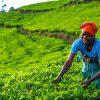
African Women Seek to Boost Innovation and Creativity in Agribusiness
Adeline Umukunzi, a 28-year-old woman mushroom farmer in Musanze, a district located about 100 km north of the capital Kigali, said women have often been the unseen faces of agribusiness in Rwanda. "Women have always played a vital role in agriculture, but behind the scenes. We are starting to see more and more female faces in agribusiness," she told IPS.
Mobilizing Private Capital for Adaptation: the Silent Climate Need
In the climate change discourse, “mitigation” (namely, reducing greenhouse gas emissions) often dominates. This is particularly true when the discussion turns to the mobilization of the massive amounts of private capital needed to achieve our climate objections. But “adaptation” — namely, action to respond to the impacts of climate change that are already happening, as well as prepare for future impacts — also faces large funding needs.
Inequitable Distribution of COVID Vaccines Tied to Power and Money
 The reasons that led to inequitable distribution of COVID vaccines during the pandemic have been inherent in the global pharmaceutical supply chain for decades and contributed to serious adverse consequences for global south countries, as was evident with HIV and Ebola. Further, those issues will likely contribute to inequities with regard to vital medicines in the future. This story by IPS Correspondent and IWMF Fellow Jewel Fraser highlights that the inequity issue is definitely not due just to the pandemic but an ongoing one.
« Previous Page — Next Page »





 2026 High-level Political Forum on Sustainable Development. Credit: UN Photo/Eskinder Debebe
In 2015, the United Nations and its Member States adopted the Sustainable Development Goals (SDGs) in an effort to make the world a more sustainable and peaceful place for future generations. Progress on the 17 SDGs has been uneven, and inequality persists across the globe. 10 years after adoption, the 2025 UN SDGs Report revealed that only 35% of the SDG targets are on track, with more than half moving too slowly, and 18% moving backwards from the 2015 baseline. Poverty remains one of the world’s most pressing issues, with hunger, violence, and inequality impeding the opportunities for all people to achieve success. In September 2024, the United Nations Summit of the Future introduced a new goal: to eradicate global poverty by 2030, ensure universal rights to basic services, and increase the overall standard of living in terms of industrialization, economic well-being, citizen health, and literacy. Furthermore, recent shifts in United States foreign aid policy – notably, major budget cuts to USAID and the termination of thousands of development programmes– have severely threatened vital lifelines of financial aid to impoverished communities around the world. Additionally, the United States’ withdrawal from the Paris Climate Agreement has undercut international efforts at sustainable development. With the upcoming 2030 deadline, the UN Secretary-General has called for urgent multilateralism across six priority areas: food systems, energy, digital connectivity, education, jobs and social protection, and climate and biodiversity. IPS sheds light on marginalized communities that struggle on a daily basis to survive and have their stories heard and respected.
Updated by Yilan Batista and Shuli Wong August 2026

The Week with IPS

NEXT STOP - SDGs
Tracking global progress towards a sustainable world
Tracking global progress towards a sustainable world
