Languages
Tuesday, November 17, 2026



News and Views from the Global South
Development & Aid

Beyond Expo: Embedding the SDGs in the DNA of Future Technology and Innovation
A landscape of shared global challenges The COVID-19 pandemic has moved us farther away from the Sustainable Development Goals (SDGs). Data shows that the pandemic has pushed a further 124 million people into extreme poverty. Global poverty is now expected to be at 7% by 2030 – only marginally below the level in 2015. And with the global temperature increase already at 1.2 degrees, we are on the verge of the abyss. UN Secretary-General António Guterres is deeply concerned about the impact of the pandemic on the SDGs. But there is hope. He believes in the knowledge, science, technology, and resources to turn it around. He also urges further financing for development and climate action.

Cool Scheme to Reduce Food Waste in Nigeria
Food spoilage forced smallholder farmers out of pocket and out of business – until an entrepreneur came up with a cool idea.
A New Transport Agenda to Carry Asia and the Pacific Towards Sustainable Development
Transport ministers from across Asia and the Pacific are meeting this week to consider a potentially transformational agenda for how people and goods are moved around the region and across the globe.
Open Letter to the Secretary General, Heads of UN Agencies & International Donor Community
We are former UN officials with decades of combined experience supporting international civil society and governments to advance the rights of women and girls.
Greed-Driven Pandemic Still Killing Millions
Failure to vaccinate most in poor countries sustains the COVID-19 pandemic. Rich country greed and patent monopolies block developing countries from affordably making the means to protect themselves. Mutant menace The SARS-CoV-2 virus has been mutating as it replicates. Numerous replications in hundreds of millions of hosts have generated many variants. Some mutations are more resilient than others, and better able to overcome human defences.
Rising Suicides Shine Spotlight on Malawi’s Mental Health Burden
When a former deputy speaker of Parliament shot himself dead within the National Assembly buildings in Lilongwe in September 2021, it shook Malawi. It also turned attention to the mental health burden in the country.
CPJ’s Census on Jailed Journalists Reveals Distressing “Intolerance of Independent Journalism”
Governments are determined to control information and are prepared to imprison journalists to achieve this mission, the Committee to Protect Journalists (CPJ) said following the release of their annual global census tracking journalists who were imprisoned and killed in 2021.
Homeless Camps, a Reflection of Growing Inequality in Chile
Camps made up of thousands of tents and shacks have mushroomed in Chile due to the failure of housing policies and official subsidies for the sector, aggravated by the rise in poverty, the covid-19 pandemic and the massive influx of immigrants.
Noorjehan Niaz and Zakia Soman: Bonded to Change the Trajectory of Muslim Women in India
Discriminated in society and concerned about the discrimination of women in their homes, the two women who co-founded the Bhartiya Muslim Mahila Andolan (BMMA) started the movement to further Muslim women’s leadership and help them reclaim their rights.
Fighting Female Genital Mutilation and Cutting in Asia – Podcast
 I suspect that most of you have at least heard of female genital mutilation, or FGM. It’s a practice that happens in numerous African countries, in which girls’ genitalia are removed or cut, for cultural or religious reasons. FGM has been condemned globally for years and campaigners continue working to end it.

‘Great Mining Migration’: Power-Hungry Bitcoin Leaves China
On 14 April this year, the price of a single Bitcoin reached a then all-time-high of around US$64,870. Just over a month later, the price of the world’s most popular digital currency had tumbled to $34,259.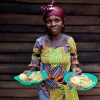
How Vitamin-Enriched Foods can be the Gateway to Better Long-Term Nutrition
When one in five pre-school children is stunted due to chronic undernutrition, it is clear that global diets urgently need to improve and diversify to include more nutrient-rich fruits, vegetables and animal-source foods.
ECW Interviews UK Special Envoy for Girls’ Education, Helen Grant
Helen Grant became actively involved in politics in 2006 and was elected as Member of Parliament for the Kent constituency of Maidstone & The Weald at the 2010 General Election.
ECW Joins Call to Action on Protection from Gender-Based Violence in Emergencies: Global Community Urged to Orange the World and End Gender-Based Violence Now
The statistics are dire: One in three women have experienced a form of gender-based violence in their lifetime, be it sexual violence, physical violence, or child marriage. The message is clear: Women and girls deserve a safer, brighter future – free from gender-based violence.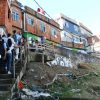
Climate Crisis Exacerbates Urban Inequality in Latin America
The Brazilian megalopolis of São Paulo recorded 932 flooded premises on Feb. 10, 2020. The Mexican city of Tula de Allende was under water for 48 hours in September 2021. In Lima it almost never rains, but the rivers in the Peruvian capital overflowed in 2017 and left several outlying municipalities covered with mud.
Future Fertility Fantasies
Many low fertility countries are having future fertility fantasies. It’s time for them to end those fantasies and prepare for a future of below replacement fertility with demographic ageing and without immigration declining populations.
APDA Young Leaders Devise Solutions for the Future
Whether you look at society, the environment, or technology – the world is changing rapidly. Global organizations strive to adapt to this change. The United Nations, for example, has developed the Sustainable Development Goals as a blueprint for human development.
What Explains Vaccination Rates in EBRD Regions?
Officially reported deaths from Covid-19 started to rise again in autumn 2021 in a number of economies in the EBRD regions. While in advanced economies in Europe the mortality rate has remained low despite the pick-up in Covid-19 cases, in the EBRD regions the mortality and infection rates continued to move in tandem.
Refugee Voices Matter – Nothing about Us, Without Us
Over the past two years, the global refugee response has been tested. The world is being rocked by the greatest pandemic in over a century, while waves of refugees have fled from Afghanistan, Myanmar, Belarus, and Tigray. So, where do we go from here? Next week, the international community will convene to take stock of the successes and shortcomings of the Global Compact on Refugees (GCR), a unique multilateral mechanism built to ensure the protection of one of the most vulnerable populations. This marquee Compact is up for review, but unlike other review processes, the participation of the people whose lives are shaped by the decisions to be made in the review process will be marginal. Unfortunately, only 1 in 50 of the invited attendees at the UNHCR High-Level Official’s Meeting (HLOM) to discuss the GCR are refugees.
Omicron & Developing Countries – Where Threats are the Greatest
On 25 November, news emerged from South Africa of a new COVID-19 variant. It has since been identified as Omicron, a Greek alphabet derivation the World Health Organization (WHO) reserves for virus variants “of concern”.
Climate Change: Adapt for the Future, Not the Past
Funding for developing countries to address global warming is grossly inadequate. Very little finance is for adaptation to climate change, the urgent need of countries most adversely affected. Also, adaptation needs to be forward-looking rather than only addressing accumulated problems.« Previous Page — Next Page »


 2026 High-level Political Forum on Sustainable Development. Credit: UN Photo/Eskinder Debebe
In 2015, the United Nations and its Member States adopted the Sustainable Development Goals (SDGs) in an effort to make the world a more sustainable and peaceful place for future generations. Progress on the 17 SDGs has been uneven, and inequality persists across the globe. 10 years after adoption, the 2025 UN SDGs Report revealed that only 35% of the SDG targets are on track, with more than half moving too slowly, and 18% moving backwards from the 2015 baseline. Poverty remains one of the world’s most pressing issues, with hunger, violence, and inequality impeding the opportunities for all people to achieve success. In September 2024, the United Nations Summit of the Future introduced a new goal: to eradicate global poverty by 2030, ensure universal rights to basic services, and increase the overall standard of living in terms of industrialization, economic well-being, citizen health, and literacy. Furthermore, recent shifts in United States foreign aid policy – notably, major budget cuts to USAID and the termination of thousands of development programmes– have severely threatened vital lifelines of financial aid to impoverished communities around the world. Additionally, the United States’ withdrawal from the Paris Climate Agreement has undercut international efforts at sustainable development. With the upcoming 2030 deadline, the UN Secretary-General has called for urgent multilateralism across six priority areas: food systems, energy, digital connectivity, education, jobs and social protection, and climate and biodiversity. IPS sheds light on marginalized communities that struggle on a daily basis to survive and have their stories heard and respected.
Updated by Yilan Batista and Shuli Wong August 2026

The Week with IPS

NEXT STOP - SDGs
Tracking global progress towards a sustainable world
Tracking global progress towards a sustainable world
