Languages
Saturday, November 21, 2026



News and Views from the Global South
Development & Aid

Village Savings: Helping Small Farmers Weather Climate Shocks
In the past, Lameck Sibukale only knew savings in the form of rearing chickens, goats and more importantly, cattle—a long cherished cultural heritage of the Tonga-speaking people of southern Zambia.
Intellectual Property Regime Undermines Equity, Progress
Over the last few decades, people in the developing world have been rejecting the intellectual property (IP) regime as it has been increasingly imposed on them following the establishment of the World Trade Organization (WTO) including its trade-related intellectual property rights (TRIPs) regime. IP rights (IPRs) have been further enforced through ostensible free trade agreements (FTAs) and investment treaties among two (bilateral) or more (plurilateral) partners.
Combating Africa’s Inequalities
Nelson Mandela, shortly after becoming the first democratically elected president of South Africa, spoke to both his countrymen and women—indeed, for Africans everywhere—when he declared, “We must work together to ensure the equitable distribution of wealth, opportunity and power in our society.”
Ethnic Violence in Ethiopia Stoked by Social Media from U.S.
In Ethiopia social media is a double-edged sword: capable of filling a sore need for more information but also of pushing the country toward even greater calamity.
UN Security Council Must Halt Disastrous March of Myanmar’s Ethnic Cleansing of Rohingya
Abdu Salam stayed in his village as Myanmar soldiers and local vigilantes burned down dozens of homes there last August. He stayed as news spread of atrocities that soldiers had committed in other Rohingya villages across northern Rakhine State. He stayed because Hpon Nyo Leik village was his home, the only home he’d known, and he wanted to protect his family’s property and right to live there.
Pyeongchang Olympics: A New Cornerstone for Peace and Prosperity
All eyes are on the 23rd Olympic Winter Games and 12th Paralympic Winter Games in PyeongChang this February. Top athletes will carry their national flags in an opening ceremony which has come to epitomize the international community. Sports fans worldwide eagerly await the Olympics, and this time there is cause for cautious optimism that sport diplomacy may lower tensions on the Korean Peninsula itself. Leaders, diplomats and citizens from the world over will witness North and South Korean athletes walking side by side. For this, there could be few better places than PyeongChang, which means peace (Pyeong) and prosperity (Chang): goals integral to the mission of the United Nations and the 2030 Sustainable Development Agenda.
Bangladesh’s Garment Industry Boom Leaving Workers Behind
Although Bangladesh has made remarkable recent strides like building green factories and meeting stringent safety standards, garment workers here are still paid one of the lowest minimum wages in the world.
Efficient Water Management in Central Asia
In Tajikistan and other countries of Central Asia, local water user associations have proved vital for efficient irrigation management, and reasonably prolonged training is the key for enabling the associations to perform well.
Power of Partnerships in the Fight Against Poverty
The 2030 Agenda is the most ambitious plan governments have ever developed to eradicate extreme poverty and safeguard our planet. While it is a global agenda, it will only be achieved by addressing the multidimensional aspects of poverty and through ensuring ownership on the part of communities, local authorities and individuals.
Humanitarian Response Plan for Spreading Crisis in Nigeria
The 2018 Humanitarian Response Plan (HRP) for north-east Nigeria demonstrates the commitment of the international community to the people of Nigeria. It is also a clear and positive indication of the strong and continued partnership between us - the international humanitarian community - and the Government of Nigeria.
Inequality also Relates to Education, Health & Illiteracy, not Wealth Alone
Antipoverty group Oxfam International got a lot of attention for claiming that there’s a global “inequality crisis,” but a far more important point is entirely neglected: globally, income distribution is less unequal than it has been for 100 years.
“No Time to Waste” in Ending FGM
More than 200 million women around the world have experienced some kind of female genital mutilation (FGM) and more could be at risk, a UN agency said.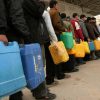
Gaza Health Sector on Verge of Collapse
UN agencies have sounded the alarm on the rapidly deteriorating humanitarian situation in Gaza, pointing to the devastating repercussions of the ongoing fuel shortages.
Three Opportunities for Humanitarians in 2018
As 2018 begins, the challenges of humanitarian crises are momentous. Humanitarians are responding to large-scale emergencies in the Democratic Republic of Congo (DRC), Iraq, Syria and Yemen.
China, Once the Final Resting Place for Half the World’s Trash, Bans Waste Products
China, once the final resting place for half the world’s trash, has just banned the import of certain plastic, paper and textile waste. Western countries are scrambling to shift ‘the problem’ elsewhere – but there could be another way. They could invest more in the circular economy, which would also help them achieve the 2030 Agenda. But what exactly is the circular economy?
One Migrant’s Brutal Odyssey Through Libya
Thirty-year-old Nazir Mohammed sits on one of the two sofas in his single room in Kwame Danso, a small town about 290 kilometres north of Ghana’s capital Accra, reflecting on life back in Libya.
UN Refugee Agency Calls for Aid and Peace in South Sudan
As South Sudan quickly becomes Africa’s largest refugee and humanitarian crisis, the world must come to its aid, said the UN refugee agency. The UN Refugee Agency (UNHCR) has launched a global appeal to support displaced persons amid South Sudan’s rapidly deteriorating humanitarian situation.
Business Unusual will Drive Africa’s Quest to achieve Health Care for All
Africa’s quest for health continues to be held back by a combination of factors such as natural disasters and pandemics, prevailing high rates of communicable and rising incidence of non-communicable diseases, sedentary lifestyles, road accidents and greater population mobility.
Survival of Indigenous Tribes in Bangladesh Starts at School
Just before sundown on Jan. 30, a group of women day labourers from the Shantal indigenous community are in a rush to wind up their work harvesting potatoes in a field in the village of Boldipukur, some 15 km away from Rangpur district in northern Bangladesh.
Healthy Nutrition Spreads in El Salvador’s Schools
Eating healthy and nutritious food in schools in El Salvador is an effort that went from a pilot plan to a well-entrenched programme that has now taken off.
Climate Change is Hurting Children the Most: Here is How to Protect Them
In the United States, the 21 young people who are plaintiffs in the case Juliana v. United States will soon make their case against the government for failing to take action against climate change. Similar lawsuits have been filed in countries including Portugal, India, and Pakistan.« Previous Page — Next Page »


 2026 High-level Political Forum on Sustainable Development. Credit: UN Photo/Eskinder Debebe
In 2015, the United Nations and its Member States adopted the Sustainable Development Goals (SDGs) in an effort to make the world a more sustainable and peaceful place for future generations. Progress on the 17 SDGs has been uneven, and inequality persists across the globe. 10 years after adoption, the 2025 UN SDGs Report revealed that only 35% of the SDG targets are on track, with more than half moving too slowly, and 18% moving backwards from the 2015 baseline. Poverty remains one of the world’s most pressing issues, with hunger, violence, and inequality impeding the opportunities for all people to achieve success. In September 2024, the United Nations Summit of the Future introduced a new goal: to eradicate global poverty by 2030, ensure universal rights to basic services, and increase the overall standard of living in terms of industrialization, economic well-being, citizen health, and literacy. Furthermore, recent shifts in United States foreign aid policy – notably, major budget cuts to USAID and the termination of thousands of development programmes– have severely threatened vital lifelines of financial aid to impoverished communities around the world. Additionally, the United States’ withdrawal from the Paris Climate Agreement has undercut international efforts at sustainable development. With the upcoming 2030 deadline, the UN Secretary-General has called for urgent multilateralism across six priority areas: food systems, energy, digital connectivity, education, jobs and social protection, and climate and biodiversity. IPS sheds light on marginalized communities that struggle on a daily basis to survive and have their stories heard and respected.
Updated by Yilan Batista and Shuli Wong August 2026

The Week with IPS

NEXT STOP - SDGs
Tracking global progress towards a sustainable world
Tracking global progress towards a sustainable world
