Languages
Sunday, November 22, 2026



News and Views from the Global South
Economy & Trade

The World in 2021
The year 2020 is ending with the world caught up in an unprecedented human and economic crisis. The pandemic has contaminated 75 million people and killed 1.7 million. With the lockdowns, the global economy has suffered the worst recession in 75 years, causing the loss of income for millions of people. In such a bleak environment, what will the new year bring? Whilst uncertainty is the only certainty, eight points are likely to be key in the year ahead:
The Impact of COVID-19 on Child Marriage and Other Gender-Based Violence
I recently visited rural areas of Bangladesh amid the COVID-19 pandemic and returned to Dhaka with a new understanding of the impact that COVID-19 is having on child marriage, a harmful practice that is a global challenge. The fundamental shift that I saw was that child marriage, which has typically been encouraged by struggling parents, is now being encouraged by struggling girls. This worrisome trend underscores a new burden of the pandemic on the poor.
How Africa can Lead the World in the COVID-19 Recovery
Africa, compared to Asia, Europe and the US, has largely escaped the devastating death toll of COVID-19, accounting for a fraction of the world’s 63 million cases.
America has a Chequered Past in International Environmental Diplomacy
When it comes to international environmental diplomacy, America has a chequered past. It stood at the forefront of the international battle to fix the ozone hole and has shaped many key international agreements. Sadly, US positions are not always built on solid political ground at home. Twice, in the climate change process, this has led to the United States forging an agreement, only to then walk away. This happened with the 1997 Kyoto Protocol which then Vice-President Gore flew to Japan to sign in the full knowledge that a Republican dominated Senate would never ratify the deal. It happened again five years ago, with former President Obama closing that landmark deal (and John Kerry signing at the UN), only for President Trump to tear it up a few weeks later.
Five Years since the Paris Agreement: The Race to Net Zero Is On
In the wake of the worldwide COVID-19 pandemic, there are both challenges and opportunities in ensuring that COP26, a UN climate change summit, builds confidence in the Paris Agreement as an effective tool to avoid climate crisis.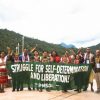
Reclaim Your Rights: Defend Indigenous People’s Lands
Rights are earned through hard-fought struggles. And for Indigenous Peoples (IP), its fulfillment comes from the collective and continuous defense of ancestral land and territory, and assertion of their ways of life and the right to self-determination.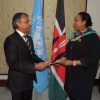
Sid Chatterjee Epitomizes the New Leadership Model of UN Resident Coordinators Worldwide
Siddharth Chatterjee, who has served with the United Nations for over 20 years, has been appointed as the new Resident Coordinator in China, the world’s second largest economy after the United States.
Getting Children in Lebanon Back to School Amongst Multiple Crises
Education and health care were high on the agenda when the United Nations vowed to work toward a better future by setting 17 Sustainable Development Goals (SDGs) to be met by 2030.
Intellectual Property Monopolies Block Vaccine Access
Just before the World Health Assembly (WHA), an 18 May open letter by world leaders and experts urged governments to ensure that all COVID-19 vaccines, treatments and tests are patent-free, fairly distributed and available to all, free of charge.
Discriminatory Laws Still Holding Women Back in the Middle East
Decades of aggressive efforts to create equal opportunities for women, shatter the glass ceiling and build a more inclusive society only ends up in failure, when the key stake holders refuse to acknowledge discriminatory laws, socio-cultural and religious set ups that continue to threaten progress made by the female work force.
R & D Expenditure: How to Raise It and Why
Economic growth is the time-tested method of raising living standards and, if not accompanied by large increases in inequality, lowering poverty. Since World War II, economic growth has lifted hundreds of millions of people out of poverty, including in South Asia.
Africa Readying for Free Trade, Come January 2021
One day in February 2020, Accra-based coffee and cocoa trader Meron Dagnew visited the Secretariat of the African Continental Free Trade Area (AfCFTA) to introduce herself, even before the Secretariat was fully operational.
GGGI selected as Technical Assistance Providers for Burkina Faso and Viet Nam by K-CEP
The Kigali Cooling Efficiency Program (K-CEP), a philanthropic collaboration, has selected the Global Green Growth Institute (GGGI) as technical assistance providers to improve access to and the efficiency of cooling in Burkina Faso and Viet Nam.
Women’s Bodies, COVID-19 and Male Chauvinism
COVID-19 has in some nations been converted into a noxious, political issue. One of many worrying examples is the rhetoric of Brazil´s president. On 10 November, when Brazil´s COVID-19 death toll surpassed 162,000 victims – the numbers have continued to raise and are now 179,032 second only to USA´s 296,745 – Jair Bolsonaro minimized the effects of COVID-19 by stating: ”All of us are going to die one day. There is no point in escaping from that, in escaping from reality. We have to cease being a country of sissies.” Bolsonaro actually said maricas, which like sissies is slang for gay people. Both expressions originally indicated ”small girls” – marica is a diminutive of Maria and sissy of “kid sister”. Bolsonaro thus defined homosexuality as effeminacy by associating gay men with affectation and cowardice. By connecting disease, fear, and femininity the Brazilian president not only ignored the strength and courage women throughout history have demonstrated by enduring childbirths and caring for others, it also shows a strong disregard for gender equality and the rights of women and gay people.
Celebrating Vanuatu’s Path to Sustainable Development
The Pacific Island Developing State of Vanuatu has emerged as one of the region’s great success stories. Vanuatu has joined the ranks of Samoa and the Maldives as one of only six countries to graduate from being a least developed country, since the category was introduced by the United Nations in 1971.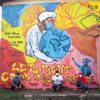
Human Rights Must Be at the Heart of the COVID-19 Recovery
On 10 December every year, we celebrate Human Rights Day, marking the anniversary of the adoption of the Universal Declaration of Human Rights. The Universal Declaration guarantees a spectrum of human rights that belong to each of us equally, and unite us as a global community and upholds our humanity.
Education Is a Fundamental Human Right and the Priority of the 21st Century
Education is not a privilege. It is a fundamental human right. Yet, education is undervalued even at the best of times. We often fail to connect the dots between the right to education and the realization of all human rights. As noted by the Nobel-winning economist Amartya Sen, we have failed to give ‘this massive potential in transforming human lives’ the attention it deserves.
Climate Action for Human Rights
Climate change and human rights are two key issues in international development and their interaction is increasingly in need of focus at national, regional and international levels. In the Pacific, where the 22 Pacific Island countries and territories are on the front line of both climate ambition and the ongoing effects of the climate crisis, climate change is recognised as the region’s single greatest threat. Urgent climate action is consistently called upon to protect the interests of youth and the most vulnerable populations, together with preserving the ‘shared needs and interests, potential and survival of our Blue Pacific and this great Blue Planet’.
La Niña Weather Phenomenon Could Endanger Colombia’s Food Security
After ten years without a strong La Niña weather phenomenon in Colombia, the climate pattern, coupled with the COVID-19 pandemic, could create a vacuum in food production and supply. Multilateral organizations, along with the Colombian government, are trying to implement measures to reduce malnutrition risk. Still, the population is already overwhelmed by a year of struggles that have deepened socio-economic differences.
Urgently Needed Deficit Financing No Excuse for More Fiscal Abuse
Fiscal and monetary measures needed to fight the economic downturn, largely due to COVID-19 policy responses, require more government accountability and discipline to minimise abuse. Such measures should ensure relief for the vulnerable, prevent recessions from becoming depressions, and restore progress.Lopsided nature of global fashion industry and why change is needed
The global apparel industry is broken and only urgent, drastic surgery can fix it. I am not talking about another initiative or another public relations exercise. I am talking about deep, systemic change to be agreed by all involved—by brands, by suppliers, governments, unions and NGOs.« Previous Page — Next Page »


 UN Commission on International Trade Law Holds Colloquium on Harmonizing Law in Age of Digital Trade and Finance. Credit: UN Photo/Manuel Elías
Trade has historically been a geopolitical tool that can both be used to propel development as well as entrench inequalities. In various nations in East Asia and Latin America, increased trade, as often seen in export booms, has allowed them to achieve influential standings within the global economy. On the other hand, many low-income countries in Sub-Saharan Africa, Asia, and Latin America struggle to maintain a robust trade performance, and oftentimes are subjugated to exploitative trade dynamics through intense extraction of their natural resources. In recent decades, international trade has reached a new era as emerging economies across the world are rising in economic preeminence. Stable international trade is crucial to world peace as global interconnectedness facilitates reliable diplomacy. Nevertheless, significant challenges are on the rise. Notably, a major wave of United States tariff escalations in January 2025 lifted US import taxes to their highest level since the 1930s, changing market dynamics and forcing renegotiations with global trading partners.These articles are aimed at informing readers about the complexities of trade and its varying effects on development, with a special focus on the consequences of the global economic crisis, the potential of fair trade and the gender implications of trade policies.
Updated by Yilan Batista and Shuli Wong August 2026

The Week with IPS

NEXT STOP - SDGs
Tracking global progress towards a sustainable world
Tracking global progress towards a sustainable world
