Languages
Sunday, November 22, 2026



News and Views from the Global South
Economy & Trade
Zimbabwe Food Crisis: Time to Act Is Now, Says UN Special Rapporteur
 Global food systems are ripe for transformation if people are to be nourished and the planet sustainable, says Hilal Elver, Special Rapporteur of the Right to Food of the United Nations Human Rights Council.

Tradition and Technology Take Centre Stage at BCFN Food Forum
A coffee producer will receive a cent and a half from a $2.50 cup of coffee. This one stark fact stood out as scientists, researchers, activists and grappled with solutions for change in food and nutrition practises, which would benefit the greater community.
Inequality and Its Many Discontents
Much recent unrest, such as the ‘yellow-vest’ protests in France and the US ‘Abolish the Super-Rich’ campaign, is not against inequality per se, but reflects perceptions of changing inequalities. Most citizens resent inequalities when it is not only unacceptably high, but also rising.
What Do We Want from Our Oceans?
This is a question we need to ask ourselves but before answering we need to acknowledge the diversity of expectations and aspirations that we all have for oceans, which cover more than two-thirds of the planet’s surface.
World’s Crisis-Stricken Oceans Doomed to Destruction Without a Global Treaty
The greatest single climate-induced threat facing the world’s 44 small island developing states (SIDS) is rising sea waters which could obliterate some of the low-lying states, including Maldives, Marshall Islands, Kiribati, Nauru, Solomon Islands, Tuvalu, Palau and Micronesia.
Under Pressure. Can COP25 Deliver?
Mass public pressure backed by the weight of scientific reports is starting to bring governments to their senses as the annual UN climate summit kicks off in Madrid today.
Biofortified Food, a Business Boost for Smallholder Farmers
A start-up in Zimbabwe is producing high nutrition foods using biofortified crops in a bid to fight micronutrient deficiency. Vitamin A deficiency (VAD) leads to night blindness, illness and death from childhood infections. In Zimbabwe, 36 percent of children under five years of age suffer from Vitamin A deficiency, according to the World Health Organisation (WHO).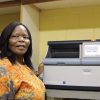
Care for Economic Development, Then Care for Food Nutrition, Food Researcher Tells Africa’s Politicians
More than 2 billion people in the world are suffering from malnutrition. This is the result of diets lacking essential micronutrients such as vitamins, iron and zinc, which are vital for the body to function, according to the Food and Agriculture Organization (FAO).
Africa’s Civil Society Calls for Action as COP25 Kicks off in Madrid
During the 25th round of climate change negotiations starting today in Madrid, Spain, African civil society organisations will call on governments from both developing and developed nations to play their promised roles in combating climate change.
Water Is Worth More than Milk in Extrema, Brazil
"They called me crazy" for fencing in the area where the cows went to drink water, said Elias Cardoso, on his 67-hectare farm in Extrema, a municipality 110 km from São Paulo, Brazil's largest metropolis.
Bangladeshi Migrant Female Domestic Workers Face Violence
Millions of Bangladeshi women are facing violence either as domestic housemaids or as migrant workers in Gulf countries. A few days ago, a video in social media, secretly filmed by a Bangladeshi housemaid employed in Saudi Arabia, caught everyone’s attention where she was helplessly crying and begging to be rescued from her abusive employer.
270 Million People are Migrants, Who Send Home a Staggering $689 Billion
The number of international migrants in 2019 is now estimated at 270 million and the top destination remains the United States, at nearly 51 million, the UN migration agency said on Wednesday.
IDB Modernises Crucial Social and Environmental Safeguards
The Inter-American Development Bank (IDB) is in the process of modernising the social and environmental safeguards that govern the financing of projects considered vital for the construction of sustainable infrastructure in the Latin American region.
Catalysing Change for Gender Equality
Great strides have been taken to empower women and girls in the Asia-Pacific region since the Fourth World Conference on Women in Beijing adopted an ambitious global agenda to achieve gender equality twenty-five years ago. Gender parity has been achieved in primary education. Maternal mortality has been halved. Today, the region’s governments are committed to overcoming the persistent challenges of discrimination, gender-based violence and women’s unequal access to resources and decision-making.
Social Protection Necessary to Quickly End Poverty, Hunger
Historically, most social security systems have developed in the formal sector of rich economies. However, most of the poor and hungry in the world live in rural areas, surviving in the informal economy.
When African Women are Financially Included, an Entire Continent Wins
When Rwandan-born, Senegalese-raised entrepreneur and businesswoman Kristine Ngiriye was 18 she had a brilliant idea that she wanted to translate into a business. But when she went to her local bank for a loan they told her to rather get married, because “ a woman must be married instead of venturing into business”, Ngiriye tells IPS.
First ladies panel seeks urgent policies to translate Africa’s demographic dividend into viable potential
“Investments in gender equality are critical to realizing demographic dividend, but we need to ensure that women have the tools to overcome the barriers they face,” First Lady of Rwanda, Jeannette Kagame told participants at a panel at the Global Gender Summit in Kigali on Monday.
More Austerity for Developing Countries: It’s Bad News, and It’s Avoidable
After years of austerity, a number of Eurozone countries are now considering expansionary fiscal policies. And in the UK, government spending is set to return to levels last seen in the 1970s. But austerity abounds elsewhere in the world, including in some of the poorest countries.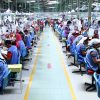
Global Clothing Brands Should Respond to the #MeToo Mandate
It has been two years since #MeToo went viral, and it’s about time the garment industry’s sexual harassment problem got the attention it deserves. Clothing and footwear brands can do much more to prevent and address gender-based violence in their supply chains, but first they need to confront how badly their inspection or “social auditing” programs fail women.
Green Steel
How Indonesian craftsmanship is undergoing a revival at the world’s first ‘bamboo university’. It’s fast-growing, flexible and strong. Standing underneath a bamboo canopy, it is easy to understand why people have been using this grass plant for years, in the construction of houses, bridges and scaffolding.The Organisation of Eastern Caribbean States (OECS) joins GGGI as its 34th Member and 1st Regional Integration Member
Today, the Organisation of Eastern Caribbean States (OECS) became the 34th Member of the Global Green Growth Institute (GGGI) after formally submitting its Instrument of Accession. The OECS is also the first regional integration organisation to become a member of GGGI.« Previous Page — Next Page »


 UN Commission on International Trade Law Holds Colloquium on Harmonizing Law in Age of Digital Trade and Finance. Credit: UN Photo/Manuel Elías
Trade has historically been a geopolitical tool that can both be used to propel development as well as entrench inequalities. In various nations in East Asia and Latin America, increased trade, as often seen in export booms, has allowed them to achieve influential standings within the global economy. On the other hand, many low-income countries in Sub-Saharan Africa, Asia, and Latin America struggle to maintain a robust trade performance, and oftentimes are subjugated to exploitative trade dynamics through intense extraction of their natural resources. In recent decades, international trade has reached a new era as emerging economies across the world are rising in economic preeminence. Stable international trade is crucial to world peace as global interconnectedness facilitates reliable diplomacy. Nevertheless, significant challenges are on the rise. Notably, a major wave of United States tariff escalations in January 2025 lifted US import taxes to their highest level since the 1930s, changing market dynamics and forcing renegotiations with global trading partners.These articles are aimed at informing readers about the complexities of trade and its varying effects on development, with a special focus on the consequences of the global economic crisis, the potential of fair trade and the gender implications of trade policies.
Updated by Yilan Batista and Shuli Wong August 2026

The Week with IPS

NEXT STOP - SDGs
Tracking global progress towards a sustainable world
Tracking global progress towards a sustainable world
