Languages
Thursday, November 19, 2026



News and Views from the Global South
Editors' Choice

Russian Arms Producers Move Ahead of Western Rivals
The world's top 100 arms producing companies racked up 402 billion dollars in weapons sales and military services in 2013, according to the latest figures released by the Stockholm International Peace Research Institute (SIPRI).
OPINION: The Sad Future of Our Planet
It is now official: the current inter-governmental system is not able to act in the interest of humankind.
Lima Agrees Deal – but Leaves Major Issues for Paris
After a 25-hour extension, delegates from 195 countries reached agreement on a “bare minimum” of measures to combat climate change, and postponed big decisions on a new treaty until the 21st Conference of the Parties (COP 21), to be held in a year’s time in Paris.
Dirty Energy Reliance Undercuts U.S., Canada Rhetoric at Climate Talks
While U.S. and Canadian officials delivered speeches about how the world needs to step up to their responsibilities at the U.N. climate negotiations in Lima, Peru, activists from North America demanded clear answers back home on their governments’ relationships with fossil fuel corporations, as well as the future of several major oil projects across the continent.
Renewable Energy: The Untold Story of an African Revolution
Africa is experiencing a revolution towards cleaner energy through renewable energy but the story has hardly been told to the world, says Achim Steiner, Executive Director of the United Nations Environment Programme (UNEP).
Glaciers and Fruit Dying in Peru with no Response from COP20
Snow-capped mountains may become a thing of the past in Peru, which has 70 percent of the world’s tropical glaciers. And farmers in these ecosystems are having a hard time adapting to the higher temperatures, while the governments of 195 countries are wrapping up the climate change talks in Lima without addressing this situation facing the host country.
Climate Change Creates New Geography of Food
The magnitude of the climate changes brought about by global warming and the alterations in rainfall patterns are modifying the geography of food production in the tropics, warned participants at the climate summit in the Peruvian capital.
Want Economic Growth? Lessen Inequality
For years, many policy makers, including economists, have clung to the belief that if states do nothing to boost income equality, market forces will cause wealth to trickle down to the poorest citizens and contribute to overall growth.
U.S. Faulted for Undermining Torture Convention
The timing was inadvertently impeccable as two stinging reports on harsh interrogation techniques - by the Central Intelligence Agency (CIA) in the United States and former military regimes in Brazil - were released on the eve of the 30th anniversary of the U.N. Convention Against Torture.
Pushing for Gender Equity at COP20
Despite international acknowledgement that women are disproportionately affected by climate change, the Lima climate negotiations have been slow to deliver progress on recognising their importance, while threats of pushback loom on the horizon.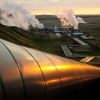
The Rapid Rise of Green Bonds
Most countries joining the growing list of nations pursuing clean geothermal power have been confronted with a huge financial challenge.
Nuclear States Face Barrage of Criticism in Vienna
Sarcastic laughter erupted when a civil society representative expressed his “admiration for the delegate of the United States, who with one insensitive, ill-timed, inappropriate and diplomatically inept intervention” had “managed to dispel the considerable goodwill the U.S. had garnered by its decision to participate” in Vienna Conference on Humanitarian Impact of Nuclear Weapons.
Latin America Faces the Novelty and Challenge of Ageing
The eternally young Latin America is also ageing, due to the rise in life expectancy and the drop in birth rates - a demographic revolution that poses new challenges in a region that has begun to move slowly away from its status as the most unequal part of the world.
Civil Society Support for Marshall Islands Against Nuclear Weapons
Ahead of the Dec. 8-9 Vienna Conference on the Humanitarian Impact of Nuclear Weapons, activists from all over the world came together in the Austrian capital to participate in a civil society forum organised by the International Campaign to Abolish Nuclear Weapons (ICAN) on Dec. 6 and 7.
Divestment Campaign Aims to Bleed Dry the Fossil Fuel Industry
Even as the presence of major oil and gas corporations is nearly ubiquitous at the U.N. climate talks in the Peruvian capital known as COP20, fossil fuel divestment campaigns have gained ground in various countries and are moving to counter the influence of the "dirty energy" lobby here.
Climate Neutrality – the Lifeboat Launched by Lima
Packed into stifling meeting rooms in the Peruvian capital, delegates from 195 countries are trying to find a path that would make it possible for the planet to reach climate neutrality in the second half of this century – the only way to avoid irreversible damage, scientists warn.
OPINION: Addressing Climate Change Requires Real Solutions, Not Blind Faith in the Magic of Markets
Norwegians know something of life in a climate change world. Migratory birds arrive earlier in spring, trees come into leaf before previously expected, and palsa mires (wetlands) are being lost as permafrost thaws.
“Indigenous Peoples Are the Owners of the Land” Say Activists at COP20
The clamor of indigenous peoples for recognition of their ancestral lands resounded among the delegates of 195 countries at the climate summit taking place in the Peruvian capital. “I want my land…that’s where I live and eat, and it’s where my saintly grandparents lie,” Diana Ríos shouted with rage.
War Knocks on Door of Youth Centre in Zwara
It could be a squat house anywhere: music is playing non-stop and there is also a radio station and an art exhibition. However, weapons are also on display among the instruments, and most here wear camouflage uniform.
Climate and Post-2015 Development Agenda Talks Share the Same Path
The international community’s post-2015 development agenda will depend, in key aspects, on whether the delegates of 195 countries meeting now at the climate summit in the Peruvian capital reach an agreement to reduce global warming, since climate change affects all human activity.
Climate Finance Flowing, But for Many, the Well Remains Dry
For more than 10 years, Mildred Crawford has been “a voice in the wilderness” crying out on behalf of rural women in agriculture.« Previous Page — Next Page »


The Week with IPS

NEXT STOP - SDGs
Tracking global progress towards a sustainable world
Tracking global progress towards a sustainable world
