Languages
Friday, October 23, 2026



News and Views from the Global South
Education

Young People Bring Solar Energy to Schools in the Argentine Capital
"The idea came to a group of schoolmates and me in 2014, but we never thought it could become a reality," says Sebastián Ieraci, 23, as he points to a multitude of photovoltaic solar panels shining on the roof of the Antonio Devoto High School in the Argentine capital.
Her Education Is Our Foundation
Conflicts and disasters are about destruction. Discrimination and marginalization are about disempowerment. Combine the two and we get a glimpse of the brutal reality affecting millions of girls today. Standing amidst the ruins of their towns, displaced communities and torn-apart families, they are further shackled by exclusion, exploitation and lost opportunities because of their gender.
Is Our Academic System Ready for a New Coronavirus Normal?
Institutions of higher education have a responsibility to lead by example and to provide current, high-quality information to the people and communities that support them. This responsibility is no clearer than during a public health and information crisis like the one presented by this novel coronavirus.
An Ambitious Year for Climate Action Is a Big Year for Women’s Empowerment
This year, the Paris Agreement’s effectiveness as a global response to the climate crisis is being tested as governments are preparing to submit more ambitious national targets for mitigation and adaptation.
TikTok: Expressive Mechanism for many dealing with today’s world
“What do you get from the TikTok videos? Do you prefer the platform for entertainment, passing time or for connecting with your friends? I have seen comical videos, venting sessions and some that do not make any sense what so ever and some are just rude, making fun of others.” I asked the 14-year-old k-popper teenager flipping through the pages of a manga book while he chose to respond in English coming from a Spanish speaking family and studying Mandarin as a third language.
On 8th March – and All the Other Days: Each for Equal
Development efforts over the past two decades have seen millions of people freed from poverty and hunger, and inequalities reduced worldwide. This is an undoubted achievement, but is no reason for complacency. The fact is that inequality between men and women, between boys and girls, remains not only a social justice concern, but one of the impediments on development in countries across Africa and beyond. Addressing such inequalities is a duty for all of us, and one which is at the heart of the theme of this year’s International Women’s Day on 8th March: Each for Equal.
Many Milestones but Painfully Slow Progress Towards Gender Equality
The narrative surrounding women’s rights in 2020 carries much hope and possibility. A new decade is ushering in important anniversaries and milestones: 25 years since the Beijing Platform for Action, 110 years since the birth of International Women's Day and the 10-year countdown to achieve the UN Sustainable Development Goals.
Personal Conviction Versus Fandom: The Case of Mitt Romney
The great American impeachment show has ended not with a bang, but with a whimper. The dirt was washed away from President Trump, the perfect Teflon Guy. Maybe his invulnerability comes from the fact that he appears to be more of a brand than a real person, adapted to a frame of mind that increasingly dominates social media – cheap entertainment, shallowness, vulgarity, invectives, and catchy phrases without support in well-founded facts. Trump is all and nothing, a shape shifting trickster pretending to be the role model for voiceless masses.
The Italian Pyramid: Scientific Observatory at the Top of the World
 Hello! Are you Italian?
No, I’m from Nepal.
Oops.
Kaji Bista is the staff manager of the Ev-K2-CNR’s innovative Pyramid International Laboratory/Observatory (known as the Italian Pyramid) at 5,050 m a.s.l. located in Lobouche.
Hello! Are you Italian?
No, I’m from Nepal.
Oops.
Kaji Bista is the staff manager of the Ev-K2-CNR’s innovative Pyramid International Laboratory/Observatory (known as the Italian Pyramid) at 5,050 m a.s.l. located in Lobouche.
Education Cannot Wait and Porticus announce new partnership focused on measuring holistic learning outcomes for children and youth caught in protracted crises and emergencies
To improve learning outcomes for girls and boys caught in emergencies and protracted crises, Education Cannot Wait (ECW) is now partnering with the global philanthropic organization Porticus to develop, test and document fit-for-purpose solutions towards measuring the learning of children in crises-affected countries.
EDUCATION CANNOT WAIT INVESTS $48 MILLION IN CHAD AND ETHIOPIA
In just one week, Education Cannot Wait (ECW), with the Governments of Ethiopia and Chad and implementing partners, launched two new multi-year resilience programmes in Chad (7 February) and Ethiopia (14 February) with US$48 million in seed funding over three years to roll out crucial programme activities and catalyse additional resources.
Coming Down the Davos Mountain with a Gender Lens
In a recent report by World Economic Forum (WEF) shows women suffer a “triple whammy” in the workplace. Without drastic action, gender parity will take more than a lifetime to achieve. This is the challenge that Katja Iversen, President and CEO of Women Deliver is staring down.
Restoring Competition in ”Winner-took-All” Digital Platform Markets
Digital platforms are at the centre of the global economy and daily lives of consumers. A handful of these platforms have become dominant in specific markets without facing meaningful competition. They include Amazon as a marketplace, Facebook in social networking, Google in search engines and Apple and Google in application stores.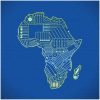
Could Africa’s Marketplace Platforms Help Upskill a Generation for the Digital Age?
By 2030, sub-Saharan Africa will be home to more than a quarter of the world’s population under 25. Between 15 and 20 million young people will enter the African workforce each year, joining the ranks of the millions of currently under- and unemployed people searching for better livelihoods.
Organization of Educational Cooperation Established to Meet SDG4
 The Education Relief Foundation (ERF), jointly with the Republic of Djibouti, convened the III ForumBIE 2030 on Balanced and Inclusive Education On January 27-29 2020. This third ForumBIE 2030, with the overall aim to develop strategies for achieving the United Nations Sustainable Development Goal 4 (SDG 4) on inclusive and equitable quality education, concluded with the signing of the Universal Declaration on Balanced and Inclusive Education, which established a new international organization : 'Organization for Educational Cooperation'.
Digital Civil Registration Can Reduce the Number of ‘Invisible’ People and Bring Kenya Closer to the SDGs
A recent opinion piece in the New York Times titled, “Kenya’s New Digital IDs May Exclude Millions of Minorities” raises an issue that the UN is passionate about: that the pursuit of sustainable development should leave no one behind.
International Summit on Balanced and Inclusive Education in Djibouti concludes with establishment of new Organisation of Educational Cooperation
At the Closing Ceremony of the III ForumBIE 2030, 38 governments, civil society organisations and academic entities became the first to sign the Universal Declaration of Balanced and Inclusive Education (UDBIE). Furthermore, with the objective of achieving the aspirations and commitments contained within the UDBIE, 30 signatories, including governments and civil society organisations, agreed to establish the Organisation of Educational Cooperation (OEC), a new international organisation from the Global South creating platforms and mechanisms of solidarity-based technical and financial cooperation and support for educational reforms.
Inclusive Education Still Evades People with Disabilities
Neema Namdamu, 42, grew up in the village of Bukavu in eastern Democratic Republic of Congo where children with disabilities were considered a curse. As a child Namdamu contracted polio, leaving her paralysed from the waist down. Her neighbours advised her mother to do what they felt was the "right thing": to leave the child alone in a hut until she died of starvation.
Addressing the Low Female Representation in STEM Education
Dr. Anne-Maria Brennan loved science as a young girl. But instead of encouraging her, those around her made attempts to steer her in the "right direction". “The right direction was in nursing, teaching and secretarial courses. I was told that girls do not study physics,” she tells IPS.
Russia’s Prodigious Gift of Higher Education to the Developing World
Peoples’ Friendship University of Russia - popularly known as RUDN (acronym from its Russian name Rossiysky Universitet Druzhby Narodov) - is a renowned, world-class educational and research institution in Moscow.
**UPDATE** African Nations Caught in Conflict Re-commit to Inclusive Education
Djibouti’s President Ismail Omar Guelleh knows that his country is in need of an education system that is, “innovative, based on universal principles and values and adaptive of the local realities”.« Previous Page — Next Page »





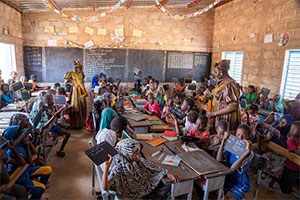 Two teachers work in a classroom in Forces Vives School in Dori, Burkina Faso. Credit: UNICEF/UNI978361
Safe and uninterrupted education is a fundamental right for all children. Education is paramount to global development, as it has been proven that investing in education – especially for girls and children – contributes significantly to economic growth and prosperity. Although more than 1 billion children go to school, many are subjected to conditions that are not conducive to a proper learning environment, including makeshift facilities, a lack of supplies, violence in classrooms, inadequate sanitation, untrained instructors, and widespread school closures. Since 2015, there have been immense gains in education with an increase of 109 million children in school. However, as of 2023, 272 million children are still out of school.
High poverty levels in developing countries also impede children’s access to a proper education. For example, from the early to mid 2000s, Sub-Saharan African nations witnessed a dramatic decline in trained teachers due to inadequate funding in the education sector. Furthermore, major cuts to United States international aid threaten an estimated 23 million additional children's access to education, as USAID‑funded school programmes across Africa and Asia face closure.
Various other factors contribute to the decline of education, notably hunger, which has increased as conflict and climate change interfere with global food production and dissemination. Meanwhile, certain social and cultural practices also impede children’s access to education, with gender inequality, discrimination, child labour, and child marriages preventing millions of children from attending school. Economic conditions such as the inaccessibility of higher education also affect disenfranchised communities across the world. In extreme situations, such as warfare where educational facilities are destroyed in their totality, notably in Gaza and Sudan, entire generations of children might grow up without access to education. Rebuilding educational infrastructure is a long and arduous process, especially when violence persists across generations, and this significantly stunts the development of societal prosperity and stability.
IPS is dedicated to telling the shocking truths about worldwide education through impassioned opinion pieces and comprehensive articles, highlighting global issues that impede worldwide education and the courses of action being taken by organizations such as UNICEF and Education Cannot Wait.

The Week with IPS

NEXT STOP - SDGs
Tracking global progress towards a sustainable world
Tracking global progress towards a sustainable world
