Languages
Tuesday, October 6, 2026



News and Views from the Global South
Energy

China Drives Nuclear Expansion in Argentina, but with Strings Attached
Two new nuclear power plants, to cost 14 billion dollars, will give a new impetus to Argentina’s relation with atomic energy, which began over 60 years ago. President Mauricio Macri made the announcement from China, the country that is to finance 85 per cent of the works.
New Research to Unearth UAE’s Renewable Energy Potential
A report by World Wildlife Fund (WWF) states that supplying the world with 95 per cent renewable sources by 2050 will not only reduce 80 per cent of GHG emissions from the energy sector but also save four trillion euros annually.
Mixed Reactions to U.S. Withdrawal from Climate Deal
The United States is expected to withdraw from the landmark Paris climate agreement, prompting mixed reactions from civil society and political representatives.
Business Unusual: Valuing Water for a Sustainable Future
Valuing water is more than simply assigning costs to a scare resource - it is an essential step for transforming water governance to meet the needs of a prosperous future.
Millions of Homes in Mexico Suffer from “Energy Poverty”
Energy poverty afflicts millions of homes in Mexico, with many social, economic and environmental impacts for the country.
Big polluting lobbyists may be forced to declare interests at UN talks
Is the presence of the fossil fuel industry necessary in global climate change negotiations, or does their presence in these talks represent a conflict of interest and undermine global progress?
World to Cut Emissions With or Without Trump
In a last-ditch effort, Germany and China are trying to influence the United States not to walk away from the Paris climate change accord it signed along with 194 nations.
Africa and India – Sharing the Development Journey
Africa, like India, is a continent of rich and compelling diversity. Both continents share a similar landscape, a shared colonial history, and similar economic and demographic challenges. This helps both India and Africa work especially well with each other.
World Lags on Clean Energy Goals
It may be the 21st century but more than three billion people still use fire for cooking and heating. Of those, one billion people have no access to electricity despite a global effort launched at the 2011 Vienna Energy Forum to bring electricity to everyone on the planet.
When It Comes to Fracking, Argentina Dreams Big
Since a US Energy Information Administration (EIA) report announced in 2011 that Argentina had some of the world’s biggest shale oil and gas reserves, the dream of prosperity has been on the minds of many people in this South American nation where nearly a third of the population lives in poverty.
Mega-Projects Have Magnified Corruption in Brazil
It cannot be categorically stated that corruption has increased in the country in recent years, because there is no objective information from earlier periods to compare with, according to Manoel Galdino, executive director of Transparency Brazil.
Caricom’s Energy-Efficient Building Code Could Be Tough Sell
Caribbean Community (Caricom) states are in the process of formulating an energy efficiency building code for the region that would help reduce CO2 emissions, but implementation of the code may depend heavily on moral suasion for its success.
Caribbean Pursues Green Growth Despite Uncertain Times
Barbados and its Caribbean neighbours are continuing to press ahead with their climate change agenda and push the concept of renewable energy despite the new position taken by the United States.
Climate Funds for World’s Poorest Slow to Materialise
Climate change is making poor countries poorer, yet funding meant to address its economic consequences has been slow to materialise. Instead funding bodies are choosing to invest in green energy projects in middle-income countries.
Green Power: Wave of the Future
The price of renewable energy — especially solar power — continues to tumble, and the result is more green power generating capacity for fewer dollars. That’s the bottom line message from the latest figures on world investment in clean technologies.
Climate Change Solutions Can’t Wait for U.S. Leadership
From tourism-dependent nations like Barbados to those rich with natural resources like Guyana, climate change poses one of the biggest challenges for the countries of the Caribbean.
Brazilian Dam Causes Too Much or Too Little Water in Amazon Villages
The Juruna indigenous village of Miratu mourned the death of Jarliel twice: once on October 26, when he drowned in the Xingu River, and the second time when the sacred burial ground was flooded by an unexpected rise in the river that crosses Brazil’s Amazon region.
Trinidad Pushes for Shift to Cleaner Fuel
The Trinidad and Tobago government has invested about 74 million dollars in the first phase of a 295-million-dollar project to encourage more drivers to use Compressed Natural Gas (CNG), described by experts here as a preliminary step in the country’s transition to using more sustainable forms of energy.
A Carbon Law to Protect the Climate
The Carbon Law says human carbon dioxide (CO2) emissions must be reduced by half each decade starting in 2020. By following this “law” humanity can achieve net-zero CO2 emissions by mid-century to protect the global climate for current and future generations.
Climate Breaks All Records: Hottest Year, Lowest Ice, Highest Sea Level
Climate has, once more, broken all records, with the year 2016 making history-highest-ever global temperature, exceptionally low sea ice, unabated sea level rise and ocean heat. And what is even worse-- extreme and unusual trends continue in 2017.
Don’t Understand Clouds? But You Should!
Obviously, there are so many issues and phenomena that have been brought up by growing impact of climate change that one would likely not think about. Some of them, however, are essential and would be good to learn about. For instance, the fact that clouds play a "pivotal role" in weather forecasts and warnings.« Previous Page — Next Page »





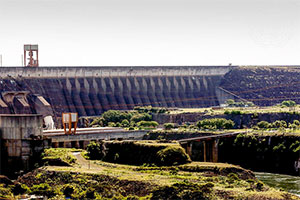 UN Power Plant, Paraguay. Credit: UN Photo/Evan Schneider
Energy has posed a great challenge for economies around the world. As global energy consumption skyrockets throughout the years, so does the need for sustainable solutions. The Sustainable Development Goals are essential in providing people with access to safe, affordable, and sustainable energy sources that minimize harm on the planet. Progress towards these goals opens the door for an advancement in modernization for communities on a global level and allows for a potential mitigation of tensions between nations.
The UN’s Summit of the Future in 2024 offered new initiatives that are being taken to achieve these goals, including a decreased reliance on fossil fuels, a switch to renewable energy sources, and improved climate financing.
IPS is well positioned to provide relevant, insightful, and compelling analysis of recent updates and measures being taken around the world to achieve a cleaner future.

The Week with IPS

NEXT STOP - SDGs
Tracking global progress towards a sustainable world
Tracking global progress towards a sustainable world
