Languages
Thursday, October 15, 2026



News and Views from the Global South
Energy

China’s Rising Soybean Consumption Reshaping Western Agriculture
Global demand for soybeans has soared in recent decades, with China leading the race. Nearly 60 percent of all soybeans entering international trade today go to China, making it far and away the world's largest importer.
Villagers Wail Against Nuclear Power
Mahalakshmi, a housewife married to a farmer, is afraid for her family’s future. The fifty-two-year-old woman is also frustrated that Indian authorities have "betrayed" poor villagers.
OP-ED: Climate Inaction Is a Clear Failure of Democracy
Around the world, 2012 was the year of extreme weather, when we unequivocally learned that the fossil fuel energy that powers our societies is destroying them. Accepting this reality is the biggest challenge of the brand new year.
Amazon Regional Alliance to Confront the Climate Emergency
“When someone in Peru sneezes, someone in Brazil catches a cold. When a barrel of oil is produced in Ecuador, a neighbouring country ends up buying it,” says prominent environmentalist Yolanda Kakabadse.
Renewable Energy Alliance Stretches From Germany to Central America
A recent agreement between El Salvador and Germany, with the latter supporting two renewable energy projects that would increase installed capacity in the Central American country by 94.2 megawatts by 2013, points to a promising alliance for carbon-free energy.
Guyana Hits Paydirt on Low Carbon Development Path
Imagine Guyana and Dominica without forests and rivers, or Antigua, Barbados and St. Lucia without beaches.
Funding Restored for U.S. Military Biofuels Programme
Reversing attempts to eliminate the U.S. military’s advanced biofuels programme, both houses of Congress on Tuesday approved major legislation that now presents no obstacles to broad-reaching Defence Department plans to mainstream and spread the use of alternative fuels throughout its operations.
Frolic Barefoot, But Don’t Leave a Carbon Footprint
As the world’s most tourism-dependent region, with the sector accounting for one in every eight jobs, the Caribbean has much to fear from climate change.
At the Edge of the Carbon Cliff
The most important number in history is now the annual measure of carbon emissions. That number reveals humanity's steady billion-tonne by billion-tonne march to the edge of the carbon cliff, beyond which scientists warn lies a fateful fall to catastrophic climate change.
OP-ED: A Universal Climate Change Agreement Is Necessary and Possible
The results of the United Nations climate change conference that closed in Doha, Qatar on Dec. 8 show once again that the international negotiations are moving steadily in the right direction, but alarmingly slow.
Caribbean Islands Find Economic Advantages in Sustainable Energy
With the exception of oil rich Trinidad and Tobago, most, if not all, other Caribbean islands are extremely vulnerable when it comes to the high costs of imported fuels that are easily disrupted by natural disasters and other phenomena.
Iranian Bomb Graph Appears Adapted from One on Internet
The suspect graph of a nuclear explosion reportedly provided to the International Atomic Energy Agency (IAEA) as evidence of Iranian computer modeling of nuclear weapons yields appears to have been adapted from a very similar graph in a scholarly journal article published in January 2009 and available on the internet.
Dreams of a ‘Green Utopia’ Wither in the Maghreb
When the Desertec Industrial Initiative (DII), an alliance of 21 major European corporations, first unveiled plans to install a network of solar thermal, photovoltaic, and wind plants across the North African Maghreb region to generate electricity, the project was greeted as a ‘green utopia’.
Native Communities in Peru Take Charge of Environmental Monitoring
At the end of every month, with the skill of an environmental engineer, Wilson Sandi prepares a work plan that will be used by Achuar indigenous people, like him, to document the scars left by 40 years of oil drilling in the Peruvian Amazon region of Loreto.
No Basic Services for Oil Country
South Sudan may have received slightly more than 10 billion dollars in oil revenue from 2005 to January 2012, when oil production shut down, according to both government officials and the World Bank. But development experts have urged the government to begin investing in the country and its people, as basic social services remain scarce.
Critics Brand Climate Talks Another Lost Opportunity
Rich countries came to the U.N. climate talks in Doha intent on delaying needed action on climate change for another three years and a still to be hammered out new global treaty.
Brazilian Firms Bring Water and Power to Angolans
The Kwanza river in the heart of Angola will be a symbol of Brazilian partnership in African development when power stations along the country's main source of water are fully operational.
Doha Climate Summit Ends With No New CO2 Cuts or Funding
The United Nations climate talks in Doha went a full extra 24 hours and ended without increased cuts in fossil fuel emissions and without financial commitments between 2013 and 2015.
Swiss Battery May Lose Power
Swiss energy companies are determined to turn the country into a 'battery for Europe'. Vast investments are made in big-scale water power projects. But it is not certain they will eventually pay off.
A Hotter World Is a Hungry World
Food prices will soar and hundreds of millions will starve without urgent action to make major cuts in fossil fuel emissions. That is what is at stake here on the last day of the U.N. climate talks known as COP 18, scientists and activists say.
An Empty Table at Doha Climate Talks
United Nations climate talks are on the edge of collapse Thursday, according to a coalition of civil society and representatives from half of the world's countries.« Previous Page — Next Page »





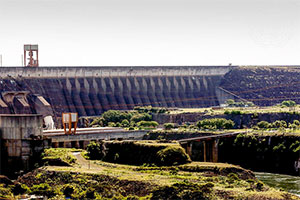 UN Power Plant, Paraguay. Credit: UN Photo/Evan Schneider
Energy has posed a great challenge for economies around the world. As global energy consumption skyrockets throughout the years, so does the need for sustainable solutions. The Sustainable Development Goals are essential in providing people with access to safe, affordable, and sustainable energy sources that minimize harm on the planet. Progress towards these goals opens the door for an advancement in modernization for communities on a global level and allows for a potential mitigation of tensions between nations.
The UN’s Summit of the Future in 2024 offered new initiatives that are being taken to achieve these goals, including a decreased reliance on fossil fuels, a switch to renewable energy sources, and improved climate financing.
IPS is well positioned to provide relevant, insightful, and compelling analysis of recent updates and measures being taken around the world to achieve a cleaner future.

The Week with IPS

NEXT STOP - SDGs
Tracking global progress towards a sustainable world
Tracking global progress towards a sustainable world
