
Sunday, November 15, 2026



News and Views from the Global South
Environment

Living with Drought: Lessons from Brazil’s Semiarid Region
 No one died of hunger during the worst drought in Brazil's semiarid ecoregion, between 2011 and 2018, in sharp contrast to the past when scarce rainfall caused deaths, looting, a mass exodus to the South and bloody conflicts.

Capture of CO2 and Hydrogen as Part of Latin America’s Energy Future
While struggling to increase the generation and consumption of renewable energy, Latin America is beginning to see the rise of new technologies, such as the capture and storage of carbon and hydrogen from fossil fuels or wind and solar energy.
‘The Sahel – a Microcosm of Cascading Global Risks Converging in One Region’
The European Commission this week pledged $27.8 million in humanitarian support to the Sahel region as floods and the coronavirus pandemic exacerbate the stability in a region deeply in conflict. While the figure is less than 2 percent of the $2.4 billion that the United Nations has appealed for, Amnesty International researcher Ousmane Diallo told IPS that despite past donations from international development partners to Sahelian countries, the situation hasn’t improved over the years.
Bulawayo Water Crisis: When the Taps Run Dry and the City Runs out of Ideas
Dotted across the Zimbabwean city of Bulawayo, the water tanks installed in private residences is evidence that years of a water crisis, that has seen some suburbs here going for months without running water, has not spared anyone. The large plastic drums, locally called Jojo tanks after the company that manufacturers them, and which have a storage range of up to 10,000 litres, have assumed a class status of sorts in Bulawayo.
Questions Remain over Botswana’s Mass Elephant Deaths
When hundreds of elephants died in the space of a few months in Botswana earlier this year, conservationists were shocked. Wildlife experts said it was one of the largest elephant mortality events in history.
Limited Liability: Profit Without Responsibility
Limited liability protection for shareholders in joint stock companies was introduced to encourage investments in them. However, it has encouraged irresponsibility, causing much harm while generating profits without responsibility. Limited liability limits responsibility Columbia Law School’s Professor Katarina Pistor has extended her critique of the legal system to emphasize the implications of such limited liability. Limited liability encourages shareholders not to pay attention to the harm corporations they invest in may do.
Climate Change: New Threat to Nepal’s Rhinos
Nepal’s population of one-horned rhinoceros that survived hunting, a shrinking habitat and wildlife trafficking are now faced with a new threat: changes in their living environment due to a rapidly-warming atmosphere.
NESFAS Partner Communities Celebrate World Food Day
World Food Day, a day dedicated to tackle world hunger, is annually celebrated on October 16, 2020 globally. To commemorate this day, the North East Slow Food and Agrobiodiversity Society (NESFAS) along with its partner organisations — Society for Urban and Rural Empowerment (SURE) and North East Network (NEN), Nagaland — hosted several programmes across 27 communities in Meghalaya and Nagaland. It may be mentioned here that all government SOPs and measures were followed during the events.
Why We Need Trees to End to Poverty – Landmark Report
With extreme poverty (living on $1.90 a day) projected to rise for the first time in over 20 years, a new study has concluded that global poverty eradication efforts could be futile in the absence of forests and trees.
Working Animals’ Role in SDGs and Addressing Climate Change, Pandemic Crises
As we prepare to celebrate the 75th anniversary of the Food and Agriculture Organization of the United Nations (FAO), it is time to recognise the role of working animals in livelihood systems, addressing climate change and in human health, which has been overlooked for too long. The Working Animal Alliance seeks to change this.
The Urban Poor are Fighting Back Against COVID-19
For those who live in slums and informal settlements, the Covid-19 pandemic has brought to the forefront their greatest vulnerabilities. But they are fighting back; organising, and coming up with creative ways to protect their communities.
How the Pacific Islands are Balancing COVID-19 Survival Demands on Coastal Fisheries with Sustainable Management
Coastal fisheries in the Pacific Islands have become a food and livelihood lifeline to many people who have lost jobs, especially in urban centres and tourism, following COVID-19 lockdowns and border closures. Now governments and development organisations are trying to meet the crisis-driven survival needs of here and now, while also considering the long-term consequences on near shore marine resources and habitats.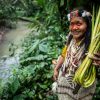
Indigenous Peoples & Local Communities Offer Best Hope for Our Planetary Emergency
Indigenous peoples and local communities offer the best hope for solutions to our planetary emergency. These solutions are grounded in traditional, time-tested practices and knowledge.
Milton Friedman Versus Stakeholder Capitalism
Milton Friedman was arguably the most influential economist of the second half of the 20th century, associated with promoting ‘neo-liberal’, free-market, shareholder capitalism. Friedman’s monetarist economics is now widely considered irrelevant, if not wrong, especially with the low inflation associated with ‘unconventional’ monetary policies following the 2008-2009 global financial crisis.
Gendering Agriculture so Women Take the Lead in Feeding Africa
Africa’s hopes of feeding a population projected to double by 2050 amidst a worsening climate crisis rest on huge investments in agriculture, including creating the conditions so that women can empower themselves and lead efforts to transform the continent’s farming landscape.
Scaling Up SDG4 in Crises
Out of global crises spring opportunities for change. In crisis, change is not an option. It is a necessity. And, as Plato famously noted: “Necessity is the mother of invention.” Education Cannot Wait (ECW) is an invention that sprang out of crisis and was borne of necessity.
Nobel Peace Prize to World Food Programme Delivering Life-Saving Sustenance to Millions Worldwide
With the 2020 Nobel Peace Prize bestowed on the Rome-based World Food Programme (WFP), the United Nations and its affiliated agencies continue to hold a monopoly of one of the world’s most prestigious annual awards.
Community Hydropower Dam Lights Up Salvadoran Villages
The people of Potrerillos, a village located in northeastern El Salvador, worked hard to achieve something that many doubted they could do: harness the waters of the Carolina River to install a community mini hydroelectric plant, which supplies them with cheap energy. 
Caribbean Communities Building Resilience through Water Harvesting
On the Eastern Caribbean (EC) islands of St Kitts’ Nevis, hotter and fewer rainfall days have begun to impact everyday life.
Forging Resilient Regional Supply Chains and Connectivity
Participation in global and regional supply chains has been one of the most reliable economic growth strategies, especially for developing countries in Asia and the Pacific. Smooth and efficient connectivity in both trade and transport has been indispensable to the region’s pursuit of the 2030 Agenda for Sustainable Development.
Teachers Shoulder the Burden: Improving Support in Crisis Contexts
Teachers are at the heart of children and young peoples’ educational experiences. Teachers play multiple roles in their students’ lives by supporting their learning, providing them with inclusive and safe environments to grow and develop, and helping them become more confident as they make their way in the world. As we commemorate World Teachers’ Day on Monday, 5 October and its theme--Teachers: Leading in Crisis, Reimagining the Future--we must recognize the inspiring and transformative role that teachers working in armed conflicts, forced displacement, climate change induced disasters and protracted crises play in their students’ lives.« Previous Page — Next Page »


Through our global network of local writers, we are continuing our award-winning coverage of global and local environmental challenges, with a focus on the people for whom the ecosphere matters in a direct way: rural dwellers who have little means to protect themselves against adverse conditions; communities that need to switch to sustainable development in order to survive; poor women and children, who are the most vulnerable in natural disasters. Sponsored by the United Nations Environment Program (UNEP), the United Nations Development Program (UNDP) and The World Bank (WB), IPS also maintains the award-winning Tierramérica, a specialised information service on environment and development.

The Week with IPS

Tracking global progress towards a sustainable world


