
Saturday, November 21, 2026



News and Views from the Global South
Environment

Climate-Smart Agriculture is Corporate Green-Washing, Warn NGOs
On the sidelines of the U.N.'s heavily hyped Climate Summit, the newly-launched Global Alliance for Climate-Smart Agriculture announced plans to protect some 500 million farmers worldwide from climate change and "help achieve sustainable and equitable increases in agricultural productivity and incomes."
Water: A Defining Issue for Post-2015
A gift of nature, or a valuable commodity? A human right, or a luxury for the privileged few? Will the agricultural sector or industrial sector be the main consumer of this precious resource? Whatever the answers to these and many more questions, one thing is clear: that water will be one of the defining issues of the coming decade.
Urban Population to Reach 3.9 Billion by Year End
People living in cities already outnumber those in rural areas and the trend does not appear to be reversing, according to UN-Habitat, the Nairobi-based agency for human settlements, which has warned that planning is crucial to achieve sustainable urban growth.
Experts Warn of Dire Consequences as Lake Victoria’s Water Levels Drop Further
Over the years, Cassius Ntege, a fisherman from Kasenyi landing site on the Ugandan side of Lake Victoria, has observed the waters of the lake receding. And as one of the many who depend on the lake for their livelihoods, he has had to endure the disastrous consequences of the depleting lake.World Bank Reports Major Global Support for Carbon Pricing
Seventy-three countries and 22 lower-level governments offered formal support Monday for a global price on carbon dioxide emissions, including China, Russia and the European Union.
U.N. High-Level Summits Ignore World’s Political Crises
As the 69th session of the General Assembly took off with the usual political pageantry, the United Nations will be hosting as many as seven "high-level meetings", "summits" and "special sessions" compressed into a single week - the largest number in living memory.
Climate Change an “Existential Threat” for the Caribbean
When it comes to climate change, Prime Minister Ralph Gonsalves doesn’t mince words: he will tell you that it is a matter of life and death for Small Island Developing States (SIDS).
Biodiversity Offsetting Advances in Latin America Amidst Controversy
Compensation for biodiversity loss, which is taking its first steps in Latin America, is criticised by social organisations for “commodifying” nature and failing to remedy the impacts of extractive industries and other activities that destroy natural areas and wildlife.
“No Planet B”: Marchers Demand Swift Action on Climate Change
 On Sunday, Sep. 21, at least 300,000 people filled the streets of New York City ahead of the U.N. General Assembly and special one-day Climate Summit Sep. 23 to protest the ongoing lack of political will to cut global CO2 emissions and kick-start a greener economy. They came by bus and bike and train. They came with their kids -- some in strollers, others old enough to proudly carry signs. By afternoon, it had become clear that the march in New York was the biggest climate-change gathering in history. Protesters also turned out in more than 150 other cities around the world.

Green Economy Isn’t Rocket Science – And It’s Not Even Costly
Acting on climate change will not hurt domestic economic growth, and in fact is more likely to boost growth, most analyses now show.
Only the Crazy and Economists Believe Growth is Endless
From the mid-20th century onwards, economic growth has come to count as a self-evident goal in economic policies and GDP to be seen as the most important index for measuring economic activities.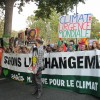
French Add Voice to Global Climate Action
As if to highlight the reality of climate change, the rain came pouring down here as demonstrators prepared to rally for political action to combat global warming.
Boosting the Natural Disaster Immunity of Caribbean Hospitals
When floods overwhelmed the Eastern Caribbean in December last year, St. Vincent’s new smart hospital, completed just a few months earlier, stood the test of “remaining functional during and immediately after a natural disaster.”
Africa Seeks Commitment to Adaptation in Climate Deal
It is a critical time for international climate change negotiations. By December 2015, world leaders are due to decide on an international climate change agreement covering all countries that will take effect in 2020.
Environmental Funding Bypasses Indigenous Communities
When she talks about the forests in her native Kalimantan, the Indonesian part of the island of Borneo, Maridiana Deren’s facial expression changes. The calm, almost shy person is transformed into an emotionally charged woman, her fists clench and she stares wide-eyed at whoever is listening to her.
Will Governments Keep Their Promises on the Human Right to Water?
It was a dramatic moment at the United Nations when it voted in 2010 to affirm water and sanitation as a human right.
Rare Zambian Tree Faces Exploitation Because of Legal Loophole
Steven Nyambose used to sell charcoal for a living until he discovered that the trees could be more lucrative in another way - through cutting them down and selling the logs to international buyers.

New Fund to Build on “Unprecedented Convergence” Around Land Rights
Starting next year, a new grant-making initiative will aim to fill what organisers say has been a longstanding gap in international coordination and funding around the recognition of community land rights.
Latin America at a Climate Crossroads
World leaders gathered at the Climate Change Summit during the United Nations General Assembly on Sep. 23 will have a crucial opportunity to mobilise political will and advance solutions to climate change.
U.N. Pushes Climate-Smart Agriculture – But Are the Farmers Willing to Change?
United Nations Secretary-General Ban Ki-moon is expected to make a strong pitch to world political leaders at the U.N. Climate Summit in New York on Sep. 23 to accept new emissions targets and their timelines.
As Uganda Heats Up, Pests and Disease Flourish to Attack its Top Export Crop
When Abudu Zikusoka was a small boy his father would bring people to their home in Ndesse village in Central Uganda’s Mukono district. He would watch as they packed the family’s harvested coffee into sacks and then loaded it onto their bicycles.« Previous Page — Next Page »


Through our global network of local writers, we are continuing our award-winning coverage of global and local environmental challenges, with a focus on the people for whom the ecosphere matters in a direct way: rural dwellers who have little means to protect themselves against adverse conditions; communities that need to switch to sustainable development in order to survive; poor women and children, who are the most vulnerable in natural disasters. Sponsored by the United Nations Environment Program (UNEP), the United Nations Development Program (UNDP) and The World Bank (WB), IPS also maintains the award-winning Tierramérica, a specialised information service on environment and development.

The Week with IPS

Tracking global progress towards a sustainable world


