
Tuesday, November 24, 2026



News and Views from the Global South
Environment
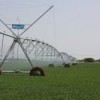
CLIMATE CHANGE: As World Warms, Southern Africa Swelters
Africa will be amongst the hardest hit regions of the world as the climate heats up, threatening the continent's food security, experts agree. If global temperatures rise 2.0 degrees C, southern Africa will warm an additional 1.5 degrees to a 3.5-degree increase on average.
CLIMATE CHANGE: Cancun Summit Gives Fossil Fuels a Free Pass
The main cause of climate change is the burning of fossil fuels, so why are billions of dollars being invested to find and produce more oil, coal and natural gas?LAOS: World Bank-backed Dam Powers Ahead, Despite Social Cost
As the World Bank returns to the big dam business with the inauguration of Laos’ largest hydropower project, it is coming under the scrutiny of familiar adversaries: green groups and grassroots activists.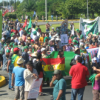
CLIMATE CHANGE: Straining Gnats and Swallowing Camels
What some people view as modest but real progress in the climate change talks, now in their second week in this southeastern Mexican resort city, others see as no more than smokescreens or "false solutions."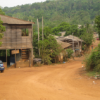
BRAZIL: Mitigating Impacts of Progress in Amazon Jungle
"We want real compensation," said Luis Nascimento de Freitas, a fisherman from Vila Teotonio, a ramshackle town on the banks of the Madeira River that will be flooded when the Santo Antonio hydroelectric plant is completed.CLIMATE CHANGE: Legislators Seek to Influence Cancun
"And what about after 2012?", when the Kyoto Protocol climate change treaty’s first period of commitments ends, was the question floating around an international meeting of legislators held over the weekend in the Mexican capital.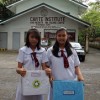
PHILIPPINES: Students Turn Trash into Tuition
Most people would not think twice about throwing out old plastic bags, empty soda cans, scrap metal and used shampoo bottles. But for the students of Cavite Institute in the Philippines, trash like these have become their ticket out of poverty.
Cancún Summit Gives Fossil Fuels a Free Pass
At the global summit on climate change, no country is being challenged for its plans to expand fossil fuel production, despite being the main source of climate-changing gas emissions.Ecobreves – BRAZIL: Food Industry Can Utilize Its Own Waste
Waste from the food industry could be utilized in its same productive process -- this is the surprising conclusion of a study by Brazil's Luiz de Queiroz College of Agriculture at the University of São Paulo.Ecobreves – CHILE: Last of the Huemul Deer in Danger
The construction of the Punilla hydroelectric dam in the Chilean region of Biobío poses a threat to some 40 huemul (Hippocamelus bisulcus), a type of deer living in that area of central Chile, warn local and foreign environmental groups.Ecobreves – VENEZUELA: Chevron Finances Indigenous Artisanry
The Tierra Viva Foundation launched an artisan training program, financed by the oil giant Chevron, for indigenous Warao communities living in the Orinoco River delta, in the far east of Venezuela.Ecobreves – HONDURAS: A Push for Sustainable Rural Enterprise
Four provinces in Honduras will begin sustainable development efforts in 2011 for small rural agricultural businesses, financed by 32 million dollars from the Inter-American Development Bank.CLIMATE CHANGE: Recyclers Tout Benefits of Their Trade at Cancun Summit
Ezequiel Estay began collecting glass bottles in 1991 after losing his job with the Chilean media conglomerate Copesa. Now, years later, he heads Chile's National Movement of Recyclers and is a leader of the Latin American Recyclers' Network, which is questioning the climate benefits of the Clean Development Mechanism (CDM).
CLIMATE CHANGE: Turning Agriculture From Problem to Solution
Global agriculture contributes in the region of 17 percent to the greenhouse gas emissions that cause climate change, but according to the World Bank, climate smart agriculture techniques can both reduce emissions and meet the challenge of producing enough food for a growing world population.
CLIMATE CHANGE: Rumours and Pessimism Reign Midway Through Cancun Summit
At the end of the first week of climate negotiations under way in this Mexican Caribbean resort city, it seems a distant possibility that the nearly 200 national delegations will agree on renewing the Kyoto Protocol, which expires in 2012.
CLIMATE CHANGE: REDD at Cancun Causes Angst in India
Forest rights advocates and indigenous community organisations from India are adding their voices to what promises to become the newest division in the climate talks here: the inclusion of Reducing Emissions from Deforestation and Degradation + in developing countries, or REDD+, as an agreement.INDIA: Brakes Applied to SUVs – ‘Socially Useless Vehicles’
Indian owners of sports utility vehicles (SUVs) and luxury cars, who have been benefiting from subsidies on diesel meant to help farmers, may soon have to pay real prices for their fuel.U.S.-WEST AFRICA: Report Urges Enhanced Maritime Security
The United States and its allies should give much more attention - and resources - to ensuring that weak West African governments along the oil- and gas-rich Gulf of Guinea can protect their territory and coastal regions from terrorists, drug and human traffickers, and other threats, according to new report by an influential think tank released here this week.
Southern Africa Collectively Gearing Up For REDD
The Southern African Development Community (SADC) is moving to support its member countries to tap into benefits from the reducing emissions from deforestation and forest degradation (REDD) framework.
LATIN AMERICA: Biodiversity Superpower Faces Development Dilemma
If Latin America is to sustain continued economic growth, it faces the dilemma of either threatening its rich biodiversity or transforming into a global leader in providing environmental services based on its unique ecosystems.
CLIMATE CHANGE: New Forest Agreement – REDD Hot Issue at Cancun
A large number of social organisations are not pleased with the international convention on Reducing Emissions from Deforestation and Forest Degradation (REDD) being negotiated at the COP16 climate summit.« Previous Page — Next Page »


Through our global network of local writers, we are continuing our award-winning coverage of global and local environmental challenges, with a focus on the people for whom the ecosphere matters in a direct way: rural dwellers who have little means to protect themselves against adverse conditions; communities that need to switch to sustainable development in order to survive; poor women and children, who are the most vulnerable in natural disasters. Sponsored by the United Nations Environment Program (UNEP), the United Nations Development Program (UNDP) and The World Bank (WB), IPS also maintains the award-winning Tierramérica, a specialised information service on environment and development.

The Week with IPS

Tracking global progress towards a sustainable world


