
Wednesday, October 14, 2026



News and Views from the Global South
Farming Crisis: Filling An Empty Plate
LATIN AMERICA: Poor, Overweight and Malnourished
Fruit? Maybe a banana now and then. Vegetables? Onions, if they are chopped up in a stew. Meat? No, because they choke on it, and will only eat wieners. Carina Ramírez thinks her children are "strange": they eat nothing but bread, pasta and sweets, "and that’s why they’re chunky," she says.
Q&A: Eco-Friendly Farming Practices to Fight Hunger in Bolivia
The gradual loss of traditional farming practices that preserve the land has pushed into extreme poverty small farmers in Bolivia who 20 years ago were producing surplus produce to sell at market and now are barely able to feed themselves.
NIGER: Livestock Herders Plan Ahead
The cows Djibo Hama looks after belong to someone else, but he is diligent. Anticipating a severe shortage of good grazing in 2010, he secured cattle feed for the 35 that remain.WORLD WATER DAY: Water Everywhere but Not a Drop to Drink
When there are water cuts in Bulawayo, the plants in 59-year-old Ntombizodwa Makati’s vegetable garden are still watered - but she and her family go thirsty.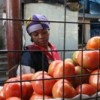
TANZANIA: Weather Changes Turn Farming into Gamble with Nature
Changes in weather patterns have turned agriculture into a gamble with nature for Tanzanian farmers. Prolonged droughts and floods have made the lives of small-scale farmers, who don’t have access to irrigation, extremely difficult.MALAWI: Patrilineal Inheritance Prevents Women’s Access to Land
Mercy Gondwe, 51, from Rumphi in northern Malawi, was married for 34 years. When her husband died in 2008, she assumed she would inherit the land they had been cultivating together since they got married. But this was not the case.MALAWI: Climate Change Is Changing Farming Methods
As they slept soundly on the night of Feb. 28, a family of four was killed when their house collapsed over their heads in Malawi’s southern district of Chikhwawa.
DR CONGO: Will Poultry Project Live up to Expectations?
For some seven million Congolese living in Kinshasa the only meat and poultry they could buy to eat since the 1980s was frozen imports from Western countries, distributed locally by a few local businessmen.AGRICULTURE-CONGO: All Hands On Deck to Repair Rural Roads
Two kilometres from the village of Ngouha II, a party of villagers are busy repairing an old bridge made of logs, and filling in a massive pothole.DR CONGO: Access To Credit Hampers Farmers in the East
The hundreds of savings and loan cooperatives operating in South Kivu should be providing an opportunity to develop agriculture and fight food insecurity in the province, but few farmers have been able to take advantage.DR CONGO: Small-scale Farmers Say They Just Need Land
The more than 800 small-scale farmers belonging to co-operatives around the Democratic Republic of Congo (DRC) capital, Kinshasa, could produce enough rice and vegetables for the capital's estimated eight million inhabitants, according to the country's agriculture ministry.SENEGAL: Farmers Anxious About Aid
As part of a project to support community initiatives and fight poverty in South Senegal, the Sédhiou Local Development Fund received a donation of agricultural equipment worth more than half a million dollars in a bid to reverse the region's dramatic drop in agricultural production in recent years.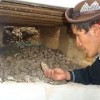
PERU: Fighting Hunger with Native Crops
As if he were showing off a treasure, Dionicio Sarmiento holds up his seed potatoes with a smile. "Look how nice they are, all ready to plant. It'll be a good harvest," says the peasant farmer from Huancavelica, Peru's poorest province, where most of the population depends on subsistence farming.
SIERRA LEONE: New Dawn for Small Farmers?
They call her "Marie Nerica", after a new breed of rice.
AGRICULTURE-SENEGAL: Groundnut Production in Freefall
Farmers are complaining about a lack of technical assistance and the poor quality of seeds they've planted this year in the Kaolack region, Senegal's groundnut-producing area, 200 kilometres south of the capital Dakar.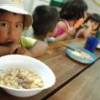
ARGENTINA: ‘Drugs Are Killing the Youngsters We’re Feeding’
"You often ask yourself why feed them if some wretch is just going to come along and sell them that rubbish," says Isabel Ruiz, who runs the Las Brujas soup kitchen in Moreno, a poor neighbourhood on the west side of the Argentine capital.COTE D’IVOIRE: Without Better Storage, We Are Farming to Feed Insects
Every year, Robert Assalé, a farmer at Tangamourou in the Bondoukou region in east-central Côte d'Ivore, produces an impressive amount of yams. He harvested 30 tonnes in 2007, 42 tonnes in 2008 and has almost surpassed 50 tonnes this year.
SIERRA LEONE: New Agriculture Plan Sprouts
When in power, the Sierra Leone People's Party (SLPP) promised that thanks to its pursuit of a pro-agriculture agenda, no Sierra Leonean would go to bed hungry by 2007. But the appointed date came and the people were still hungry. Unfortunately for the SLPP, it was an election year.CLIMATE CHANGE-BOLIVIA: Climbing a ‘Dead’ Glacier
The rapid disappearance of glaciers and the subsequent exhaustion of water sources are pushing indigenous communities in the Bolivian highlands even further into poverty, Bolivian experts told IPS, adding that an increase in awareness about climate change is desperately needed.
AGRICULTURE-COTE D’IVOIRE: Small-scale Pineapple Growers Want More Support
Karim Diabaté, looks questioningly at his vast 20 hectare pineapple plantation in Bonoua in south-eastern Côte d'Ivoire. "I'm asking myself if if I'll get the money I need for in time for the inputs I need and keep my plants going."
AGRICULTURE-NIGERIA: Bagging Beans Against Beetles
Cowpeas are of vital importance to the diets and livelihood of millions of people in West and Central Africa. But the crop is notoriously difficult to store - beetles and other pests can destroy an entire granary full of cowpeas within 12 months.« Previous Page — Next Page »





Today, one in six people on the planet go hungry, according to United Nations statistics. The food crisis and now the global economic crisis, together, have increased the number of undernourished people in the world to more that one billion for the first time since the 1970’s. Much of southern Africa continues to face severe food shortages, largely the result of one of the worst droughts in a decade followed by erratic rains. While the Latin American and Caribbean region as a whole is a net food exporter, food price inflation is still having a detrimental impact on the income, nutrition, and health of poor consumers. Solutions must be carefully crafted in each region, country and community taking into account local priorities. The complex web of issues surrounding food security and rural development include farmers access to markets, the adoption of international trade rules, technology transfer, the sustainable use of limited resources, and the application of traditional knowledge, among others. Establishing a prosperous, sustainable economic future for the world means placing a spotlight on agriculture - and giving a voice to farmers. IPS News is covering the food crisis, its causes and its effects, from both a local and a global perspective.

This website is funded through the support of the International Fund for Agricultural Development (IFAD).
