
Wednesday, October 14, 2026



News and Views from the Global South
Farming Crisis: Filling An Empty Plate
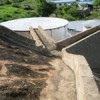
Harvesting Water to Save Crops and Lives
Peter Kivuti, a 51-year-old farmer from Eastern Kenya, never relied on meteorological weather predictions all his life - until three years ago. It was then that rainfall in the region become less predictable.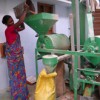
INDIA: Buoyed by Growing Market, More Farmers Go Organic
He had decided to grow watermelons this summer on his one-acre (.405 hectare) plot, and so Veera Narayana went about preparing the arid red earth by first ploughing it and then lighting fires in the furrows.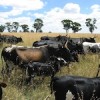
SOUTHERN AFRICA: Adapt or Perish
A changing climate will prompt changes in behaviour across Southern Africa. And when it comes to adaptation, Swazi farmer Bongani Phakathi is a frustrated man a few steps ahead of his neighbours.
Uganda Could Become Regional Rice Exporter say Researchers
In a small garden at the Entebbe Botanical garden, about 40 kilometres from Kampala, a few yellowish plants are trying to adapt to their new environment.US: Salmonella Outbreak Tied to Factory Farming
As regulators traced the U.S. salmonella outbreak spread by infected eggs back to the hen feed used at two Iowa farms Thursday, many groups are pointing the blame at the factory farm system from which the eggs – and bacteria – came.
KENYA: A Bid to Save Macadamia Crops
Joseph Ndirangu Muriithi is a worried man. After watching the fall of coffee farming in Kenya a decade ago, he now fears that his other cash crop will also go into decline as a new disease preys on his macadamia trees.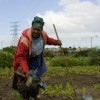
SOUTH AFRICA: Climate Change Policy Ignores Women Farmers
When asked if they have already felt the effects of climate change, Mary-Anne Zimri and Katrina Scheepers eagerly nod their heads. The two small-scale farmers say lack of rain this winter has foiled their planting season, ruined their harvest – and drastically slashed their income.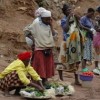
RWANDA: Improving the Lives of Small-Scale Farmers
Joelle Nsamira Kajuga, a female agricultural researcher has a ready answer to describe which modified crop will produce a higher yield, which will be resistant to bacteria, and which will ensure food security and generate a higher turnover for poor small-scale farmers in different regions in Rwanda.
SOUTHERN AFRICA: Land Reform Underfinanced and Failing
Mavis Muchena sits on the veranda of her mud hut, a middle-aged single mother of four with a face worn beyond her years and hands creased from working the soil. She should represent the future of a renewed farming boom in Zimbabwe, but instead she represents its failure.GUATEMALA: Multi-Pronged Effort to Boost Food Security Still Falling Short
"I used to work on the south coast, cutting sugar cane, and I would go all the way to Belize to pick oranges during the harvest. I went through a lot so we could get by," Héctor Pan, a Q'eqchi Indian in Guatemala who has now abandoned farming to become a river rafting guide, told IPS.MALAWI: A Cellphone, a Bicycle and Sound Agricultural Advice
It is 11 am and Mary Jusa seems unconcerned by the sun beating hard on her back. Humming a traditional tune, she carries on uprooting weeds in her maize field between two water canals.
AFRICA: Modified Banana Could Cure Deadly Disease
An innovation by researchers in Nigeria could be a cure for the devastating Banana Xanthomonas Wilt (BXW) - responsible for annual losses in excess of 500 million dollars of crop across East and Central Africa. But it has also fuelled debate on the genetic engineering of crops in Africa.
Russia’s Agony a “Wake-Up Call” to the World
A wind turbine on an acre of northern Iowa farmland could generate 300,000 dollars worth of greenhouse-gas-free electricity a year. Instead, the U.S. government pays out billions of dollars to subsidise grain for ethanol fuel that has little if any impact on global warming, according to Lester Brown.
EAST AFRICA: Deadly Cactus Good for Animal Feed
Joseph Ole Morijo is baffled by research findings that cactus plants can be used as animal fodder during drought. Not after he lost his entire herd of 152 goats and sheep to the said plant.
AFRICA: Small Scale Farmers Vulnerable to New Wheat Fungus
Smallholder wheat farmers are at risk as new mutations of a wheat-killing fungus have recently been discovered.Seeds of Hope Take Root in Kenya
Countries have paid too little attention to the importance of biodiversity, and as result, species and ecosystems are in sharp decline and the public does not understand the concept.
Angola’s Small-Scale Farmers Welcome Investment, Urge Careful Targeting
Think small to overcome big problems - that was the message to African governments being urged to do more to increase food security and reduce hunger and malnutrition on the continent.
ROMANIA: Slow Food – Opportunity for Small Farmers
Mari Cat, an economist by profession, thinks nothing of selling meat, bread and apple juice at a stall in the ‘Slow Food’ market in this central Romanian town.ECUADOR: Co-op Proves that the Poor Can Eat Organic, Too
"There is no reason why we poor people have to eat badly," says Ecuadorian farmer Juan Anguisaca. "It’s not true that organic products have to be expensive. They can be profitable and within the reach of the poor," Rodrigo Aucay adds.
ARGENTINA: Invisible Rural Women
"I had never worked before, and now I produce kilos and kilos of dried fruit to sell. They taught me how to dry peaches, tomatoes, peppers and grapes, and I decided on my own to try it with melons and pears - and they were spectacular," Susana Robledo, a proud new entrepreneur from rural Argentina, told IPS.
SENEGAL: Small-Scale Irrigation: Key to Rural Development
Over the past four years, the Local Small-scale Irritation Project has spent more than $10.5 million U.S. dollars supporting rural communities in Senegal.« Previous Page — Next Page »





Today, one in six people on the planet go hungry, according to United Nations statistics. The food crisis and now the global economic crisis, together, have increased the number of undernourished people in the world to more that one billion for the first time since the 1970’s. Much of southern Africa continues to face severe food shortages, largely the result of one of the worst droughts in a decade followed by erratic rains. While the Latin American and Caribbean region as a whole is a net food exporter, food price inflation is still having a detrimental impact on the income, nutrition, and health of poor consumers. Solutions must be carefully crafted in each region, country and community taking into account local priorities. The complex web of issues surrounding food security and rural development include farmers access to markets, the adoption of international trade rules, technology transfer, the sustainable use of limited resources, and the application of traditional knowledge, among others. Establishing a prosperous, sustainable economic future for the world means placing a spotlight on agriculture - and giving a voice to farmers. IPS News is covering the food crisis, its causes and its effects, from both a local and a global perspective.

This website is funded through the support of the International Fund for Agricultural Development (IFAD).
