Languages
Monday, November 9, 2026



News and Views from the Global South
Featured

How Should Europe Respond to Russians Fleeing the Military Mobilisation?
Since Russian President Vladimir Putin announced a military draft on September 21st aiming to mobilise around 300,000 Russian men to fight in the war in Ukraine, an estimated 400,000 Russians have fled the country, possibly even more.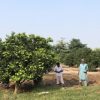
His Zest For Mandarins Soured, Pakistani Producer Turns To Mushrooms
The zesty citrus whiff from the rows of trees boasting unripe kinnow (mandarins) freshens the autumn air in late September. Two deeply tanned men clear the ground under and between the trees to plant vegetables.
University Outreach Project Teaching Tissue Culture to Potato Farmers
Until a few years ago, Kenyan potato farmer Richard Mbaria used to harvest just four tonnes of the crop from an acre of land thanks to poor quality seeds, combined with an attack on the crop by pests and diseases.
Delivering Quality Education in Small Island Developing States
With 147 million children around the world missing half of their in-person instruction over the last two years and around 24 million never returning to school, humanity is experiencing a deep learning crisis.
UN Censures 42 Nations for Retaliating Against Human Rights Activists & Journalists
The United Nations has singled out 42 countries (out of 193 member states) for condemnation-- virtually blacklisting them-- for retaliating against human rights activists and journalists
Addressing the Cow in the Room, Lowing for Nutrition and Livelihoods
Meat, milk, and eggs are bad for you, and livestock is bad for the environment. Growing negative narratives about cattle’s contribution to climate change are shrinking the growth of the strategic livestock sector on which the livelihoods of more than 1.3 billion people in the world depend.
Israel’s Democracy is in Peril
By all accounts Israel is considered a democratic country, but a close look at its domestic political combustion sadly reveals that Israel’s democracy is in tatters and is tearing at the seams. This is due to the political leaders’ dismal failure to summon their collective resourcefulness and energy to respond to the call of the hour
Small Farmers in Peru Combat ‘Machismo’ to Live Better Lives
"My father was very ‘machista’, he used to beat my mother... It was a very sad life," said Dionisio Ticuña, a resident of the rural community of Canincunca, on the outskirts of the town of Huaro, in the southern Peruvian highlands region of Cuzco more than 3,000 meters above sea level.
Pakistan’s Transgender Legislation in the Line of Fire
It has taken four years for some politicians to oppose a landmark law protecting the rights of transgender persons, saying it's against Islam and the country's constitution.
Africa is not a Country. It is a Continent.
“If all I knew about Africa were from popular images, I too would think that Africa was a place of beautiful landscapes, beautiful animals and incomprehensible people, fighting senseless wars, dying of poverty and AIDS, unable to speak for themselves”. This quote from the Nigerian writer Chimamanda Ngozi Adichie is in the introduction to Dipo Faloyin's book 'Africa is not a country'. It summarizes Faloyin's book nicely.
Energy Transition: Is it Time for Africa to Talk Tough?
Thirty-year-old Difasi Amooti Kisembo is one of the demonstrators near the EU delegation offices in Kampala. He and a handful of others have traveled from Uganda’s oil and gas-rich Albertine region’s district to Uganda’s capital Kampala to express their displeasure with an EU Parliament’s resolution against the planned construction of the East African Crude Oil Pipeline.
Successful Climate Solutions Require Investment in the Lives of Adolescent Girls
This year commemorates the 10th anniversary of the International Day of the Girl Child. While the last decade has seen greater attention on the positive development needs of girls, we must move beyond documenting the barriers that girls face to investing in and prioritizing girl-centered solutions to the critical development challenges of our world.
Women in Argentine Slum Confront Violence Together
The Padre Carlos Mugica neighborhood looks like another city within the Argentine capital, which most people usually see from up above as they drive past on the freeway but have never visited. It is a shantytown in the heart of Buenos Aires, of enormous vitality and where women are organizing to confront the various forms of violence that affect them.
Lives Hang in the Balance as Kenya’s ASAL Region Ravaged by Severe Prolonged Drought
The sight of children begging for water from motorists along the Garissa highway in the northeastern part of Kenya signals that all is not well. Unable to go to school on an empty stomach, drought-affected children wait for good Samaritans along the road, begging for water and food.
Journalists, Under Threat, Need Safe Refuge Through Special Emergency Visas
“This woman sitting next to me, Maria Ressa, is a Nobel laureate and a convicted criminal,” said barrister Amal Clooney, who co-leads the international legal team representing Ressa. The founder of news website Rappler, Ressa has been targeted with a barrage of legal charges intended to stop her journalism in the Philippines.
Uyghur Violations a Litmus Test for Global Governance & Rules-based International Order
This week is a momentous one for the world’s premier human rights body. At stake is a resolution to decide whether the UN Human Rights Council in Geneva can hold a debate on a recently released UN report.
UN Plans a New Mobility Scheme Where Staffers will be Forced to Work Overseas
The United Nations is planning to introduce a new “mobility policy” under which staffers based in New York and other Western capitals will be mandated to serve in overseas missions and field services in Asia, Africa, the Middle East and Latin America, including the UN’s 12 peacekeeping operations.
Annexation of a State’s Territory is a Violation of the Charter & International Law, Warns UN Chief
The Kremlin has announced that a ceremony will take place Friday in Moscow that will launch a process of annexation of the Ukrainian regions of Donetsk, Luhansk, Kherson and Zaporizhzhia.
UN’s High-Level Meeting of World Leaders Falls Short of Gender Empowerment
When the UN’s high-level meeting of world leaders concluded last week, the head count seemed lopsided: 190 speakers, including 76 Heads of State, 50 Heads of Government, 4 Vice-Presidents, 5 Deputy Prime Ministers, 48 Ministers and 7 Heads of Delegations—overwhelmingly male.
Nepal Government, UN Agency Seek Investors for Latest Cash Crop to Boom in Country’s East
Two and a half hours’ drive north from Kakarbhitta, Nepal’s eastern-most border crossing with giant neighbour India, lies the hilly hamlet of Salakpur where lives Kaushila Moktan, a famed farmer of large cardamom.
Hard Hit By Climate Change, Villagers Raise a Forest on Their Own
Some ten years ago, Sheemanto Chatri, a 39-year-old farmer hailing from India's northeastern state of Meghalaya, was reeling with distress. The unseasonal rainfall had washed away all the crops he had cultivated after year-long labor in his far-off hamlet.« Previous Page — Next Page »





The Week with IPS

NEXT STOP - SDGs
Tracking global progress towards a sustainable world
Tracking global progress towards a sustainable world
