Languages
Wednesday, November 11, 2026



News and Views from the Global South
Featured

Data Drought in the Global South
In 2020, every human on Earth created an average of at least 1.7 megabytes of data per second, collectively amassing 2.5 quintillion data bytes. Some 90% of the world’s total data was created in the last two years alone.
Rural Water Boards Play Vital Role for Salvadoran Farmers
After climbing a steep hill along winding paths, you reach a huge water tank at the top that supplies peasant farmer families who had no water and instead set up their own community project on this coastal strip in central El Salvador.
‘Building Back Better’: Jordan’s Road to Green Economic Recovery
For the first time in decades, Jordan’s economy contracted in 2020. COVID-19 took a heavy toll on the economy, and it was concerning for the country, particularly because Jordan had managed to grow at an average rate of 2%, despite regional and international shocks to its economy amounting to 44% of Gross Domestic Product (GDP) over the past decade.
Scientific Panel’s Scoping Report Instructive for Global Food Systems Transformation
On September 10th, on a sweltering summer afternoon, three fishers drove a van around the residential community of Castle Comfort in Dominica, blowing forcefully into their conch shells – the traditional call that there is fresh fish for sale in the area.
How Satellite Technologies Can Aid Fiji, Other Pacific Island Nations to Build Climate Resilience
Sepesa Curuki and his community are coming to terms with the prospect of relocation from Cogea village on Fiji’s second-largest island of Vanua Levu. Their village, which lies between two rivers that flow into the Pacific Ocean only 2km away, has been battered by intense and frequent cyclones, flooding and erosion, threatening their very existence.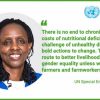
How Transforming Food Systems Could Unlock a $12 Trillion Global Windfall
With the world still counting the social and economic costs of the Covid-19 pandemic, amid a fresh “code red” on the climate crisis, food may not seem like the most pressing threat to humanity.
Women Leaders Hailed for COVID-19 Response
On September 20, Prime Minister of Bangladesh Sheikh Hasina accepted an award from the United Nations Sustainable Development Solutions Network for her country’s ‘striking’ progress towards achieving the Sustainable Development Goals.
Nurturing a New Generation of Food Leaders
Food security experts have raised an alarm that with as many as 811 million people the world over or 10 percent of the global population going hungry, the world is off-track to ending hunger and malnutrition.
From “We the Peoples” to “Our Common Agenda”, the United Nations is a Work in Progress
When the UN Charter was being drafted in the closing days of the Second World War in 1945, a debate ensued on what its opening words should be. Jan Smuts, representative of colonial South Africa, had originally suggested that the UN Charter begin with the words, ‘The High Contracting Parties.’
For Healthier Food Systems: Turn the Tide Against Ultra-Processed Products
COVID-19 has exposed serious vulnerabilities in how people around the world access and consume food. One of the more alarming trends is the significant increase in the consumption of foods that may be tasty and convenient, but harm our heath. These ultra-processed products include sugary drinks, snack foods, frozen meals, packaged breads and frozen desserts.
How Jamaica got Youth Climate Action Engagement Right
When the NDC Partnership, the alliance which helps governments to determine and achieve their climate goals, held its first-ever Global Youth Engagement Forum in July, several segments were underpinned by Jamaica’s model of engaging young people and sustaining youth interest in climate initiatives.
Food Experts’ Expectations for Global Food Systems Transformation
Dubbed ‘the People’s Summit, the United Nations Food Systems Summit (UNFSS) hopes to put the world back on a path to achieve the Sustainable Development Goals by 2030, through food systems overhauling. From the tempered to the extremely optimistic, experts in various food system sectors share their expectations of transformation.
Fundamental Changes Needed at UN Summit to Tackle Global Food Insecurity
COVID-19 has exposed numerous fractures in global food systems that leave millions at risk of food insecurity. Like the numerous political failures in dealing with COVID, the repercussions of food system failings are experienced by rich and poor countries alike, with the poorest and most marginalised paying the greatest price.
Bukele Speeds Up Moves Towards Authoritarianism in El Salvador
The president of El Salvador, Nayib Bukele, has been widely criticised for his authoritarian tendencies, but has said that the changes he plans will be long-term - which to his critics means a further undercutting of the weak democratic institutions that he has already begun to dismantle.
If Women Farmers were Politicians, the World Would be Fed, says Danielle Nierenberg
Women, key contributors to agriculture production, are missing at the decision table, with alarming consequences, says Food Tank President Danielle Nierenberg in an exclusive interview with IPS.
Venezuela’s Glimmer of Hope
This is the third serious attempt to inject some momentum in the negotiations between the Venezuelan government and opposition. Negotiations have been taking place in Mexico since last Friday, with Norway acting as mediator.
Barilla Foundation Report Highlights Need for Food Companies to Align with Sustainable Development Goals
In the backdrop of rising hunger, half of the world’s population living on unhealthy diets, a third of agricultural produce lost to postharvest events, and waste, poverty in farming communities, a pandemic that laid bare the vulnerability of food systems to external shocks and unsustainable food production, the Barilla Foundation for Food and Nutrition has published a report which introduces guidelines for the private sector to fulfil its role in transforming global food systems.
UN Staffers Under Pandemic Restrictions, but Diplomats to Wine & Dine Unrestrained
When hundreds of delegates and diplomats arrive in New York city next week for the new 76th session of the UN General Assembly, they will be pinned down with pandemic restrictions in a city where Delta variant infections have been skyrocketing.
Even as IUCN Congress Closes, Conservation Debate Hots Up
One of the most hotly debated issues at the recently concluded IUCN Congress in Marseilles was about designating 30 percent of the planet's land and water surface as protected areas by 2030.
The Covid-19 Youth Employment Crisis in Asia & the Pacific
A pre-pandemic report published by the International Labor Organization, ILO, the Global Employment Trends for Youth 2020, offered a sober analysis on the job market prospects for youth.
Southeast Asian Farmers Adapt, Insure against Growing Climate Risks
As incidents of drought and extreme rainfall increase, farmers in Southeast Asia are partnering with experts to develop targeted weather forecasts to work around the threats and, when adaptation becomes too costly, buy specially designed insurance to protect their livelihoods.« Previous Page — Next Page »





The Week with IPS

NEXT STOP - SDGs
Tracking global progress towards a sustainable world
Tracking global progress towards a sustainable world
