Languages
Wednesday, November 11, 2026



News and Views from the Global South
Featured

Drought, Storms, Intense Rainfall and Fires Threatening Millions in Latin America and the Caribbean
In 2020, Brazil, Paraguay and Bolivia faced their worst drought in half a century. The Atlantic Basin saw 30 named storms – the most recorded in a single year. Two category 4 hurricanes achieved an unprecedented feat by making landfall in Nicaragua.
“Don’t Call It Ethnic. Ituri Conflict Is a Mystery”
It is a metallic sound, harmless. It lasts just over a second, but it can become as sharp as a machete blade or as devastating as the burst from an assault rifle. It is a beep, just the beep of a phone notification. A woman is on the ground, her belly open, her intestines exposed and her severed head resting on her arm. A pagne of colorful fabric still girds her hips. Where? Why? Then, a video. Do you hear those voices? It happened there, in that village. It was them who did it, it was them.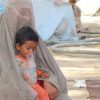
Afghanistan – What Will Happen Now?
As I write this, India has just celebrated the 75th anniversary of its independence from British rule (Pakistan celebrated it a day earlier). But there is little cause for celebration. A dark shadow looms over both countries, indeed over much of the world as well.
Solutions to Food Insecurity Top Agenda in Meeting of Small Island Developing States
The urgency of finding solutions to the most pressing development challenges of our times has increased as the Covid-19 pandemic threatens to reverse the global momentum in recent years toward achieving the Sustainable Development Goals (SDGs). And small island developing states (SIDS), with their physical remoteness, restricted land and resources and dependence on trade and tourism, are experiencing growing hardship caused by closed borders and plummeting economies.
Southern African Migrants Excluded as COVID-19 Pandemic Grows
Migrants across the Southern Africa region are massively disadvantaged as they find themselves excluded from vaccine programmes – even when the global vaccine initiative COVAX often funds these programmes.
Salvadoran Migrants Still Look to the U.S. to Lift Themselves Out of Poverty
The Joe Biden administration's call for undocumented Central American migrants not to go to the United States, as requested by Vice President Kamala Harris during a June visit to Guatemala, appears to have fallen on deaf ears.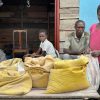
Eastern DRC Under a State of Siege: A Bitter Pill in North Kivu
On May 6, 2021, after a decision by President Félix Tshisekedi, a state of siege was established in Ituri and North Kivu, two provinces that are located in the eastern Democratic Republic of the Congo and that are in the grip of endless violence.
How to Feed the World Without Starving the Planet is a $15 Billion Question
A population of more than 9 billion people, hotter temperatures, decaying ecosystems and increasingly severe natural disasters. That is what our world is facing by 2050 because of climate change.
Where Did We Go So Wrong in Afghanistan?
President Biden’s decision to finally withdraw US forces from Afghanistan was the correct decision and certainly overdue. However, the lack of preparation to do so orderly and safely was yet another terrible mistake in a string of mistakes that have plagued the US from day one.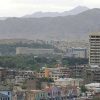
Were US War Profiteers the Ultimate Winners in Battle-Scarred Afghanistan?
As the 20-year-old occupation of Afghanistan came to an inglorious end last week, there were heavy losses suffered by many-- including the United States, the Afghan military forces and the country’s civilian population.
NDC Partnership: Supporting a Global Network of Youth Climate Advocates
Just over six months after launching its Youth Engagement Plan, the NDC Partnership, the coalition assisting governments with their climate action plans, has brought together youth climate advocates for its inaugural NDC Global Youth Engagement Forum.
Afghan Female Journalist: “I may not be Alive by the time US can Evacuate Me”
Steven Butler describes it as “mass panic.” As the Taliban seized control of Afghanistan, CPJ’s Asia program coordinator has been fielding “hundreds and hundreds” of daily pleas from journalists asking for help to flee the country.
How Many More Innocent Lives Must be Lost in Tigray, asks Adama Dieng
Despite a June 30 unilateral ceasefire declaration by Ethiopian President Abiy Ahmed, United Nations agencies say a recent escalation in fighting has been ‘disastrous’ for children, amid reports of over 100 children being killed in an attack on displaced families.
How to Protect Your Data from Malicious Encryption?
Ransomware is deploying its encryption right on your computer. The malicious process runs in the background as you continue your everyday activities suspecting no cyber disaster ahead.
A New Global Agenda on Sport for 2030
Does sport need to change to better serve society? What can sport and development actors do better in the future? How can sport play a greater role in contributing to development and peace? Can we reimagine the role of sport? Can we resolve the conflict and contradictions inherent within sport?
Poor Sales at Slated Namibian Elephant Auction
A heavily criticised Namibian government sale of elephants has attracted only a third of its expected sales as government officials admit that an international outcry when the plans were announced may have put buyers off.
Solar Energy Revitalises Indigenous and Farming Communities in Chile
Communities in Arica y Parinacota, the region in the extreme north of Chile, are using solar energy and are being empowered by projects for shrimp and trout farming, the production of yarn from camelid wool, the production of tomatoes and cheese, and even the sale of surplus solar power to the national electric grid.
Indigenous Peoples Need Recognition, Reciprocity & a New Social Contract
The coronavirus pandemic has invited the world to reflect on relationships – between people within and across countries and communities, and between people and nature around the planet.
UN’s Ultimatum to Staff & Diplomats: Get Vaccinated or Go Hungry
As New York city struggles to cope with the widespread outbreak of the deadly new coronavirus Delta variant -– which has claimed more than 100,000 cases per day in the US— the United Nations is laying down strict guidelines at its headquarters (UNHQ) for staffers, diplomats and visiting delegates.
Digitisation Boosts Mechanised Farming Among Kenyan Farmers
When 33-year-old Kimani Mwaniki, an Irish potato farmer in Elburgon, Nakuru County in Kenya’s Rift Valley, heard about a farmer’s virtual school, he didn’t hesitate to enrol. He was keen to learn how the programme will enable him to get higher crop yields for his market in the capital city Nairobi and elsewhere.
How Market Knowledge is Powering Africa’s Solar Irrigation Sector
‘Know your customers’ is arguably the first rule of marketing. By identifying and segmenting customer groups, companies can target their products and services to the right people, in the right way. This can open-up opportunities for growth, inform product development and improve customer retention.« Previous Page — Next Page »





The Week with IPS

NEXT STOP - SDGs
Tracking global progress towards a sustainable world
Tracking global progress towards a sustainable world
