Languages
Monday, November 16, 2026



News and Views from the Global South
Featured

Solar Cookers Produce More Than Food for Mexican Women
 The sun's rays are also used to cook food and thus replace the burning of firewood and gas, improve the health of local residents and fuel the energy transition towards the use of renewable sources - the objectives of an enterprise in the southern Mexican state of Oaxaca.
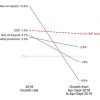
If India Stopped Growing, Would the IMF and World Bank Say So?
Leading economic indicators have slowed or reversed. Criticisms of official statistics are mounting. But the IMF and World Bank continue to forecast 6-percent growth by simple extrapolation.
Africa Watch: Morocco Tourism Gains Momentum
The crème de la crème of Hollywood was in Marrakech, Morocco, for the wedding of British movie star Idris Elba in April this year. Elba tied the knot with his Canadian model girlfriend, former Miss Vancouver Sabrina Dhowre, at the Ksar Char-Bagh hotel, an exquisite Alhambra-style hotel.
How Can We All Hear That the World is on Fire?
The annual rhythm of the United Nations year peaks with the General Assembly in September. One month on, it’s a good time to reflect on this year’s gathering which was remarkable for its focus on fighting climate change, the transforming effect of one 16 year old girl telling it like it is, and the way people heard her words in a way they haven’t heard before.
Mother Earth’s Café Dares Climate Crises in India
The sun has barely risen when Phlida Kharshala shakes her 8-year-old grandson awake. He hoists an empty cone-shaped bamboo basket on his back, sets the woven strap flat across his forehead and off they go into the wilderness.
UN Turns to Global Investors for Billions Needed for its 2030 Development Agenda
A Republican US Senator of a bygone era was once quoted as saying “a billion here, a billion there, and pretty soon you're talking about real money.”
Industrial Policy Still Relevant
Industrial policy refers to the promotion of new investments and technology by governments to encourage the growth and development of specific economic sectors. However, scepticism persists about the feasibility and desirability of using industrial policy, especially of the ability to ‘pick winners’, often accused of leading to ‘propping-up failing industries’.
Nepal and Colombia Struggle With Mental Health Burden of Conflict
Children sit in a circle experimenting with different colours on palettes at a shelter in Godavari one morning this week. Some design flowers in bright colours, others draw homes nestled below mountains. Many of the children are survivors of rape or domestic violence, from rural parts of Nepal. The one thing they have in common is mental trauma.
Climate Change to Further Escalate Violence in Western Africa
Nearly 50 million people in west Africa rely on agriculture and livestock for their livelihood but the land available for pastoral use has been rapidly shrinking.
Beyond the Headlines: the Development Story Behind Irregular Migration
Last week, a too-familiar human tragedy captured news headlines. 39 people were found dead inside a shipping container on an industrial estate in Essex in Southeast England; 31 men and 8 women whose individual identities, for now, remain anonymous, as authorities begin to investigate one of Europe’s worst people-trafficking cases.
Governments Must Short Circuit Tobacco Industry’s Pervasive Tactics
The tobacco industry’s new rhetoric that smoking is harmful and that its so-called less risky products will reduce the global tobacco epidemic, should see the industry stop opposing or fighting government efforts to reduce tobacco use. However, this is not the case.
Sustainable Development and Education – Is the Non-Aligned Movement Still Relevant?
By the time of publication, representatives, senior officials, and Heads of State and Government of 120 countries from around the world will have converged on Baku in Azerbaijan for the XVIIIth Summit of the Non-Aligned Movement (NAM).
Nutrition – the Best Investment for a Developing Africa
There is evident correlation between countries with high levels of children under five years of age who are stunted or wasted and the existence of political instability and/or frequent exposure to natural calamities, experts say. But current food systems in Africa are not addressing nutrition because of the combination of poor investment in the agriculture value chain, inadequate policies and lack of accountability in addressing malnutrition.
Solar Tubewells Suck Water out of Sindh Desert
At the southern end of Pakistan’s Sindh-Balochistan border near the Kirthar mountain range, Sindh’s Kachho desert has witnessed an unprecedented surge in the use of solar-powered tubewells for groundwater extraction in agriculture.
World’s Spreading Humanitarian Crises Leave Millions of Children Without Schools or Education
As massive protests escalated worldwide last month, millions of children walked out of schools to demonstrate against the lackadaisical response – primarily from world leaders --to the ongoing climate emergency resulting in floods, droughts, typhoons, heat waves and wildfires devastating human lives.
Fearless Young Women and Insensitive Men
On October 11, the Norwegian Nobel Prize Committee announced that this year´s Peace Prize is awarded to Ethiopia´s prime minister Abiy Ahmed: “For his efforts to achieve peace and international cooperation, and in particular for his decisive initiative to resolve the border conflict with neighbouring Eritrea.”1 Let us hope that Abiy remains a worthy Peace Prize winner and that warfare and human suffering on the Horn of Africa will finally come to an end.
Nigerian Military Targeted Journalists’ Phones, Computers with “forensic search” for Sources
Hamza Idris, an editor with the Nigerian Daily Trust, was at the newspaper’s central office on January 6 when the military arrived looking for him.
Insurance Scheme Offers Hope for Drought-stricken African Farmers
A partnership between United Nations and African Union (AU) agencies will help African economies insure themselves against the droughts and other extreme weather events that plague the continent, organisers say.
Bangladesh’s Climate Change Victims Safeguard the Sundarbans’ Endangered Dolphins
Israfil Boyati lives along the shoreline of the Bay of Bengal. In the past he used to catch fish in the canals and rivers of Bangladesh’s Sundarbans mangrove forest — one of the world’s largest and habitat to many endangered species, including the Bengal tigers and freshwater dolphins.
Governments & Internet Companies Fail to meet Challenges of Online Hate
The prevalence of online hate poses challenges to everyone, first and foremost the marginalised individuals who are its principal targets. Unfortunately, States and companies are failing to prevent ‘hate speech’ from becoming the next ‘fake news’, an ambiguous and politicised term subject to governmental abuse and company discretion.
Swiftly Ending Tobacco Epidemic Requires Government Action, Not Empty Promises
New information published in the Morbidity and Mortality Weekly Report shows that action taken by just 11 countries – most of them low- or middle-income – has resulted in 20 million fewer adult tobacco users in 2017 compared with 2008. Seventy percent of the world’s tobacco users live in low- and middle-income countries.« Previous Page — Next Page »


The Week with IPS

NEXT STOP - SDGs
Tracking global progress towards a sustainable world
Tracking global progress towards a sustainable world
