

Korchi a village of 3,256 people, most of whom are small and marginal farmers belonging to Gondi and Kawar indigenous communities, lies about 750 kilometres east of Mumbai, India. Here, women like Jam Bai, a 53-year-old indigenous farmer, have been leading a ground movement for years to own land.
Languages
Tuesday, November 17, 2026


News and Views from the Global South
Featured

Mexican Women Use Sunlight Instead of Firewood or Gas to Cook Meals
Reyna Díaz cooks beans, chicken, pork and desserts in her solar cooker, which she sets up in the open courtyard of her home in a poor neighborhood on the outskirts of this town in southwestern Mexico.
Are Jair Messias Bolsonaro and Donald John Trump a Menace to the Planet?
We live in different worlds. The ones of friends, family and work colleagues. Worlds which are overshadowed by other, much bigger ones. Global spheres of international finance, politics, climate change, etc., contexts that might threaten our smaller circle of relationships; our family, our income, our general wellbeing, in short – our entire existence. However, even at those levels there exist small circles of acquaintances and associates able to make decisions that affect the entire humankind. Let me take one example – the regimes of U.S. President Donald J. Trump and Brazilian President Jair Messias Bolsonaro, which are menacing our global natural habitat.
The Missing Women in Finance
Women comprise a very small proportion of the financial industry workforce, and this has implications on the way female clients use and benefit from financial services.
Promoting Women’s Safety in Latin America
Every year, over 12,000 women are killed in Latin America. The region is plagued by extremely high levels of violence, and a vacuum of state power persists. Public face of this violence is caused by paramilitary, guerrilla, gangs and armed groups.
Towards a Sustainable Future: Case of China’s Economic Transformation
The Asia-Pacific region is at a crossroads. The traditional export-oriented, manufacturing-driven growth is facing headwinds from sluggish external demand and rising protectionist trade measures.
Five Million Palestinians Deserve Better!
An old adage passed on by veteran U.N. staff to younger recruits is, “Do nothing whenever possible. It’s safer.” For a junior officer that might indeed be career-enhancing.
‘Beggar Thy Neighbour’ Policy Advice
The harmful effects of falling corporate tax rates have been acknowledged in a recent International Monetary Fund (IMF) research paper. This trend, since the early 1980s, has been especially detrimental for developing countries, which rely on direct taxation much more than developed economies.
Is India on Track to Beat the Perfect Storm?
“The Perfect Storm” was a dire prediction that by 2030 food shortages, scarce water and insufficient energy resources together with climate change would threaten to unleash public unrest, cross-border conflicts and mass migration from worst-affected regions.
To Uplift a Woman is to Uplift a Village
Khadija Zuberi, 23, from Ruaha Mbuyuni village in Tanzania’s central highlands, is a single mother to her four-year-old son, Hashim.
How India’s Indigenous Female Forest Dwellers Feel about Owning Their Own Land
 Kumaribai Jamkatan, 51, has been fighting for women’s land rights since 1987.
Though the constitution of India grants equal rights to men and women, women first started to stake their claim for formal ownership of land only after 2005–the year the government accorded legal rights to daughters to be co-owners of family-owned land.
In the Midst of Conflict, India’s Indigenous Female Forest Dwellers Own their Land
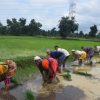
Jam Bai, an Indigenous farmer from Korchi village in western India, is a woman in hurry. After two months of waiting, the rains have finally come and the rice saplings for her paddy fields must be sown this week while the land is still soft.
Burning Forests for Rain, and Other Climate Catastrophes
The villagers living on the foothills of Mount Kenya have a belief: If they burn the forest, the rains will come.
Land Degradation Jeopardizes Ability to Feed the World
We have known for over 25 years that poor land use and management are major drivers of climate change, but have never mustered the political will to act.
Desertification a Frontline Against Climate Change: IPCC
A new United Nations report has described farming, land degradation and desertification as critical frontlines in the battle to keep the global rise in temperatures below the benchmark figure of 2 degrees Celsius.
The Nairobi Summit – Towards a Watershed Moment
In 2019 a female scientist created an algorithm that gave the world the first ever images of a black hole. Working with a team of astronomers, physicists, mathematicians and engineers, a young woman led the development of a computer program that in her own words enabled them to “achieve something once thought impossible.”
Will Palestinian Refugees Pay a Heavy Price for UNRWA Bungling?
A crisis that has threatened to undermine the future of the UN Relief and Works Agency (UNRWA) is expected to have a devastating impact—not only on the credibility of the United Nations-- but also on the lives of over five million Palestinian refugees whose very survival depends on the humanitarian services provided by the beleaguered UN agency based in Amman and Gaza.
Domestic Violence and the Role of Education
Trying to teach and inspire youngsters is a daunting task. Many teachers tend to suffer from a harrowing, bad conscience, obliged as they are to follow routines, rules, and regulations set down by their employers while knowing that these are difficult to apply and provide with desired results. Worst is a nagging feeling of inability to reach out to the students. Most teachers want their pupils to be good learners, critically thinking individuals who feel gratified and keen to change things for the better.
Extreme Floods, the Key to Climate Change Adaptation in Africa’s Drylands
Extreme rainfall and heavy flooding, often amplified by climate change, causes devastation among communities. But new research published on Aug. 7 in the scientific journal Nature reveals that these dangerous events are extremely significant in recharging groundwater aquifers in drylands across sub-Saharan Africa, making them important for climate change adaptation.
Mediating Peace in a Complex World
“It is all about orchestration”, was Martin Griffiths’, the UN Special Envoy for Yemen, response to the question of what mediation in Yemen looks like today.
Nuclear Weapons Must Go: Lessons of Hiroshima & Nagasaki
It has been 74 years since a nuclear devastation took place. But a clear message stands -- that nuclear weapons must go and peace and love must reign. “Because if we forget the horrific consequences of the use of these devices, the likelihood of repetition is increased.” Jonathan Granoff, President of the Global Security Institute told IPS, as the United Nations marked the tragedies of Hiroshima and Nagasaki.« Previous Page — Next Page »


The Week with IPS

NEXT STOP - SDGs
Tracking global progress towards a sustainable world
Tracking global progress towards a sustainable world


