Languages
Thursday, November 19, 2026



News and Views from the Global South
Featured

GGGI Eyes Expanding Role in Triggering Pro-poor Green Growth
Green used to be the color of money. Now it’s the word we use to mean actions that don’t hurt perhaps even help the environment. Moving from paper currency to the world we live in is progress!
Humanitarian Response Plan for Spreading Crisis in Nigeria
The 2018 Humanitarian Response Plan (HRP) for north-east Nigeria demonstrates the commitment of the international community to the people of Nigeria. It is also a clear and positive indication of the strong and continued partnership between us - the international humanitarian community - and the Government of Nigeria.
Inequality also Relates to Education, Health & Illiteracy, not Wealth Alone
Antipoverty group Oxfam International got a lot of attention for claiming that there’s a global “inequality crisis,” but a far more important point is entirely neglected: globally, income distribution is less unequal than it has been for 100 years.
“No Time to Waste” in Ending FGM
More than 200 million women around the world have experienced some kind of female genital mutilation (FGM) and more could be at risk, a UN agency said.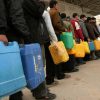
Gaza Health Sector on Verge of Collapse
UN agencies have sounded the alarm on the rapidly deteriorating humanitarian situation in Gaza, pointing to the devastating repercussions of the ongoing fuel shortages.
China, Once the Final Resting Place for Half the World’s Trash, Bans Waste Products
China, once the final resting place for half the world’s trash, has just banned the import of certain plastic, paper and textile waste. Western countries are scrambling to shift ‘the problem’ elsewhere – but there could be another way. They could invest more in the circular economy, which would also help them achieve the 2030 Agenda. But what exactly is the circular economy?
One Migrant’s Brutal Odyssey Through Libya
Thirty-year-old Nazir Mohammed sits on one of the two sofas in his single room in Kwame Danso, a small town about 290 kilometres north of Ghana’s capital Accra, reflecting on life back in Libya.
UN Refugee Agency Calls for Aid and Peace in South Sudan
As South Sudan quickly becomes Africa’s largest refugee and humanitarian crisis, the world must come to its aid, said the UN refugee agency. The UN Refugee Agency (UNHCR) has launched a global appeal to support displaced persons amid South Sudan’s rapidly deteriorating humanitarian situation.
As Peace Talks Resume, South Sudan Continues Assault on Press Freedom
A ceasefire agreement signed on December 21 between the South Sudanese government and opposition forces has revived a 2015 peace process and brought hope that the conflict will not persist into its fifth year.
Survival of Indigenous Tribes in Bangladesh Starts at School
Just before sundown on Jan. 30, a group of women day labourers from the Shantal indigenous community are in a rush to wind up their work harvesting potatoes in a field in the village of Boldipukur, some 15 km away from Rangpur district in northern Bangladesh.
Healthy Nutrition Spreads in El Salvador’s Schools
Eating healthy and nutritious food in schools in El Salvador is an effort that went from a pilot plan to a well-entrenched programme that has now taken off.
Except for Syria, Middle East Disappeared from U.S. Network News in 2017
Except for the ongoing war in Syria, coverage of the Middle East by the evening news programs of the three big U.S. networks virtually disappeared in 2017, according to the latest annual compilation by the authoritative Tyndall Report.
BDS Movement for Palestinian Rights Nominated for Nobel Peace Prize
As a member of the Norwegian parliament, I proudly use my authority as an elected official to nominate the Boycott, Divestment and Sanctions (BDS) movement for Palestinian rights for the Nobel Peace Prize.
Impact of Climate Change on Karachi May be One of Pakistan’s Biggest Threats
Historically a small fishing village, Karachi has now turned into Pakistan’s biggest commerce and industrial center that generates about half of the country’s tax revenue.
Iraq’s Toxic Conflict
In Iraq, thirty years of armed conflict has killed hundreds of thousands of people, wounded countless more, displaced millions and laid cities and towns to waste.
Wars, Crises and Catastrophes Drive Immigration to Brazil
The war in Angola, the earthquake in Haiti, Venezuela’s political crisis and shortages and the political repression in the Democratic Republic of the Congo are the main driving factors behind the recent waves of immigration to Brazil.
Truth & Nothing But the Truth: Impact of Media & Communication on Democratic Participation
In recent years, technological developments and the liberalization of media markets have fueled an explosive change in media and communication, with profound implications for how people are informed, how they interact with each other, and how they participate in public life.
Gender Empowerment: What Will You Do in 2018 to make a Change?
In the last year, a women’s rights tidal wave flooded the world: over 4 million people marched in the first “Women’s March” in January 2017, and over a million marched a year later, from Washington DC to New York, from Sydney to Osaka, and from Rome to Nairobi.
Climate-Related Disasters Cost Nearly $400 Billion in 2017
I am pleased to be with you at this important and timely summit on climate risk and to discuss the opportunities that are there for us to seize through decisive climate action.
Create “Sponge Cities” to Tackle Worsening Floods
With floods now causing more damage more frequently around the world, it is time to counter their effects by turning our towns into "Sponge Cities", a recent trend popularised by China to absorb rainwater through permeable roads and pavements, parks, rooftop gardens and other green spaces.
Why Humanitarian Assistance Needs Rigorous Evaluation
According to the United Nations Office for the Coordination of Humanitarian Affairs (UNOCHA) and the Financial Tracking Service (FTS), the number of people in need of humanitarian aid in 2017 rose to 141.1 million and they were located in 37 countries.« Previous Page — Next Page »


The Week with IPS

NEXT STOP - SDGs
Tracking global progress towards a sustainable world
Tracking global progress towards a sustainable world
