Languages
Monday, November 23, 2026



News and Views from the Global South
Featured

More Vehicles in Latin America – More Deaths
The family of Susana Suárez, a 35-year-old Venezuelan dentist, are still in shock over her death in a traffic accident in May. She and a friend were killed on their way back from the beach, and became just two more of the 130,000 victims who died on Latin America’s roads in 2013.
Pakistan’s Polio Campaign Runs Into Taliban Wall
The Taliban are proving to be a huge stumbling block for Pakistan as the South Asian nation - one of only three remaining polio endemic countries in the world – tries to fight the crippling disease.
The Scramble for Kenya’s Kibera Slum
Controversy continues to brew here over ownership of the land under Kibera slum, one of Africa’s largest.
Hospitality, Agriculture Firms Vulnerable to Human Trafficking
Shareholders are calling on 15 U.S.-based multinational corporations to ensure that their global supply chains are not facilitating human rights abuses, particularly labour and sex trafficking.
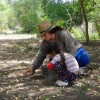
Seedpods Worth More than Gold in Argentina’s Arid North
Tired of the drought driving away their men and killing their livestock, the women of Guanaco Sombriana, a town in northern Argentina, have found a new source of income by using the seedpods of native trees that up to now merely provided shade in this arid landscape.
Keeping the Grass Greener for African Plant Breeders
For the few plant breeders in Africa like Vivian Oduro, working for an international research institution is an obvious choice, with prestige and benefits any agricultural scientist would find hard to decline.
Libyan Highlanders Enforce Rule of Law
Everybody in this mountain village is seemingly familiar with the new regulations. “People other than militiamen or policemen will be fined 500 dinars [around 300 euros] for carrying guns,” local resident Younis Walid tells IPS.
A Complicated Calculus in South Sudan
Hours after forces ostensibly under Riek Machar’s command claimed victory in the strategic South Sudanese city of Bor, the former vice-president and once again rebel commander announced he would – after a week of postponement – send an envoy to upcoming peace dialogues in Addis Ababa with regional leaders and representatives of his one-time superior and comrade, President Salva Kiir.
Farm Forecasts Try to Decode a Capricious Climate
In the southwest peninsula of Cedros, one of Trinidad’s driest areas, Jenson Alexander grows the cocoa used for many years by the British chocolate giant Cadbury.
Democracy Gets an Electronic Boost
Elections in Pakistan have long been marred by allegations of fraud, but now one of its provinces is hoping to give democracy a boost with the help of technology. Khyber Pakhtunkhwa in the north of the country has given a thumbs up to the biometric voting machine.
Mexican Communities On Guard Against Thirst for Oil
The Terra 123 oil and gas well in the southeastern Mexican state of Tabasco was in flames since late October, just 1.5 km from a community of 1,500 Oxiacaque indigenous villagers, who were never evacuated.
Kenya’s Excess of Policies Can’t Deal With Climate Change
Kenya is facing its greatest challenge as weather patterns are starting to significantly affect food production. And experts are blaming the low adaptive capacity of the farming sector on an excess of policy and institutional frameworks that are silent on both climate change and agriculture.
Pakistani NGOs Fear New Year Constraints
A new policy by the Pakistani government to regulate foreign-funded non-governmental organisations (NGOs) has come in for sharp criticism from the social sector, with many saying it could stifle rights-based groups and affect crucial services provided to the needy.

Cuba’s Reforms Don’t Believe in Tears
The landscape is changing in Cuba’s cities and towns, with political slogans giving way to lighted signs advertising the best of local and international cuisine and air-conditioned lodgings – signs of an emerging private sector that was inconceivable until recently.
Tallying Losses, St. Vincent Begins Repairs After Deadly Flood
Ralph Gonsalves fought to hold back tears as he shared how his cousin was killed the night before Christmas.
Growing Number of Private Operators in Cuban Education
Cuba’s state education monopoly is increasingly sharing space with private operators, including churches and teachers working as tutors, which are filling in gaps and providing knowledge that has become necessary as a result of the country’s economic reforms, such as business management courses.
Barren Fields Recover From Taliban
Ahmed Nawaz, a 55-year-old farmer in northwestern Pakistan’s Swat valley, rues the day the Taliban arrived in his beautiful land, known for its rolling mountains, lush fields and blossoming orchards. “The earth became barren,” he says.
Baka Caught in the Maze of Modernism
Essomba Dominique, a Baka man from Mindourou in Cameroon’s East Region, sits dulled-eyed in front of his hut, known in the Baka language as the ‘mongoulou’.Sri Lanka Faces New Year Pressure Over Rights
When the American Centre in Colombo held a memorial event honouring the late South African President Nelson Mandela, the first few questions at the question and answer session had nothing to do with the great freedom fighter.
Palestinians Face a Route to Nowhere
The full moon sets; another dawn rises over Route 443. For over 40,000 Israeli residents and settlers commuting daily between Jerusalem and the Tel Aviv metropolitan area, it isn’t yet rush hour.Waiting for the Rains, Zambia Grapples With Climate Change
It is seven in the morning and Georgina Musende, 56, of Kamanga Township, which just lies east of the Zambian capital Lusaka, is already sweating as she digs into the dry earth. Every time the hoe hits the ground, the dust engulfs her.« Previous Page — Next Page »


The Week with IPS

NEXT STOP - SDGs
Tracking global progress towards a sustainable world
