Languages
Wednesday, November 25, 2026



News and Views from the Global South
Featured

Stockout Risks of South Africa’s New ARV Programme
“If I don’t have my pills, I don’t know what will happen. I will probably get sick again, very sick. Maybe I will die this time,” says Xoliswa Mbana* as she readies her four young children for school in the impoverished informal settlement of Masiphumelele, in Cape Town, South Africa.
Hunger Rises in Great Britain
The social consequences of austerity economics have been most visible in Europe’s southern periphery. In the UK, the coalition government has brought in sharp cutbacks in welfare state provision in the name of dealing with the financial crisis. Their impact is becoming increasingly visible.
Going to School Away From School
As the Czech government comes under fire for apparently backtracking on commitments to inclusive education, Roma children and teenagers continue to be systematically shut out of Eastern Europe’s mainstream education system.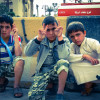
Obama Seen Unlikely to Sharply Escalate Intervention in Syria
Despite renewed pressure by hawks in Congress and the media, U.S. President Barack Obama appears determined to avoid sharply escalating U.S. involvement in the ongoing civil war in Syria.
U.N. Finds “Little Appreciation” for Human Rights among U.S. Businesses
A United Nations expert group is warning that too many gaps remain in implementing new safeguards among businesses based in the United States, both in terms of their domestic and international operations, to ensure the protection of human rights of workers and communities affected by those operations.
Few Meaningful Changes in Wake of Dhaka Factory Collapse
Worker advocacy groups here are calling on some of the most high-profile U.S.-based clothing companies to make drastic reforms to their international labour practices in the wake of the factory collapse that killed more than 420 workers in Dhaka last week.
U.N. Harnesses Social Media to Reach Outside World
As the world continues to turn digital, so does the United Nations - slowly but steadily.
Sudanese Rebels Prepare for War
A rebel coalition in Sudan has declared war on the government less than a week after it attacked Sudanese forces. “Now there is a fully-fledged war in the new south of the north,” Yasir Arman, a leader of one of the armed groups in the alliance, told IPS, adding that the rebels now control a southern stretch of the country.Rohingyas At Home and Nowhere
Rendered the nowhere people in their own homeland, thousands of Rohingya Muslims in Myanmar are fleeing inhuman living conditions, lack of humanitarian aid and rising sectarian tensions in their country. And the very state that is supposed to protect them now stands accused of ‘ethnic cleansing’.
Hamas ‘Talibanising’ Gaza
The Islamist resistance group Hamas, which controls the Gaza Strip, is being accused by its Palestinian Authority (PA) rivals in the West Bank of Talibanising Gaza and turning the coastal territory into a new Muslim Brotherhood neighbourhood.
Preserving the Soil and Reaping Greater Harvests
Smallholder farmer Peter Mcharo, from Morogoro Region in eastern Tanzania, has a reason to smile. His fields are full of green, healthy maize plants, he has richer soil and he spends less time farming now than he did two years ago.
Not Safe for Rwandan Refugees to Return
The Congolese government is demanding a comprehensive strategy for a lasting solution for the repatriation of 127,537 Rwandan refugees estimated to be in the country.
Migrants Tune in to Community Support
At the age of 23, Gao travelled to Thailand to escape intense fighting in his native Shan State in the east of Myanmar (Burma) and possible recruitment into the Shah army.
Asylum Seekers Housed Where Eagles Dare
Struggling to accommodate all its asylum seekers, Swiss authorities have turned to unused army quarters. Some of these lie on mountain passes, far away from inhabited areas.
From Rags to Penury
India’s planners worry about ‘jobless growth’, but perhaps nothing illustrates this phenomenon better than a policy of handing over the collection and disposal of the capital’s refuse to large private corporations, leaving close to 50,000 ragpickers unemployed.
Giving Women in Zimbabwe’s Informal Sector Rights
Mollin Siyanda, 46, a single mother of three from Harare’s low-income suburb of Hatcliffe, is scared of being arrested by the council police as she sells fruit, vegetables and second-hand clothes on the pavement of the city centre without a permit.A Political Island Defies Europe
"Give gas" was the original name for the Goj motorbikers parade intended for Apr. 21, a day when Hungary’s large Jewish community commemorates the Holocaust in the Peace March.
Japan’s Aid Programme Takes a Selfish Turn
As Japan slips from its former top spot as the world’s biggest donor, experts here are worried about long-term changes in the country’s development assistance programme, which has played a crucial role in global poverty reduction efforts.
Taliban Show Patients No Mercy
Akbar Shah was sitting with his sick wife in the gynaecology ward of the Agency Headquarters Hospital in Bajaur Agency, a division of northern Pakistan’s Federally Administered Tribal Areas (FATA), when a bomb ripped through the facility, scattering patients, doctors and medical supplies.
In U.S.-Mexico Relations, a Shift from Security to Economy
Ahead of President Barack Obama’s trip to Mexico and Costa Rica, experts here are expecting that security will take a back seat to issues of economic cooperation between the U.S. and Mexico.
Monetising Human Waste and 101 (Slightly) Crazy Other Ideas
One, two or more of the 102 newly launched out-of-the box ideas to improve global health could be world-changing breakthroughs.« Previous Page — Next Page »


The Week with IPS

NEXT STOP - SDGs
Tracking global progress towards a sustainable world
