Languages
Saturday, November 28, 2026



News and Views from the Global South
Food and Agriculture
Mexico Tempted to Shift From Tortillas to Ethanol
Farmers' protests and the rise in corn tortilla prices in late December put temporary brakes on the Mexican Senate, which was preparing to lift the national ban on utilising maize to make fuel alcohol, or ethanol.
RWANDA: Forest Conservation Calls for Carrot and Stick
For years, the various campaigns for sustainable use of forests just passed Pascal Segatashya by. But Rwanda's ambitious Forest Conservation Project eventually found him - and it has transformed his life and livelihood.
COTE D’IVOIRE: New Techniques, New Profits for Tomato Farmers
Even while the country has faced civil war and political crisis, innovative research organisations have worked to meet the challenges of food security and rural poverty.
JAMAICA: Dying Manufacturing Sector Seeks Govt Cure
For close to 10 years, Patrick Marzouca has just managed to keep his tiny car factory afloat in a rapidly declining productive sector.Food Worries Rise in China
In China, a country with a history of famine and where rural dwellers still use the greeting "have you eaten?", food is close to sacred. Feeding the country’s massive population remains one of the biggest threats to future economic growth and social stability, experts warn.More Arabs Protest Rulers With Self-Immolations
Mohammed Bouazizi, the 26-year old Tunisian whose act of self-immolation led to an unprecedented popular revolution in Tunisia, is quickly turning into a symbol for disgruntled Arab youths angry at their autocratic rulers and poor economic conditions - a development that Arab leaders in the region are clearly taking note of.
Malnutrition Has an Indigenous Face in Peru
Indigenous children under five in Peru's highlands regions still bear the brunt of chronic malnutrition, even though local authorities in those areas received millions of dollars worth of taxes between 2006 and 2010 from the mining companies operating there.Arab Regimes Fear Bread Intifadah
"Break my heart but don’t come near my bread," goes an old Arabic proverb. Failure to observe it has often come at a high political price.FOOD: The Rats Have It
While floods and droughts are often highlighted in the media for devastating the world’s rice production, a lesser-known culprit has been able to scurry away without being fingered for causing damage - rats.SRI LANKA: Extreme Weather Changes Could Follow Floods
Weather experts warned Sri Lankan to be prepared for extreme weather changes with hardly any notice following devastating floods here that have affected over one million people.
MALI: Cotton and Food Security Closely Linked
Many Malian farmers are boycotting cotton this year, instead planting cereals. Cotton isn't edible, but observers say that the shift could weaken food security.
In Corrupt Global Food System, Farmland Is the New Gold
Famine-hollowed farmers watch trucks loaded with grain grown on their ancestral lands heading for the nearest port, destined to fill richer bellies in foreign lands. This scene has become all too common since the 2008 food crisis.
Climate Change Could Be Worsening Effects of El Niño, La Niña
The strongest La Niña weather system in 50 years has brought historic flooding to Australia and drought to Argentina, Brazil and Uruguay, driving up food prices.Latest Food Crisis Brewing for Months
The United Nations, which is trying to reach out to nearly a billion undernourished people, some living in perpetual hunger, is anticipating another food crisis later this year.PERU: Storm in a Glass of Milk
During his nearly five years in office, Peruvian President Alan García has earmarked 620.5 million dollars to the "Glass of Milk" Programme (PVL), the backbone of the policies aimed at reducing malnutrition levels in the country. But the results of the nutritional supplement programme are poor.
Suicides Rise Across India
"India has become the suicide capital of the world," says Daya Sandhu, a counselling psychology professor at the University of Louisville in the U.S.Bahrain’s Farms Disappearing Under Concrete Towers
Environmentalists are engaged in a nation-wide campaign to protect what is left of the agricultural belt in Bahrain. Seventy percent of farms have been eliminated due to urbanisation, according to environmentalists who are warning of a serious environmental crisis.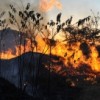
BRAZIL: Resilient Plants Could Hold Key to Adapting Agriculture
A vision of "the Apocalypse, everything burnt, turned black from ashes and smoke," was what photographer Mila Petrillo saw when she returned in October to what had been her Eden in the Brazilian municipality of Alto Paraiso, 230 km from Brasilia.
Cassava Combating Rural Hunger in Zambia
In Zambia, a silver lining has emerged for widespread rural hunger and poverty, thanks to homegrown agricultural research. Local scientists have successfully developed four new, early-maturing and high- yielding cassava cultivars in an ambitious research project conducted in the cassava-rich Luapula Province, under the on-going Root and Tuber Improvement Programme (RTIP).SRI LANKA: Economy Going Nuts
At a marketplace near Colombo, consumers scramble for coconuts being sold from a state-owned truck. Sri Lanka is the world’s fourth largest coconut producer and a major exporter; but a crop shortfall and a drought have forced the country to import coconuts.
BRAZIL: Climate Change Means New Crop Health Concerns
Farming around the globe, already reeling from drought, heat waves and major storms, will have to prepare for the new challenges that global warming will bring, especially in the form of pests and disease.« Previous Page — Next Page »


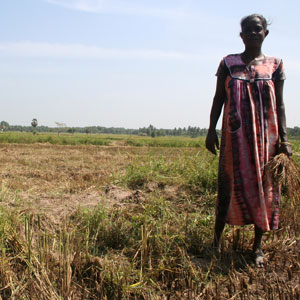
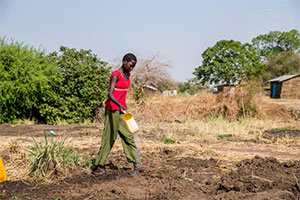 Farming on the Outskirts of Juba. Credit: UN Photo/JC McIlwaine
Promoting human and planetary health is a central focus of the United Nations, as laid out in the 2030 Sustainable Development Goals (SDGs). World hunger and unsustainable farming practices continue to be pressing concerns for the world. According to the 2025 State of Food Security and Nutrition in the World report by the Food and Agriculture Organization (FAO), 673 million people faced hunger in 2024. There are stark regional disparities, with the FAO projecting that 60% of the world population facing hunger will reside in Africa by 2030. Globally, the prevalence of food insecurity has remained consistently higher for women than men.
Sustainable and efficient national food systems are essential in preserving health, education, environmental well-being, peace, economy, and security. However, creating sustainable food systems can be a challenging endeavor, as food production takes a heavy toll on the environment. The agricultural sector accounts for a significant portion of greenhouse gases. Finding safe, sustainable, and ethical strategies to feed the world is crucial in ensuring planetary longevity. A recent initiative from 2023, the EU Regulation on Deforestation-free Products (EUDR), seeks to advocate for sustainable food systems. The main driver of deforestation is the expansion of agricultural land used to produce commodities like cattle, wood, cocoa, coffee, etc. The EUDR is part of the 2020 European Green New Deal and the EU Biodiversity Strategy for 2030 and aims to limit Europe’s consumption of products linked with deforestation by requiring that companies prove that their products are deforestation-free. Despite aiming to achieve major strides in sustainability, policies such as EUDR also raise socioeconomic concerns for targeted countries. Many emerging Latin American economies are impacted by the policy, and have raised the question of how developing countries can grapple with the tensions between economic development and advancing sustainability.
IPS has been at the forefront of providing compelling and insightful stories on communities facing hunger as well as the cost of food production. IPS uses statistics from FAO, the World Food Programme (WFP) and the International Fund for Agricultural Development (IFAD) to bring relevant and hard-hitting facts to readers. This gathering of information and data from such organizations helps bring the best stories from IPS journalists working in the different regions in consultation with experts on the ground.

The Week with IPS

NEXT STOP - SDGs
Tracking global progress towards a sustainable world