Languages
Thursday, November 19, 2026



News and Views from the Global South
Gender

‘Breastfeeding Best for Bangladesh’
Bangladesh’s achievement in raising exclusive breastfeeding rates for infants under six months from 43 percent to 64 percent, over the last five years, is said to be the result of a determined campaign by government and non-governmental organisations (NGOs).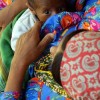
Wrangling Begins Over New Sustainable Development Blueprint
As the Millennium Development Goals (MDGs) limp towards their target date of 2015, the United Nations is shifting its focus to another long-term action plan: a new set of Sustainable Development Goals (SDGs).
New Drugs Underused in Averting Maternal Deaths
In most developing countries, where a woman gives birth still determines whether she lives or dies, despite the availability of inexpensive new medication that is proven to save lives.Women Using ICTs to Change the World
New technologies can transform society, and the role of women in using these tools to promote change was clearly seen at the first ICT Congress for Peace in this city in northern Spain.
Q&A: Severe Birth Defects Soar in Post-War Iraq
A new study confirms what many Iraqi doctors have been saying for years – that there is a virtual epidemic of rare congenital birth defects in cities that suffered bombing and artillery and small arms fire in the U.S.-led attacks and occupations of the country.
Regional Trade Key to African Food Security, World Bank Says
The World Bank is urging African countries to strengthen regional food trade, suggesting that food security could be greatly enhanced simply by allowing farmers to trade more easily across the continent.
Egypt Revolution Makes It Worse for Women
During the uprising that toppled Egyptian dictator Hosni Mubarak women stood shoulder to shoulder with men in Cairo’s Tahrir Square, pressing the revolution’s demands for freedom, justice and dignity. But those who hoped the revolution would make them equal partners in Egypt’s future claim they may be worse off now than under Mubarak’s authoritarian rule.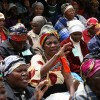
Entrepreneurs and Women: Keys to Growth in Africa
The international financial crash of the late 2000s created more than a global economic recession: it accentuated popular doubts about the paradigms on which our economies are built and prompted a closer look at two crucial drivers of economic growth: women and entrepreneurship.
Adultery Laws Unfairly Target Women, U.N. Says
When one of the Asian countries embraced Islamic Sharia law back in the 1990s, the rigidly conservative government threatened to enforce a provision that called for convicted adulterers to be stoned to death.
‘Malala’s Cause Is Our Cause’
Less than two weeks after being left for dead by the Taliban, Malala Yousafzai is standing up on her own two feet.
Migrant Women Trapped in Sex Trade
When French police broke up a Nigerian human trafficking ring that allegedly forced young migrant women into prostitution, the arrests cast a sharp light on the plight of what the authorities called “modern-day slaves”, here and throughout Europe.Amidst Controversy, World Bank to Review Influential Rankings
The World Bank released its 10th annual Doing Business report on Monday, using the occasion to track business- and investment-friendly reforms put in place around the world over the past decade.
The Face of Food Security Is Female
In a major endorsement for investment in women - the bulk of food growers in the developing world - United Nations Secretary General Ban Ki-moon said food security could not be achieved without women, and that the world's hungry also needed leaders to prioritise actions.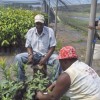
Amid Food Crisis, Caribbean Agriculture Going to Seed
With the average age of a farmer in the Caribbean now 62 years old, there is growing concern that commercial agriculture is on a path to extinction – a dire scenario for a region already shouldering a massive food import bill.
Cooperatives Help Women Farmers Tighten Ranks
It is a tried and tested truth that when women come together in groups they can address their issues more powerfully than they can as individuals.
Violence Against Women Surging in India
As gender-based violence across India becomes more frequent, and more savage, increasing numbers of women are speaking out against the cruelty.
Women’s Groups Say Uruguay’s New Abortion Law Falls Short
The Uruguayan Congress passed a law Wednesday decriminalising abortion, making it one of the few countries in the region where abortion is allowed in cases other than rape, incest, malformation of the fetus or danger to the mother’s life. But activists who backed the bill are not pleased with modifications introduced in the final version.
Violence Against Women Persists in Bangladesh
Bangladesh, often cited as a model of progress in achieving the United Nations Millennium Development Goals (MDGs), appears to be sliding backwards when it comes to dealing with violence against women (VAW).
Giving Women Land, Giving them a Future
Clarisse Kimbi barely ekes out a living from a tiny parcel of land in Kom village in the North West Region of Cameroon. Today, the mother of six finds it hard to put food on the table for herself and her children. But five years ago she, her husband and children were considered well-off.
Women Hit Hard by Natural Disasters
In the aftermath of a natural disaster, women are often the most vulnerable. Particularly in rural areas, women suffer disproportionately from inadequate shelter and poor sanitation facilities and are often tasked with rebuilding shattered homes.
Q&A: Disaster Resilience Starts with Grassroots Women
Women and girls can be powerful agents of change, but they are disproportionately affected by disasters because of social roles, discrimination and poverty.« Previous Page — Next Page »


Women make up half the world's population, but don't nearly share half of the world's wealth, well-being and opportunity. Two-thirds of the world poor are women, disproportionally exposing women to precarious living conditions, disease and unmitigated natural disasters. The media, meanwhile, remains a male-dominated sector in much of the world, contributing to women's voices lacking a crucial amplifier to put their concerns on political agendas and unleash the development potential of their ingenuity. Rather than then stereotypical victims of local and global forces, women are also organizer, innovators, conservators and community builders. These are some of their stories.

The Week with IPS

NEXT STOP - SDGs
Tracking global progress towards a sustainable world
Tracking global progress towards a sustainable world
