Languages
Friday, November 20, 2026



News and Views from the Global South
Gender
MALAWI: Women’s Voices to the Fore in New Development Policy
As Malawi works on its second development blueprint, the Malawi Development and Growth Strategy (MDGS II), the country’s women are hoping health and education will be prioritised and given proper attention in implementation.Headscarf Returns to Trouble Turkey
A ruling by an administrative court banning female candidates for academic posts from being veiled during an admission examination has brought the headscarf back to the front of Turkish politics, and reignited tensions between secularist and religious forces.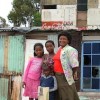
SOUTH AFRICA: New, Assertive Women’s Voices in Local Elections
Noncedo Pulana lacks many things, but she is certainly not short of confidence as she prepares to stand for election as Khayelitsha ward councillor. She feels her long years as an activist in the sprawling township have prepared her to do a better job.ARGENTINA-BRAZIL: Powerful Women Leaders Face Similar Challenges
The high popularity levels of their predecessors smoothed the way for Cristina Fernández and Dilma Rousseff to become presidents of Argentina and Brazil. But they also share the challenge of governing the two biggest countries in South America's Mercosur trade bloc, in the shadow of the leaders who went before them.
UN Women Head Unveils Empowerment Agenda
Despite birthing 100 percent of the world's children, growing 70 percent of the world's food and performing 60 percent of the world's labour, women only receive a fraction - a mere 10 percent - of the world's income.EGYPT: Mubarak Faces Historic Challenge
Egyptians have demonstrated in protests rare in size and ferocity against the three-decade rule of Egyptian President Hosni Mubarak.
PHILIPPINES: ‘Wanted, Full-Time Mothers’
It’s definitely not your typical job advertisement. "Wanted: Mothers; must be mature, strong and stable, self-confident, humorous and know how to cook; must have a positive and cheerful attitude towards life; must be willing to work as a full-time mother for the long term."MIDEAST: Hamas Guards Women’s Health – for the Wrong Reasons
When the Hamas government of Gaza imposed restrictions on shisha (water pipe) smoking several months ago, it wasn’t for health reasons – even though the habit is pervasive in the densely populated strip of land. Rather, the ban targeted only women – and it is being widely ignored despite the firm grip of the conservative Islamic government.
Should U.N. Chief’s Public Pronouncements Be Copyrighted?
When the secretary-general of the United Nations issues a key policy statement, holds a news conference or simply makes off- the-cuff remarks to the press corps, they traditionally remain in the public domain.
Q&A: “In Mexico, We Have Let the Violent Ones Do the Talking”
"In Mexico, we have let the violent ones do the talking," says journalist Marcela Turati, author of "Fuego Cruzado" (Crossfire), a new book that tells the stories of victims of President Felipe Calderón's war on drugs, which has left an official death toll of 30,000 in four years.
Set on Fire – New Form of Sexist Violence in Argentina
"I knew he beat her but I never imagined that she would end up like this," Elsa Jerez told IPS, talking about her 24-year-old daughter Fátima Catán, a victim of domestic violence in Argentina who died of severe burns to her body.EAST EUROPE: Midwives Struggle to Deliver Home Births
Women’s rights in Eastern Europe have been put into the spotlight as a Hungarian midwife faces five years in prison for assisting with home births.
INDIA: Alcoholism Grips Progressive Kerala
The scene outside a temple in Kannur district in Kerala recently was something unusual in modern India. Sitting on one side of a balance scale hanging in front of the Kannadipara Muthappan Temple was a woman, and on the other side, a bucket of coconut wine.
Malawi Missing Its Local Government
An hour and fifteen minutes each day: Melina Kalunga has plenty of time to measure how long it takes to resolve a legal battle over Malawi's Electoral Commission.
PAKISTAN: Militancy Takes On a Female Face
On December 25, a female suicide bomber, not more than 18 years of age, blew herself up killing at least 47 people and injuring 105 others.MALAYSIA: Muslim Gay Faces Govt Wrath
Muslim engineer Azman Ismail has sparked a huge storm of criticism, invited official censure and even death threats by going on YouTube.com and confessing that he is a gay.U.N. to Host Slew of Talkfests Through 2011
Living up to its reputation - or notoriety - as one of the world's quintessential talking shops, the United Nations has scheduled a slew of high-level meetings and international conferences through December this year.RIGHTS-DR CONGO: Soldiers Accused of Rape Arrested
The reported arrests of ten Congolese soldiers accused of looting stores and raping at least a dozen women in the Fizi District earlier in January is not enough to reassure local civil society.
SOUTH SUDAN: Women Dream of Independence
John Garang, the revered late leader of the Sudan Peoples' Liberation Movement, once said that women are the "the poorest of the poor and the marginalised of the marginalised". As the reality of an independent South Sudan approaches, the region's women have vowed they will not remain second class citizens.Women’s Coalition Denounces Exclusion by Security Council
In October 2001, the United Nations Security Council endorsed a resolution recognising that women's participation is essential to sustain efforts for peace in the world. But did the international body ever ask world's women leaders to take part in the decision-making process?
BRAZIL: New President’s First Steps Fuel Optimism of Women’s Movement
The initial steps taken by Brazil's first woman president, Dilma Rousseff, have confirmed that a stronger female presence will indeed be a hallmark of her administration.« Previous Page — Next Page »


Women make up half the world's population, but don't nearly share half of the world's wealth, well-being and opportunity. Two-thirds of the world poor are women, disproportionally exposing women to precarious living conditions, disease and unmitigated natural disasters. The media, meanwhile, remains a male-dominated sector in much of the world, contributing to women's voices lacking a crucial amplifier to put their concerns on political agendas and unleash the development potential of their ingenuity. Rather than then stereotypical victims of local and global forces, women are also organizer, innovators, conservators and community builders. These are some of their stories.

The Week with IPS

NEXT STOP - SDGs
Tracking global progress towards a sustainable world
Tracking global progress towards a sustainable world
