Languages
Friday, November 20, 2026



News and Views from the Global South
Gender

Gender-Based Violence: ‘Zimbabwe Police Officers Forget Themselves’
Tasha Ncube* has no kind words for the police. Early last month, the 31-year-old mother of two was beaten several times by her husband over what she says were small arguments. This was the first time in a marriage that has gone for years without any such occurrence.
Slowly Winning Fight Against FGM in Northern Senegal
The harm done by female genital mutilation is still enormous in Podor, a city in the north of Senegal, say officials at the local hospital. While the practice is declining slightly, some religious leaders in the region still support it.PAKISTAN: Death Sentence Revives Calls to Scrap Blasphemy Laws
What began as altercation among farm workers has become a full-blown nightmare for Pakistani mother Asia Bibi, one that points to her being led to the gallows.
Prenatal Care Key to Reducing Maternal Mortality
Despite successive awareness campaigns, many Malian women see no need to attend pre-natal check-ups. Health workers say this results in an elevated rate of maternal and infant mortality.
THAILAND: Photo Exhibition Captures Human Rights – And Wrongs
In this fast-developing South-east Asian country where dizzying neon signboards and glass-clad skyscrapers have been overshadowed only by a colourful political battle, a group of young photographers are hoping their work behind the lens can bring human rights back into focus.
CUBA: Lesbians Demand Fair Treatment from Health Providers
Lesbian and bisexual women's groups in Cuba, which welcome anyone who wishes to participate "with solidarity and in a respectful, friendly and healthy manner," point to the need to sensitise health personnel to the issue of female sexual diversity.
UGANDA: ICT Boom for Economy, A Bust for Some Women
The rapid growth of the ICT market in Uganda has been greeted with optimism over its potential to boost the country’s development. But less attention is being paid to the increase in gender based violence due to the use of information and communications technology.
RIGHTS-PAKISTAN: For Women, Cyber Crimes Are All Too Real
The Grade 10 student was first drugged, and then four men raped her. The group then apparently tried to extort money from her family. When the family filed a complaint with the police instead, the extortionists in October then posted a cellphone video of her whole ordeal on the Internet.LATIN AMERICA: Violence Against Women Linked to HIV Risk
"My mother used to beat me. She would lock me away, and then she started chaining me to the table," says Elizabeth. Teresa recounts how she was seven months pregnant when her husband grabbed her by the hair, threw her to the ground and kicked her.Teaching Virtual Resistance to Violence
What if young boys were imbued with a sense of empathy and fair play to counteract a culture that victimises women? Could they grow up to become part of a generation that renounces gender violence once and for all?
MEXICO: Sexist Violence Invisible in War on Drugs
They were not looking for war, but it found them anyway: Yosmireli and Griselda, two and four years old, died by bullets to their heads from soldiers' guns. Their mother, aunt and seven-year-old brother Joniel were also killed, on a rural road in northwest Mexico.
PHILIPPINES: Welcome to the Women-Friendly Jail
"I was shocked when I saw them," says 18-year-old detainee Chona (not her real name) of the first time she saw the duplex-style bungalows painted in pastel colours that make up her ‘home’.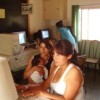
ARGENTINA: Click Here to Escape Gender Violence
"Men are drunks and batterers," Lorena Maurin tells IPS before heading in to her computer class, an oasis for women in the 22 de Enero neighbourhood on the outskirts of Buenos Aires.MALAWI: Traditional Birthing House Rises From the Rubble
Cecilia Tomoka's birthing centre stood unused for three years before the 2009 earthquake flattened it. Now she's rebuilding the house - and her practice - as Malawi's government lifts a ban on traditional birth attendants.
Recycling for Hope and Dignity on Paraguay’s Streets
"I go out with my cart and collect plastic bottles, cardboard, paper, plastic bags; that is my work," said Laura Cardozo, proud member of a recycling group that works the Paraguayan capital's streets.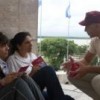
RIGHTS: Getting Harassment on the Map
Less common but perhaps more useful than the tourist map is the 'harassment map' that many Cairo women are beginning to refer to.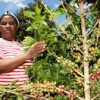
KENYA: A Brand New Constitution, But Can Women Enjoy Land Rights?
Mary Kimani wishes her husband were still alive. Holding her one-year-old son in one hand and a hoe in the other, she recounts with bitterness how she and her children lost their livelihood to her husband’s family.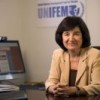
Q&A: Imagining Urban Life Without Catcalls or Rape
The U.N. Development Fund for Women (UNIFEM) launched an ambitious new initiative to improve the safety and wellbeing of women in five major cities Monday - New Delhi, India; Cairo, Egypt; Quito, Ecuador; Kigali, Rwanda; and Port Moresby in Papua New Guinea.TAIWAN: Debate Far from Over On Decriminalisation of Sex Trade
The Taiwanese government’s plans to partially decriminalise the sex trade has revived deep divisions within society, including between advocacy groups who stress the need for equal treatment and ‘autonomy’ for sex workers and those worried about the impact of such a move on human trafficking and child prostitution.
No Sex Education Please, We’re Arab
Civil society has warned of adverse social and health consequences after the Egyptian government ordered the removal of content related to male and female anatomy, reproductive health and sexually transmitted diseases (STDs) from the school curriculum.US-MEXICO: Award Honours Rights Defenders in “War Against the Poor”
Ines Fernandez and Valentina Rosendo, two indigenous Me'phaa women from the Mexican state of Guerrero, were raped and tortured by members of the Mexican Army in 2002. Since then, they have been subject to a constant stream of threats to keep them from speaking about the incidents.« Previous Page — Next Page »


Women make up half the world's population, but don't nearly share half of the world's wealth, well-being and opportunity. Two-thirds of the world poor are women, disproportionally exposing women to precarious living conditions, disease and unmitigated natural disasters. The media, meanwhile, remains a male-dominated sector in much of the world, contributing to women's voices lacking a crucial amplifier to put their concerns on political agendas and unleash the development potential of their ingenuity. Rather than then stereotypical victims of local and global forces, women are also organizer, innovators, conservators and community builders. These are some of their stories.

The Week with IPS

NEXT STOP - SDGs
Tracking global progress towards a sustainable world
Tracking global progress towards a sustainable world
