Languages
Thursday, November 12, 2026



News and Views from the Global South
Gender

Does God Hate Women? A Bangladeshi Murder Case
On 6 April, nineteen-year-old Nusrat Jahan Rafi was by a fellow student brought to the roof of their school. She told Nusrat that a friend of hers was beaten up there. Unknown to Nusrat, Moni who was four months pregnant at the time, had earlier bought burqas and gloves for three of the men who were awaiting them on the roof. Another girl, Umma, was already there beckoning Nusrat to come up. However, when Nusrat entered the roof Umma threw her down and tied her legs. The burqa-dressed men surrounded the defenseless Nusrat, demanding her to withdraw accusations of sexual harassment against the schools´headmaster. When Nusrat refused to give in, one of the men held her head down, while another poured kerosene over her and set her on fire.
Women Human Rights Defenders Face Greater Risks Because of their Gender
Does the name Ihsan Al Fagiri ring a bell? How about Heba Omer or Adeela Al Zaebaq? It’s likely that these names, among countless others, are not known to the average news consumer. But their tireless and dangerous work, however, has made news headlines as protests led to historic political change in Sudan.
Unlocking the Power of Women
This June, thousands will flock to Vancouver for a global dialogue on how to accelerate progress for girls and women under the banner of power, progress and change.
Global Hunger Is Threatening Families Because of Climate Change
There is barely a corner of human life that will not be affected by climate change, and some of its impacts are already being felt. Consider this, 821 million people are now hungry and over 150 million children stunted, putting the hunger eradication goal, SDG 2, at risk. Today 15 May, is the United Nations International Day of Families and the theme for this year is, ‘Families and Climate Action’.
Campaign to Whitewash Saudi Arabia’s Image Does Little for Women in the Kingdom
Amid a high-profile public relations campaign to convince the world just how much the Kingdom of Saudi Arabia is modernising – highlighted in last year’s lifting of the ban on women driving – Saudi authorities continue their relentless persecution of women human rights defenders.
West Africa’s Fine Line Between Cultural Norms and Child Trafficking
On a bus in Cotonou, Benin’s commercial capital, four Nigerian girls aged between 15 and 16 sit closely together as they are about to embark on the last part of their journey to Mali, where they are told that their new husbands, whom they never have met, await them.
LGBTQI Rights in the Balkans: A Perpetual Struggle
Romanian Adrian Coman and his American-born partner Clai Hamilton had two major reasons to celebrate when they tied the knot last June.
Women, Peace and Security: Let’s Turn Words into Action
To be able to tackle a problem we must first recognize that it exists. When I first spoke at the United Nations Security Council in 2009, I was asked why the issue of sexual violence was even relevant to peace and security. At that time, it was not generally accepted that rape is in fact a weapon of war. Today, that statement is both widely accepted and central to the international community’s understanding of this crucial issue.
4 Revolutionary Tips to Stop Aquaculture and Fisheries Ignoring, Resisting or Eroding Gender Equality
In my years in fisheries research in Australia, few researchers were women, all fishers were assumed to be men, "girly" calendars were occasionally pinned on the office, lab or tea room wall at work and the workplace rules of engagement for women were still being worked out by trial and error. I vividly remember when my colleague, “Jessie”, the only woman technician in our research agency, was assigned to go into the field for a week to support a fish tagging project run by men scientists. The men took umbrage and went to the Union to protest this affront to their work conditions. The Union warned them that they could be sacked for discriminating against a woman. So change was at hand - or so it seemed.
Rewriting the Rules on #MeToo Globally
I have been working to protect the rights of women workers for 25 years, and whether I speak to domestic workers, election workers, farmers, or activists, their experience of sexual harassment and violence has been a common thread. The other commonality? The almost complete absence of redress in any of those cases, spanning Asia, Africa, the Middle East, and the United States.
Women and Girls “Preyed on as the Spoils of War”
“They forcefully took us away and kept us like prisoners,” Lydia Musa, a former Boko Haram captive who was abducted at the age of 14 during an attack on her village in Gwoza, in Nigeria’s north eastern Borno State, tells IPS. Musa and two other underaged girls were captured and forced to marry Boko Haram fighters in spite of their protests that they were too young to marry.
Economic Empowerment of Women Good for All
Government staffer Souhayata Haidara enjoys talking about her life in a patriarchal society. Her career is a triumph of patience and perseverance, she tells Africa Renewal with a smile and a wink.
Women in Ethiopia Still Struggle Despite Leadership in Government
Following 2018 elections in Ethiopia, a record-breaking number of women now hold leadership positions in the country's government. But women still struggle to rise up the ranks in other sectors.
Empowering Girls Through Sport
For too long, women and girls have been excluded from the playing field—literally. But now, many are paving the way in the fight against gender inequality through sports.
Brunei’s Shariah Code & the New Stone Age
Over a week ago – on April 3 – Brunei, the tiny South East Asian kingdom on the island of Borneo, announced its citizens would face the full force of the Shariah law.
Religion & Development: An Enhanced Approach or a Transaction?
Since 2008, a number of articles/opinions have been written, on the nexus between religion and development. In chronological order, the articles first made the case for why ‘religion matters’ to the attainment of developmental objectives, noting how religious leaders are critical to changing social norms which can be in contradiction to human rights, and noting the extent to which faith-based organisations (FBOs) have anyway served as the original social service providers known to human kind.
Revealed — A Roadmap to Defeat Tobacco Tax & Keep Indonesians Addicted
The image of a smoking toddler from Indonesia horrified the world but did little to motivate local policy makers to enact measures to protect children and youth from the harms of tobacco use. Indonesia has one of the world’s highest smoking rates where two out of three men and about 40 percent of adolescent boys smoke.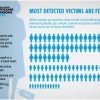
Why New York Should Not Decriminalize Sex Trade
Prostitution policies are bubbling up again in legislative circles across the United States, but few representatives seem to have much clarity on the issue. 2020 presidential candidate Senator Kamala Harris has given mixed messages on her thinking, while Bernie Sanders has said he simply has “no answer.”
Mobilizing Men as Partners for Women, Peace & Security
In the first month of Bangladesh joining the Security Council in January 2000, President Nelson Mandela was in New York to report to the Council in his capacity as the UN-mandated facilitator of the Burundi Peace Process. In an informal setting, he shared with us that his efforts to include women in the peace table were not working as participating men stonewalled.
Women Activists Protest Torture & Imprisonment Under Repressive Regimes
Faced with an uneven battle against right wing nationalist governments, repressive regimes and extremist groups, scores of civil society organizations (CSOs) are gearing themselves to fight back.
Latin America Resets Its Strategy against Femicides
Several initiatives are seeking to strengthen the fight against femicides in Latin America, a region which, despite growing popular mobilisation and pioneering legislation against gender-based murders, still has the world's worst rates in what has been described as a "silent genocide," says U.N. Women.« Previous Page — Next Page »





Women make up half the world's population, but don't nearly share half of the world's wealth, well-being and opportunity. Two-thirds of the world poor are women, disproportionally exposing women to precarious living conditions, disease and unmitigated natural disasters. The media, meanwhile, remains a male-dominated sector in much of the world, contributing to women's voices lacking a crucial amplifier to put their concerns on political agendas and unleash the development potential of their ingenuity. Rather than then stereotypical victims of local and global forces, women are also organizer, innovators, conservators and community builders. These are some of their stories.

The Week with IPS

NEXT STOP - SDGs
Tracking global progress towards a sustainable world
Tracking global progress towards a sustainable world
