Languages
Saturday, November 21, 2026



News and Views from the Global South
Green Economy

Solar Energy and Briquettes Make Headway in Haiti
While Jean Reniteau mulls over the idea of using solar panels to light his house, Frantz Fanfan is wondering how to expand production of biomass briquettes to replace the use of charcoal in the cooking stoves of most of the Haitian people, who lack electricity.
For Climate Action, 2013 “Good as It’ll Get”: Nicholas Stern
A confluence of factors could make 2013 the most fruitful opportunity in years – and for years – for potentially major action on climate change, according to a leading voice on climate change policy, the British economist Nicholas Stern.
World Bank Aims to End Extreme Poverty by 2030
World Bank President Jim Kim has unveiled a series of new institutional goals aimed at ending extreme poverty by 2030 and focusing on the promotion of “shared prosperity” – increasing the incomes of the poorest 40 percent in each country while placing increased focus on dealing with climate change.
U.S. Unveils Major New Proposal to Cut Vehicle Emissions
Environmentalists and public health advocates are lauding a key, long-awaited proposal put forward by President Barack Obama’s administration that would require cleaner gasoline and more effective technologies on vehicles, cutting various harmful emissions by 40 to 80 percent.
“Crowdfunding” Gives Boost to Renewables in U.S.
A U.S. company called Mosaic has unveiled a new way for citizens to use the Internet to invest in specific solar energy projects around the country.
Subsidies Play “Significant Role” in Climate Change, IMF Says
The International Monetary Fund (IMF) is urging national governments around the world to roll back or eliminate subsidies on petroleum-based energy sources, estimating that this alone could result in a 13-percent decline in global carbon dioxide emissions.
Spain Leads EU in GM Crops, but No One Knows Where They Are
Spain has more large-scale plantations of genetically modified seeds than any other country in the European Union (EU).
Q&A: Master Reforestation Plan to Save Haiti
Droughts and floods, devastating hurricanes and soil erosion with a drastic impact on food security make Haiti extremely vulnerable to climate change and in need of enormous adaptation efforts.
HONDURAS: Activists Protest Lack of Transparency in Extractive Industry
The Honduran government’s announcement of its plans to join the Extractive Industries Transparency Initiative (EITI) has raised expectations as well as doubts, particularly due to the speed with which it aims to complete a process that has taken several years in other countries of the region.
Visions of a Sustainable, Pollution-Free New York by 2030
As usual, midtown Manhattan is packed with whisper-quiet cars and trams while thousands walk the streets listening to the birds of spring sing amongst the gleaming, grime-free skyscrapers in the crystal-clear morning air.
How to Break the Stalemate on Global Sustainability
The current growth model is not sustainable. Neither the green economy nor alternative sources of energy can prevent global warming. Solutions will come from concerted actions at the local and national levels, from the adoption of instruments and practices borrowed from other disciplines like peacebuilding, and from the move to a “no-waste economy”, according to experts here.
Obama Proposes Major New Renewables Research
President Barack Obama on Friday unveiled a broad new proposal to step up U.S. research into renewable energy technologies, particularly in transportation, which is responsible for around 70 percent of the United States’ oil use.
Green Taxes Seek a Spot in Mexico’s Reform Bill
As the Mexican government prepares a broad tax reform bill, experts and activists see it as an opportunity to include new “green taxes” aimed at raising funds for curbing pollution.
Public Pays for Fukushima While Nuclear Industry Profits
Two years after Japan's Fukushima Daiichi nuclear disaster, the country faces 100 to 250 billion dollars in cleanup and compensation costs, tens of thousands of displaced people and widespread impacts of radiation.
Brazilian-Made Plastic Solar Panels, a Clean Energy Breakthrough
As part of the country’s growing emphasis on green tech research, Brazilian scientists have developed plastic solar panels that could revolutionise power generation from this clean, renewable energy source.
Necessary Extinction
When the environment changes, smart creatures adapt. And, in the face of a changing climate and changing economics, smart people are backing green energy. In 2011 almost a third of new electricity came from renewable sources. But, just as the first mammals had to contend with a world of dinosaurs, the pioneers of green energy have to contend with a world based on an obsolete carbon-based energy system that refuses to upgrade.
“We Aren’t Fighting Poverty Here, We’re Improving the Quality of Life”
The residents of San Crisanto, a small communal village nestled in an idyllic setting in the southeastern Mexican state of Yucatán, have learned that valuing and protecting natural resources can generate employment and income.
Cuba Diversifies – But Energy Focus Still on Oil
Cuba continues to focus heavily on oil for its energy needs, through agreements with partners like Venezuela, with the hope of discovering commercially exploitable wells in the Gulf of Mexico.
U.S. Security Establishment Increasingly Worried about Climate Change
More than three dozen national security officials, members of Congress and military leaders are warning of the threat climate change poses to U.S. national security, the latest in an indicator that U.S. intelligence and national security circles are increasingly worried about a warming planet.
Q&A: Climate Change Front and Centre in Cuban Development Model
Each of Cuba’s 168 municipalities faces the challenge of designing its own strategic development which, as well as economic and social progress, minimises the impact of extreme weather and other problems caused by global warming.
Green Energy Solves Dual Crises of Poverty and Climate
Green energy is the only way to bring billions of people out of energy poverty and prevent a climate disaster, a new study reveals.« Previous Page — Next Page »


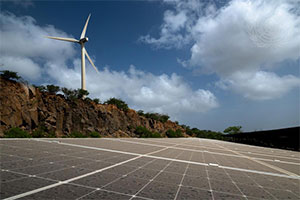 Renewable Energy in Cabo Verde. Credit: UN Photo/Mark Garten
A green economy is an economic model that aims to reduce environmental risks and build a sustainable future. Many of the UN SDGs seek to facilitate a green economy, such as ensuring access to affordable and reliable clean energy, building sustainable cities and communities, and implementing urgent action to combat climate change. Various key negotiations have strived to achieve a green economy, such as the Green New Deal and the Inflation Act of 2022. COP30, held in Belém, Brazil in 2025, agreed to mobilize $1.3 trillion annually for climate action and launched the Belém Mission to 1.5°C. However, the conference was not able to develop a fossil fuel reduction roadmap. Recent years have witnessed a sharp transformation in the geopolitical landscape of international sustainability cooperation. In March 2025, the United States stepped back from formal multilateral support for the SDGs, while China is on the rise as an international leader in renewable energy production. The actions of these global powers may shape shifting alliances on environmental governance. IPS is dedicated to sharing timely news on international developments in building a sustainable future.

The Week with IPS

NEXT STOP - SDGs
Tracking global progress towards a sustainable world
Tracking global progress towards a sustainable world
