Languages
Wednesday, November 25, 2026



News and Views from the Global South
Headlines

Brain Scientists Haven’t Been Able to Find Major Differences Between Women’s and Men’s Brains, Despite Over a Century of Searching
People have searched for sex differences in human brains since at least the 19th century, when scientist Samuel George Morton poured seeds and lead shot into human skulls to measure their volumes. Gustave Le Bon found men’s brains are usually larger than women’s, which prompted Alexander Bains and George Romanes to argue this size difference makes men smarter. But John Stuart Mill pointed out, by this criterion, elephants and whales should be smarter than people.
Q&A: Family Farming in Latin America & the Caribbean Hard Hit by COVID-19 Restrictions
With limited transport options to carry their goods to the market, lack of protective gear, and limited financial resources, family farmers across Latin America are facing grave consequences as a result of the COVID-19 pandemic.
Leading in Time of COVID: A True Test of Leadership
In 1918, the Spanish Flu, a deadly influenza caused by the H1N1 virus, decimated the world. Over the course of four successive waves, it infected 500 million people, about a third of the world’s population at the time, resulting in 50 million deaths.
Enough Is Not Enough – Call for Urgent Change in Mexican Economic Policy
A group composed by women and men, called Nuevo Curso de Desarrollo (New Course for Development) based at the National University of Mexico recently published a document to propose a set of measures to change the current economic policy in Mexico. This proposal responds to a diagnosis of the current situation: at this point of the year, the serious social damage inflicted by the health and economic crisis can already be observed. As we know, in Mexico as in many other countries, there was a great economic disruption caused by COVID. Millions of people ceased to receive income from their work. However, the Mexican government has not carried out sufficient support measures to compensate for these losses. The result is easy to guess: many households have been rapidly impoverished. It is estimated that between 10 and 16 million people in April earned much less to the point of not being able to acquire the basic food basket , a situation that has continued for many of them during May, June and July. And while it is true that more and more workers are returning to their jobs, the losses caused have not been repaired.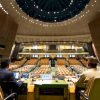
If Trump Delivers His Last Hurrah to an Empty United Nations, Will it Still Make a Sound?
There is no love lost between the United Nations and US President Donald Trump. When he addressed the high-level segment of the UN General Assembly in September 2018, Trump falsely told delegates that "in less than two years, my administration has accomplished more than almost any administration in the history of our country"
No More Lost Generations: Global Fund Provides Education for Children in Crisis
15-year-old Humaira* sits on the mud floor of her hut in Ukhiya camp, Cox's Bazar, listening as the rain beats down on the tarpaulin roof.
Getting India’s Construction Workers Their Entitlements
Basant Lal Chaudhary migrated from his village of 1,200 people in Madhya Pradesh, to a city of 90,000 people in Jammu and Kashmir in 2016. He last worked as a construction worker, before the COVID-19 lockdown forced him out of employment.“I used to earn a daily wage of INR 350. That was my only source of income,” he shares. During the lockdown, he along with others who worked with him, are finding it difficult to make the ends meet.”I don’t know whether I will be able to find work here anytime soon.”
COVID-19 Sharpens Caste Discrimination in Nepal
Across Nepal, it is the already under-served and vulnerable who have been affected by the prolonged lockdowns. But it is the Dalit returnees from India who have tested positive and their families who face double discrimination.
The Beirut Blast: An Accident in Name Only
The catastrophic explosion in Beirut’s port is a manifestation of the Lebanese political elite’s predation and dysfunction. Among the country’s long-suffering citizens, shock is quickly yielding to fury. It may be the last chance for those in power to effect long-overdue structural reforms.
Young South Africans are Shut Out From Work: They Need a Chance to Get Digital Skills
Most young people from disadvantaged backgrounds in South Africa continue to be denied access to information and communications technology because of poor infrastructure and the digital divide.
Keeping Education within the Grasp of Refugee Children
“Not being able to go to school is not something I’d wish on any child in this world,” said 21-year-old Nujeen Mustafa, a young advocate for refugees who fled the Syrian war with her sister. Mustafa, who now lives in Germany, is also the United Nations Human Rights Council (UNHCR) high profile supporter.
Debt Hawks Detract from Urgently Needed Fiscal Recovery Efforts
Developing country debt has continued to grow rapidly since the 2008-2009 global financial crisis (GFC). Warnings against debt have been reiterated by familiar prophets of debt doom such as new World Bank chief economist, Carmen Reinhart, once dubbed the ‘godmother of austerity’.
Crisis Management 101: Treating the Climate Crisis Like a Pandemic
On 23 February 2020, the South Korean government raised the national Crisis Alert Level to the highest tier in response to the Covid-19 pandemic. Since then, we have witnessed what our society is capable of when faced with a crisis.
Youth Rural-Urban Migration Hurts Malawi’s Agriculture
As households in Chiradzulu District in Southern Malawi start preparing their farms for the next maize growing season, Frederick Yohane, 24, is a busy young man.
Impending Food Crisis in Lebanon will Largely Affect Migrant Workers
Migrant workers and refugees in Lebanon will “inevitably” suffer the most as food insecurity threatens the nation following last week’s blast.
To Stay Ahead of the Next Insect Outbreak, Harness Available Data Intelligence
Recently, the UK contributed £17 million to support the Food and Agriculture Organization of the United Nations (FAO) to continue their efforts to combat the desert locust surge in East Africa and improve early warning and forecasting systems.
COVID-19: Where to From Here For Efforts to Support Youth Economic Inclusion?
As the world marks International Youth Day on August 12, it is difficult to ignore the impact of the COVID-19 pandemic on young people - particularly on efforts towards youth economic inclusion in Africa. Meaningful and swift action is needed from African states to ensure the damage is not long-lasting.
The Growing Global Movement to End Outdoor Advertising
“With advertisements removed in Grenoble you can see the city’s beauty and the mountains beyond. Adverts create obstacles. Without them you can breathe,” explains Khaled Gaiji, national mobilisation coordinator of the French anti-advertising organisation Résistance à l’Agression Publicitaire (Resistance to Advertising Aggression, or RAP). “Advertising is like an iceberg: the largest impact is below the surface. Adverts colonise our imagination.”
Reform of the United Nations Organization
The US detains essential keys to the political and economic stability of the planet. The last four years have been challenging for Americans, their allies, and the rest of the world.
CPTPP Trade Liberalization Charade Continues
The Trans-Pacific Partnership (TPP) Agreement should be dead and buried after President Trump announced US withdrawal immediately after his inauguration in January 2017. After all, most major US presidential candidates in the last election, including Hillary Clinton, had opposed the TPP.
COVID Crisis Challenges in People with Disabilities and Hansen’s Disease
Even during the best of times, unfortunately members of the global community who have special needs are marginalized and often treated as social outcasts. The COVID crisis which has been raging for over the better part of the year 2020 has posed additional barriers and challenges for these already disenfranchised individuals.« Previous Page — Next Page »


