Languages
Friday, November 27, 2026



News and Views from the Global South
Headlines

People Affected by Leprosy Still Face Stigma in Latin America
The First Latin American and Caribbean Meeting of Organisations of People Affected by Hansen's Disease, more widely known as leprosy, seeks to exorcise stigma and discrimination. The meeting has brought together around a hundred activists in Brazil.
Multilateralism: A Testimony
For over 70 years, the UN system has been perceived as the guardian of peace and development in the world. However, multilateralism today is undeniably under strain. The effectiveness of global institutions and of global policymaking is questioned, and alliances are fraying.
Innovative Sustainable Business: A Three Trillion-Dollar Opportunity that UN Environment Wants People to Develop
In the East African region, communities around the continent’s largest water body, Lake Victoria, regard the water hyacinth as a great menace that clogs the lake and hampers their fishing activities. But in Lagos, Nigeria, some groups of women have learned how to convert the invasive weed into a resource, providing them with the raw material needed to make handicrafts.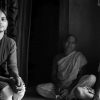
Women, Work, and Migration
Social barriers have historically been blamed for the lack of gender parity in the workplace. But there are other dimensions to this age-old discourse.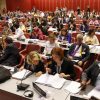
Gender Quotas Help Women Parliamentarians to Rise in Numbers
When the Inter Parliamentary Union (IPU), based in Switzerland, released its annual report on the representation of women legislators worldwide, four of the top five countries were from the developing world. Rwanda led the way with 61.3 percent of the seats held by women in its lower or single house of parliament followed by Cuba (53.2 percent), Bolivia (53.1 percent) and Mexico (48.2 percent).
Promoting Privatization
Privatization has been central to the ‘neo-liberal’ counter-revolution from the 1970s against government economic interventions associated with Roosevelt and Keynes as well as post-colonial state-led economic development. Many developing countries were forced to accept privatization policies as a condition for credit or loan support from the World Bank and other international financial institutions, especially after the fiscal and debt crises of the early 1980s. Other countries voluntarily embraced privatization, often on the pretext of fiscal and debt constraints, in their efforts to mimic new Anglo-American criteria of economic progress.
UN Pays Homage to Staffers Who Died in Plane Crash
The United Nations headquarters is in mourning – and the UN flag is at half mast. The deaths of 21 UN staffers March 10, on board an Ethiopian Airlines flight in Addis Ababa, is one of the biggest tragedies in the extended UN family—with a flashback to the deaths of 22 people, mostly UN staffers, who lost their lives in the Canal Hotel bombing in the Iraqi capital of Baghdad in August 2003.
The Crisis in Venezuela
My mission to Venezuela in November/December 2017 was the first by a UN rapporteur in 21 years. It was intended to open the door to the visit of other rapporteurs and to explore ways how to help the Venezuelan people overcome the protracted economic and institutional crisis.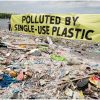
The Rising Trend of Zero Waste Lifestyles
Not too long ago, the term “zero waste” was just one of those boring policy directives or catchphrases thrown around by governments. But in the last few years, ‘going zero waste’ has taken on a new direction as a lifestyle trend of the insta-famous, who are helping to make zero waste a movement that anyone can get involved in.
Access to Water Is a Daily Battle in Poor Neighborhoods in Buenos Aires
"Look at this water. Would you drink it?" asks José Pablo Zubieta, as he shows a glass he has just filled from a faucet, where yellow and brown sediment float, in his home in Villa La Cava, a shantytown on the outskirts of Argentina's capital.
Q&A: Inventor from a Small Fishing Village in Saint Lucia Provides Hope for Water Woes
Karlis Noel spends his days in his lab in the small, picturesque community of Laborie in St. Lucia. The former fisherman’s story might sound like an overnight success, but his present accolades in the field of engineering are the result of years of hard work and an unceasing drive to make life easier for communities in the throes of a water crisis.
Birds of a Feather: Kim Jong-un and Donald J Trump
After his first meeting with Kim Jong-un Donald Trump declared: "And then we fell in love, okay? No, really – he wrote me beautiful letters, and they're great letters." Maybe it was a joke, maybe not. At least Trump indicated that he and Kim Jong-un were friends. In his book De Amicitia, written 44 BCE, Marcus Tullius Cicero wrote "A friend is, as it were, a second self." Are Trump and Kim Jong-un really friends? At least they seem to have many personal traits in common.
Preaching World Peace by Day, Peddling Lethal Weapons By Night
The Middle East, one of the world’s most politically-volatile and war-ravaged regions, has doubled its arms imports during the past five years, according to the Stockholm International Peace Research Institute (SIPRI).
Nigeria Mourns the Loss of Leading African Academic Who Was in Ethiopian Airlines Crash
Nigeria is mourning along with the rest of the world after the downing of Ethiopian Airlines Flight, which claimed all of the 157 lives onboard. The fatalities included people from 35 countries, 19 United Nations officials and two Nigerians, one of whom was regarded as Africa's leading academic and labelled a genius by many.
Millions of Venezuelans in Need of Protection
The international community must extend protections for Venezuelans in light of a growing humanitarian crisis with no end in sight. Human Rights Watch has urged governments in the Americas to provide temporary protection to the millions of Venezuelans fleeing a severe humanitarian crisis.
Will ‘People Power’, or Powerful People, Change the World?
When I was a little girl, I wanted to be a hero. While my friends dressed up as princesses, I wore a home-made Joan of Arc costume. Where others read romance novels, I read about fighting dragons. I didn’t want to be a princess, I wanted to save them.
Environmental Funding For Guyana Must Cater for Mangroves Too
For several decades, Guyana has been using mangroves to protect its coasts against natural hazards, and the country believes its mangrove forests should be included in programmes like the REDD+ of United Nations, in order to access financing to continue their restoration and maintenance, as they complement miles of seawalls that help to prevent flooding.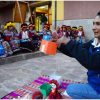
Women as Forerunners of Change: When Financial Inclusion Meets Digital Transformation
Imagine a world where women fully participate in society, and enjoy equal access to resources and opportunities. Most probably, the 2030 Agenda would be nearing its fulfillment and we would be closer to achieving the better planet we wish to build.
Urgent Call for African Food Sovereignty Movements to Connect with Radical Feminist Movements on the Continent
Africa is facing dire times. Climate change is having major impacts on the region and on agriculture in particular, with smallholder farmers, and especially women, facing drought, general lack of water, shifting seasons, and floods in some areas.
Break the Menstrual Taboo
It is time to rise up and fight a long neglected taboo: menstruation. Marking International Women’s Day, United Nations human rights experts called on the international community to break taboos around menstruation, noting its impacts on women and girls’ human rights.
Island Women Take the Lead in Peatland Restoration
Eluminada Roca has lived all her life next to the Leyte Sab-a Basin peatlands. The grandmother from of San Isidro village in Philippines’ Leyte island grew up looking at the green hills that feed water to the peatland, she harvested tikog—a peatland grass to weave mats—and ate the delicious fish that was once in abundant in the waters. But today, the land is losing its water, the grass is disappearing and the fish stock has drastically decreased.« Previous Page — Next Page »


