Languages
Wednesday, November 18, 2026



News and Views from the Global South
Health

First Global Forum of Leprosy-Affected People’s Organisations Kicks off in Manila
Being part of a platform where leprosy-affected people from all over the world can freely interact, exchange and share opinions, ideas, experiences and strategies was always something Tasfaye Tadesse dreamt of.Uniting for Zero Leprosy in Manila
World Health Organization’s (WHO) Goodwill Ambassador for Leprosy Elimination and recipient of the 2019 Order of the Rising Sun as well as the 2018 Gandhi Peace Prize, Mr. Yohei Sasakawa, is in the Philippines to call on academics, medical stakeholders and those affected by the disease to unite towards “Zero Leprosy”.
A Global Forum to Encourage Dialogue and Share Solutions
 Professor Takahiro Nanri is the executive director of the Sasakawa Health Foundation, co-organiser of the Global Forum of People’s Organisations on Hansen’s Disease, which will take place from Sept. 7 to 10 in the Philippines.

Is There Discrimination Against Women in Healthcare in India?
In an inaugural lecture at the Radcliffe Institute at Harvard University, Amartya Sen began with a swipe at Queen Victoria who complained to Sir Theodore Martin in 1870 about & quote: this mad, wicked folly of 'Woman's Rights’ ", as in her rarefied world nobody could trample upon her rights. The world has of course changed dramatically and women’s rights are widely acknowledged but injustices persist. Our concern here is with health injustices that are widely prevalent in India. These take multiple forms: female foeticide, widespread morbidity and denial of access to good quality healthcare until a critical condition develops. Our focus here is on vulnerability of women to non-communicable diseases (NCDs) and their limited access to good quality healthcare in India.
Why Governments Must Prioritise Sustained Tobacco Control Investment in Low- & Middle-Income Nations
Trends in global consumption of cigarettes haven’t improved since the World Health Organization’s (WHO) Framework Convention on Tobacco Control (FCTC) came into force, according to a study published in the British Medical Journal (BMJ) earlier this summer.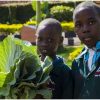
Ugandan Students Turn Waste to Wealth
Namugongo is a lush, forested community in central Uganda where tall trees are home to colourful birds and noisy monkeys. The community has a tragic place in history: on 3 June 1886, 22 Ugandan Christian converts were publicly executed, on the orders of King Mwanga II of the Buganda Kingdom, in an attempt to ward off the influence of colonial powers with whom the Christians were associated.
Our Food Systems Need Transformation
The right to food is a universal human right. Yet, over 820 million people are going hungry, according the latest edition of the State of Food Security and Nutrition in the World (SOFI 2019). In addition, 2 billion people in the world are food insecure with great risk of malnutrition and poor health” 1.
Disaster Risk Resilience: Key to Protecting Vulnerable Communities
The past five years have been the hottest on record in Asia and the Pacific. Unprecedented heatwaves have swept across our region, cascading into slow onset disasters such as drought. Yet heat is only part of the picture. Tropical cyclones have struck new, unprepared parts of our region and devastatingly frequent floods have ensued. In Iran, these affected 10 million people this year and displaced 500,000 of which half were children. Bangladesh is experiencing its fourth wave of flooding in 2019. Last year, the state of Kerala in India faced the worst floods in a century.
Kenya: The troubles of a science PhD from the West
Graduate students of the London School of Economics and Political Science gathered at Kenya’s coast in September 2018, where the Secretary-General of the United Nations Conference on Trade and Development (UNCTAD) Dr Mukhisa Kituyi told them: “With your international credibility, it is easier and tempting to leave and take out of the continent the little intellectual resource that could solve problems their countries face.”
How Tibet has Successfully Reduced Poverty
According to the Tibet's Social Science Academy’s Institute of Rural Economic Studies, the number of Tibetans still living in poverty has been brought down from 850,000 a few years ago to 150,000.
Tibetan officials say the government is committed to reducing that number to zero by the end of this year. 
A ‘Cure’ for Ebola but Will it Stop the Outbreak if People Won’t Get Treatment?
While people in the Democratic Republic of Congo (DRC) are slowly being made aware that scientists have discovered two drugs that are effective in treating Ebola, letting go of the fear and anxiety that has prevailed across the country this year will require more work.
World Health Organisation’s New Effort Can Help End Neglected Tropical Diseases
Recently, the World Health Organisation (WHO) launched global consultations for a new Roadmap on how to eliminate Neglected Tropical Diseases (NTDs). The roadmap would help achieve universal health coverage by 2030, address health emergencies and promote healthier populations.
Are Jair Messias Bolsonaro and Donald John Trump a Menace to the Planet?
We live in different worlds. The ones of friends, family and work colleagues. Worlds which are overshadowed by other, much bigger ones. Global spheres of international finance, politics, climate change, etc., contexts that might threaten our smaller circle of relationships; our family, our income, our general wellbeing, in short – our entire existence. However, even at those levels there exist small circles of acquaintances and associates able to make decisions that affect the entire humankind. Let me take one example – the regimes of U.S. President Donald J. Trump and Brazilian President Jair Messias Bolsonaro, which are menacing our global natural habitat.
The Nairobi Summit – Towards a Watershed Moment
In 2019 a female scientist created an algorithm that gave the world the first ever images of a black hole. Working with a team of astronomers, physicists, mathematicians and engineers, a young woman led the development of a computer program that in her own words enabled them to “achieve something once thought impossible.”
Domestic Violence and the Role of Education
Trying to teach and inspire youngsters is a daunting task. Many teachers tend to suffer from a harrowing, bad conscience, obliged as they are to follow routines, rules, and regulations set down by their employers while knowing that these are difficult to apply and provide with desired results. Worst is a nagging feeling of inability to reach out to the students. Most teachers want their pupils to be good learners, critically thinking individuals who feel gratified and keen to change things for the better.
Boom or Bust -Education Will Determine Africa’s Transformation
August 12, marks International Youth Day, and the theme for this year is ‘making education more relevant, equitable and inclusive’, is particularly apt for Africa. Consider this. Every 24 hours around 35,000 African youth are looking for work.
Global Aids Fight Running out of Steam, U.N. says
The global fight against Aids is floundering amid cash shortfalls and spikes in new HIV infections among marginalised groups in developing regions, Gunilla Carlsson, executive director of the Joint United Nations Programme on HIV/AIDS (UNAIDS), said Tuesday.
Sexual Exploitation of Minors is a Crime Against Humanity
If they pay for it, men tend to believe they have the right to do anything to a woman’s body. You pay for your own entertainment without a thought about who you are paying and what cause you are supporting. Money is used as an excuse for and a means to oil a machinery that generates lots of profit while keeping pimps and other perpetrators out of the reach of the law.
US Leads Donor Funding to Fight HIV/AIDS Amidst Overall Decline
Since 2010, donor funding to fight HIV/AIDS in low-and middle-income countries has dropped significantly, according to a new report released here.
Here’s How the World Can Be Better Prepared to Handle Epidemics
The 2019 G20 Summit was held recently in Osaka, Japan. The Summit ended with the “G20 Osaka Leaders’ Declaration”, which identifies health as a prerequisite for sustainable and inclusive economic growth, and the leaders committed to various efforts to improve epidemic preparedness.
The Long Struggle Against the Stigma Surrounding Hansen’s Disease
At the age of 80, Yohei Sasakawa continues to travel around the world to promote solutions for some of the challenges facing humanity, such as Hansen's Disease or leprosy, wars and disabilities, factors of stigma and exclusion. « Previous Page — Next Page »


 Bangladesh: Sarid, born one month early, receives specialized newborn care and grows stronger every day. Credit: UNICEF/UNI944397/Mojumder
Since the onset of the 2000s, global life expectancy has seen an overall rise, attributed to significant technological and scientific innovations in healthcare. Due to an increased understanding of different conditions as well as a rise in cooperation among healthcare experts around the world, there have been major strides made in ensuring that as few people die from chronic illnesses as possible. Despite the belief that healthcare is a fundamental human right, people from low- or middle-class backgrounds, marginalized groups, and underdeveloped countries have far more limited access to basic healthcare services.
The COVID-19 pandemic showed how marginalized communities are disproportionately affected by health crises, proving that we have much work to do in ensuring that no one dies of terminal conditions. While the global response to the coronavirus saw significant strides in immunization and vaccine development, the global outbreak of mpox in 2022 and its upsurge in parts of Africa in 2024 must remind us to remain vigilant.
Other major disease outbreaks in recent years have been linked to the destruction of infrastructure during warfare. Notably, in 2024, the Gaza Strip witnessed a return of the poliovirus since its eradication in the region 25 years ago. Israel’s blockade on Gaza has resulted in the collapse of the region’s sewage plants and desalination plants, and also destroyed healthcare capacities. The UN stated that this lack of clean water and sanitation would lead to an outbreak of cholera and other deadly infectious diseases. The 2026 OCHA Humanitarian Situation Report confirmed that the over two years of conflict in Gaza has produced a catastrophic health emergency, with millions remaining dependent on relief aid amid tight restrictions and no functioning public health system.
IPS is committed to providing full and comprehensive coverage on healthcare challenges around the world. IPS seeks to address the multifaceted causes of such challenges, including unprecedented pandemics, conflict-driven disease outbreaks, as well as socioeconomic barriers to equal healthcare access. IPS is also dedicated to reporting on innovations in the healthcare industry.

The Week with IPS

NEXT STOP - SDGs
Tracking global progress towards a sustainable world
Tracking global progress towards a sustainable world
