Languages
Thursday, November 19, 2026



News and Views from the Global South
Humanitarian Emergencies

U.S. Airdrops to Kobani Kurds Mark New Stage in ISIL Conflict
The U.S. air drop Sunday of new weapons and supplies to Kurdish fighters in the besieged border town of Kobani marks an important escalation in Washington’s efforts to “degrade and destroy” the Islamic State of Iraq and the Levant (ISIL).
OPINION: Iraq’s Minorities Battling for Survival
Through all of Iraqi President Saddam Hussein’s campaigns of ‘Arabization’, they survived. The diverse Iraqi communities inhabiting the Nineveh plains – Yezidis, Turkmen, Assyrians and Shabak, as well as Kurds – held on to their unique identities and most of their historic lands.
Pressure Building on Obama to Impose Ebola Travel Ban
President Barack Obama is under significant pressure to impose a range of restrictions on travellers coming to the United States from West African countries affected by the current Ebola outbreak.
Cash-Strapped Human Rights Office at Breaking Point, Says New Chief
After six weeks in office, the new U.N. High Commissioner for Human Rights (UNHCHR) Zeid Ra'ad al-Hussein of Jordan launched a blistering attack on member states for insufficient funding, thereby forcing operations in his office to the breaking point "in a world that seems to be lurching from crisis to ever-more dangerous crisis."
Cycle of Death, Destruction and Rebuilding Continues in Gaza
When the international pledging conference to rebuild a devastated Gaza ended in Cairo over the weekend - the third such conference in less than six years - the lingering question among donors was: is this the last of it or are there more assaults to come?
ANALYSIS: Europe’s Migrant Graveyard
Since the end of the Cold War, the Mediterranean has become the most lethal of Europe’s barriers against irregular migration, having claimed nearly 20,000 migrant lives in the last two decades.
Displacement Spells Danger for Pregnant Women in Pakistan
Imagine traveling for almost an entire day in the blistering sun, carrying all your possessions with you. Imagine fleeing in the middle of the night as airstrikes reduce your village to rubble. Imagine arriving in a makeshift refugee camp where there is no running water, no bathrooms and hardly any food. Now imagine making that journey as a pregnant woman.
Thirsty Land, Hungry People
 Gazing out over the parched earth of Sri Lanka’s Northern Province, one might think these farmlands have not seen water in years. In fact, this is not too far from the truth.
Floods Wash Away India’s MDG Progress
The northeastern Indian state of Assam is no stranger to devastating floods. Located just south of the eastern Himalayas, the lush, 30,000-square-km region comprises the Brahmaputra and Barak river valleys, and is accustomed to annual bouts of rain that swell the mighty rivers and spill over into villages and towns, inundating agricultural lands and washing homes, possessions and livestock away.

When Helping Hands Make a Disaster Worse
Relief work done by emergency responders during natural disasters may inadvertently exacerbate problems caused by climate change and lead to further disasters, recent reports suggest.
Floods Wash Away India’s MDG Progress
The northeastern Indian state of Assam is no stranger to devastating floods. Located just south of the eastern Himalayas, the lush, 30,000-square-km region comprises the Brahmaputra and Barak river valleys, and is accustomed to annual bouts of rain that swell the mighty rivers and spill over into villages and towns, inundating agricultural lands and washing homes, possessions and livestock away.
Schools Open In Iraqi Kurdistan … But for Refugees Not Students
“We had ten minutes to leave our hometown,” says 33-year-old Kamal Faris who, together with his entire family, was forced to flee the threat of Islamic State (IS) fighters approaching his village.U.S. Anti-ISIL Strategy Drawing Growing Scepticism
Hopes that the strategy announced by President Barack Obama a month ago against the Islamic State of Syria and the Levant (ISIL) might yield a relatively quick victory have disappeared amidst growing fears that the U.S.-led air campaign has at most only slowed the radical group’s advance.
Blistering Drought Leaves the Poorest High and Dry
The last time there was mud on his village roads was about a year ago, says Murugesu Mohanabavan, a farmer from the village of Karachchi, situated about 300 km north of Sri Lanka’s capital, Colombo.
Militarising the Ebola Crisis
Six months into West Africa’s Ebola crisis, the international community is finally heeding calls for substantial intervention in the region.Zero Nuclear Weapons: A Never-Ending Journey Ahead
When the United Nations commemorated its first ever "international day for the total elimination of nuclear weapons," the lingering question in the minds of most anti-nuclear activists was: are we anywhere closer to abolishing the deadly weapons or are we moving further and further away from their complete destruction?
Despite New Pledges, Aid to Fight Ebola Lagging
Despite mounting pledges of assistance, the continuing spread of the deadly Ebola virus in West Africa is outpacing regional and international efforts to stop it, according to world leaders and global health experts.
U.N. High-Level Summits Ignore World’s Political Crises
As the 69th session of the General Assembly took off with the usual political pageantry, the United Nations will be hosting as many as seven "high-level meetings", "summits" and "special sessions" compressed into a single week - the largest number in living memory.
Boosting the Natural Disaster Immunity of Caribbean Hospitals
When floods overwhelmed the Eastern Caribbean in December last year, St. Vincent’s new smart hospital, completed just a few months earlier, stood the test of “remaining functional during and immediately after a natural disaster.”
OPINION: Step Up Efforts Against Hunger
At the 1996 World Food Summit (WFS), heads of government and the international community committed themselves to reducing the number of hungry people in the world by half. Five years later, the Millennium Development Goals (MDGs) lowered this level of ambition by only seeking to halve the proportion of the hungry.
Geographical Divide in Maternal Health for Syrian Refugees
At the largest refugee camp in Iraqi Kurdistan, young Syrian mothers and pregnant women are considered relatively lucky.« Previous Page — Next Page »


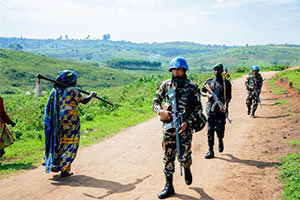 MONUSCO Peacekeepers and FARDC Soldiers Patrol Fataki Area. Credit: UN Photo/Jorkim Jotham Pituwa
Conflict, human rights violations, natural disasters, and famine have been at the forefront of concerns for humanitarian organizations. The escalation of humanitarian crises has led to over 239 million people in need of humanitarian assistance at the start of 2026, as estimated by OCHA’s Global Humanitarian Overview. The 2025 humanitarian appeal received only $12 billion, the lowest funding in over a decade, which has left 24 million fewer people reached in comparison to 2024. Conflict has remained the primary driver of crisis.
Humanitarian emergencies massively impact progress towards the Sustainable Development Goals (SDGs), adversely affecting economic development, inequality, education, planetary well-being, and poverty. Millions of people are faced with reduced access to essential services, including shelter, food, healthcare, and access to clean drinking water. UN Organizations such as UNHCR and the United Nations Children’s Fund (UNICEF) are committed to providing direct relief to affected communities when state governments cannot.
The United Nations 2024 Summit of the Future discussed measures that will be taken to reduce global inequality and promote peacekeeping efforts around the world. The recent UN Climate Change Conference (COP30) in Belém, Brazil, agreed to mobilize $1.3 trillion annually for climate action by 2035, operationalize the loss and damage fund, and triple adaptation finance. However, a fossil fuel transition commitment was not secured, despite climate change and the greenhouse effect being major contributors to humanitarian crises worldwide.
Countries across the world have also rallied to end humanitarian crises, as witnessed in conflicts such as Palestine and Ukraine. IPS is committed to providing relevant and in-depth reports of humanitarian emergencies around the world and their implications.

The Week with IPS

NEXT STOP - SDGs
Tracking global progress towards a sustainable world
Tracking global progress towards a sustainable world