
Thursday, October 22, 2026



News and Views from the Global South
Indigenous Rights

Kenyan Pastoralists Protest Wanton Destruction of Indigenous Forest
Armed with twigs and placards, enraged residents from a semi-pastoral community 360 km north of Kenya’s capital, Nairobi, protested this week against wanton destruction of indigenous forest – their alternative source of livelihood.
To Defend the Environment, Support Social Movements Like Berta Cáceres and COPINH
The 2015 Goldman Environmental Prize for Central and South America has been awarded to Berta Cáceres, an indigenous Honduran woman who co-founded the Council of Popular and Indigenous Organizations of Honduras, known as COPINH.
Giving African Artists Their Names
Quick now, can you name a famous African sculptor from the 1800s or even the early 20th century?
Q&A: Iranian Balochistan is a “Hunting Ground” – Nasser Boladai
Nasser Boladai is the spokesperson of the Congress of Nationalities for a Federal Iran (CNFI), an umbrella movement aimed at expanding support for a secular, democratic and federal Iran. IPS spoke with him in Geneva, where he was invited to speak at a recent conference on Human Rights and Global Perspectives in his native Balochistan region.
Fears Grow for Indigenous People in Path of Massive Ethiopian Dam
A United Nations mission is due to take place this month to assess the impact of Ethiopia’s massive Gilgel Gibe III hydroelectric power project on the Omo River which feeds Lake Turkana, the world’s largest desert lake, lying mostly in northwest Kenya with its northern tip extending into Ethiopia.
Rural Women in Latin America Define Their Own Kind of Feminism
Rural organisations in Latin America are working on defining their own concept of feminism, one that takes into account alternative economic models as well as their own concerns and viewpoints, which are not always in line with those of women in urban areas.

Latin America Heralds New Era with United States
Latin America presented its own recipes for development in the new era of relations with the United States in the Seventh Summit of the Americas, where Cuba took part for the first time and the U.S. said it would close the chapter of “medd[ling] with impunity” in its neighbours to the south.
Land Seizures Speeding Up, Leaving Africans Homeless and Landless
There is a new scramble for Africa, with ordinary people facing displacement by the affluent and the powerful as huge tracts of land on the continent are grabbed by a minority, rights activists here say.
Civil Society and Politics March for Negev Bedouin Recognition
There was a symbolic dimension to a recent four-day march from the periphery of Israel to the corridors of power in Jerusalem to seek recognition for Bedouin villages.
Global Civil Society to the Rescue of the Amazon
A global civil society petition to save the Amazon is circulating on the internet and its promoters say that once one million signatures have been collected indigenous leaders will deliver it directly to the governments of Brazil, Colombia and Venezuela.
Opinion: Where Does Nigeria Go From Here?
After several tension-filled months, a majority of Nigerians swept in an opposition leader and former military man, Muhammadu Buhari, to succeed incumbent President Goodluck Jonathan, whose failure to contain a terrorist wave in the northern states doomed his re-election chances.
Four Fast Facts to Debunk Myths About Rural Women
We are lucky to live in a country that has long since abandoned the image of the damsel in distress. Even Disney princesses now save themselves and send unsuitable “saviours” packing. But despite the great strides being made in gender equality, we are still failing rural women, particularly women farmers.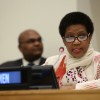
CSW 59 Wraps up as Delegates Look Towards 2016
The Commission on the Status of Women, one of the biggest events on the calendar for United Nations headquarters in New York City, is over for another year.
Why Investors Should Think Twice before Investing in Coal in India – Part 2
In November last year, India’s power minister Piyush Goyal announced that he plans to double coal production in India by the end of this decade and, in an effort to enhance production, the Indian government has started a process of auctioning coal blocks.
Banana Workers’ Strike Highlights Abuses by Corporations in Costa Rica
A strike that has brought activity to a halt since January on three major banana plantations on Costa Rica’s southern Caribbean coast, along the border with Panama, has highlighted the abuses in a sector in the hands of transnational corporations and has forced the governments of both countries to intervene.
Why Investors Should Think Twice before Investing in Coal in India – Part 1
India’s Government under Narendra Modi is in overdrive mode to please businesses and investments in the country. The much aggrandised ‘Make in India’ campaign launched in September 2014 is a clarion call for spurring investments into manufacturing and services in India and all eyes have turned to the power sector which is expected to undergo dramatic shifts.
Indonesia’s Palm Oil Industry in Need of a Makeover
Over the past three decades, 50 percent of the 544,150 square kilometres that comprise Kalimantan, the Indonesian portion of the island of Borneo, has been taken over by the palm oil industry.
Feeding a Warmer, Riskier World
Artificial meat. Indoor aquaculture. Vertical farms. Irrigation drones. Once the realm of science fiction, these things are now fact. Food production is going high tech – at least, in some places.
Newly Recognised Indigenous Rights a Dead Letter?
Nearly three years after the rights of El Salvador’s indigenous people were recognised in the constitution, there are still no public policies and laws to translate that historic achievement into reality.
Can Indigenous and Wildlife Conservationists Work Together?
Indigenous and wildlife conservationists have common goals and common adversaries, but seem to be struggling to find common ground in the fight for sustainable forests.
Opinion: Bridging the Gap – How the SDG Fund is Paving the Way for a Post-2015 Agenda
The countdown has begun to September’s Summit on the Sustainable Development Goals (SDGs), with world leaders discussing the 17 goals and 169 targets proposed by the United Nations Open Working Group.« Previous Page — Next Page »





The planet's roughly 350 million indigenous peoples took notable steps on the international stage in the last decade. They got the world's governments to agree to create a body to represent them at the United Nations, the Permanent Forum on Indigenous Issues, and to appoint a special rapporteur responsible for their human rights. In 2007 a Universal Declaration on the Rights of Indigenous Peoples was approved by the UN. Yet the living conditions of most "tribal", "aboriginal", "native" or "first" peoples remain precarious. IPS, with its network of contributors at the UN and linked to indigenous communities worldwide, is committed to tracking the world community's efforts to do justice to the rights and aspirations of these peoples, with a special current focus on Latin America's 40 million rural indigenous peoples.

The Week with IPS

Tracking global progress towards a sustainable world
