
Sunday, October 25, 2026



News and Views from the Global South
Indigenous Rights

Only Half of Global Banks Have Policy to Respect Human Rights
Just half of major global banks have in place a public policy to respect human rights, according to new research, despite this being a foundational mandate of an international convention on multinational business practice.
“Indigenous Peoples Are the Owners of the Land” Say Activists at COP20
The clamor of indigenous peoples for recognition of their ancestral lands resounded among the delegates of 195 countries at the climate summit taking place in the Peruvian capital. “I want my land…that’s where I live and eat, and it’s where my saintly grandparents lie,” Diana Ríos shouted with rage.
Model Contract to Help Protect Developing Countries From ‘Land Grabs’
When the Korean company Daewoo attempted to acquire half the arable land of Madagascar for free, it unleashed a tsunami of investor interest in agricultural land, popularised as the 'land grab'.
War Knocks on Door of Youth Centre in Zwara
It could be a squat house anywhere: music is playing non-stop and there is also a radio station and an art exhibition. However, weapons are also on display among the instruments, and most here wear camouflage uniform.
Native Villagers in Honduras Bet on Food Security – and Win
The town’s dynamic mayor, Sandro Martínez, assumed the commitment of turning the Honduran municipality of Victoria into a model of food and nutritional security and environmental protection by means of municipal public policies based on broad social and community participation and international development aid.
OPINION: Climate Justice Is the Only Way to Solve Our Climate Crisis
In November, the world's top climate scientists issued their latest warning that the climate crisis is rapidly worsening on a number of fronts, and that we must stop our climate-polluting way of producing energy if we are to stand a chance of avoiding the worst impacts of climate change.
Led by INTERPOL, U.N. Tracks Environmental Criminals
A coalition of international organisations, led by INTERPOL and backed by the United Nations, is pursuing a growing new brand of criminals - primarily accused of serious environmental crimes - who have mostly escaped the long arm of the law.
Indigenous Community Beats Drought and Malnutrition in Honduras
In the heart of the Pijol mountains in the northern Honduran province of Yoro, the Tolupan indigenous community of Pueblo Nuevo has a lot to celebrate: famine is no longer a problem for them, and their youngest children were rescued from the grip of child malnutrition.
Democratising the Fight against Malnutrition
There is a new dimension to the issue of malnutrition – governments, civil society and the private sector have started to come together around a common nutrition agenda.
Mexico’s Undead Rise Up
“Alive they were taken, and alive we want them back!”
Shale Oil Fuels Indigenous Conflict in Argentina
The boom in unconventional fossil fuels has revived indigenous conflicts in southwest Argentina. Twenty-two Mapuche communities who live on top of Vaca Muerta, the geological formation where the reserves are located, complain that they were not consulted about the use of their ancestral lands, both “above and below ground.”
G20 Seeks to Streamline Private Investment in Infrastructure
Industrialised countries have agreed to collaborate on a new programme aimed at funnelling significant private-sector investment into global infrastructure projects, particularly in developing countries.
How a Small Tribe Turned Tragedy into Opportunity
When the Asian tsunami washed over several Indian Ocean Rim countries on Boxing Day 2004, it left a trail of destruction in its wake, including a death toll that touched 230,000.Canada Accused of Failing to Prevent Overseas Mining Abuses
The Canadian government is failing either to investigate or to hold the country’s massive extractives sector accountable for rights abuses committed in Latin American countries, according to petitioners who testified here Tuesday before an international tribunal.
They Say the Land is ‘Uninhabited’ but Indigenous Communities Disagree
Disregarding the rights of indigenous people to their traditional lands is costing companies millions of dollars each year, and costing communities themselves their lives.
Guatemalan Officers Face Sexual Slavery Charges in Historic Trial
On Oct. 14, Guatemala’s Court for High-Risk Crimes ruled that charges would be brought against two members of the Army for sexual slavery and domestic slavery against q’eqchís women in the military outpost of Sepur Zarco, and other serious crimes perpetrated in the framework of the government counterinsurgency policies during the armed conflict.
Bougainville Voices Say ‘No’ to Mining
The viability of reopening the controversial Panguna copper mine in the remote mountains of Central Bougainville, an autonomous region in the east of Papua New Guinea, has been the focus of discussions led by local political leaders and foreign mining interests over the past four years.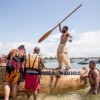
OPINION: The Front Line of Climate Change is Here and Now
The fate of my country rests in your hands: that was the message which Ian Fry, representing Tuvalu gave at the United Nations Climate Change Conference in Copenhagen five years ago. This is also the message that the Pacific Climate Warriors have come to Australia to bring.
The Nagoya Protocol: A Treaty Waiting to Happen
For over 20 years, Mote Bahadur Pun of Nepal’s western Myagdi district has been growing ‘Paris polyphylla’ - a Himalayan herb used to cure pain, burns and fevers.
Panama’s Indigenous People Want to Harness the Riches of Their Forests
For indigenous people in Panama, the rainforest where they live is not only their habitat but also their spiritual home, and their link to nature and their ancestors. The forest holds part of their essence and their identity.
Pacific Climate Change Warriors Block World’s Largest Coal Port
Climate Change Warriors from 12 Pacific Island nations paddled canoes into the world’s largest coal port in Newcastle, Australia, Friday to bring attention to their grave fears about the consequences of climate change on their home countries.« Previous Page — Next Page »





The planet's roughly 350 million indigenous peoples took notable steps on the international stage in the last decade. They got the world's governments to agree to create a body to represent them at the United Nations, the Permanent Forum on Indigenous Issues, and to appoint a special rapporteur responsible for their human rights. In 2007 a Universal Declaration on the Rights of Indigenous Peoples was approved by the UN. Yet the living conditions of most "tribal", "aboriginal", "native" or "first" peoples remain precarious. IPS, with its network of contributors at the UN and linked to indigenous communities worldwide, is committed to tracking the world community's efforts to do justice to the rights and aspirations of these peoples, with a special current focus on Latin America's 40 million rural indigenous peoples.

The Week with IPS

Tracking global progress towards a sustainable world
